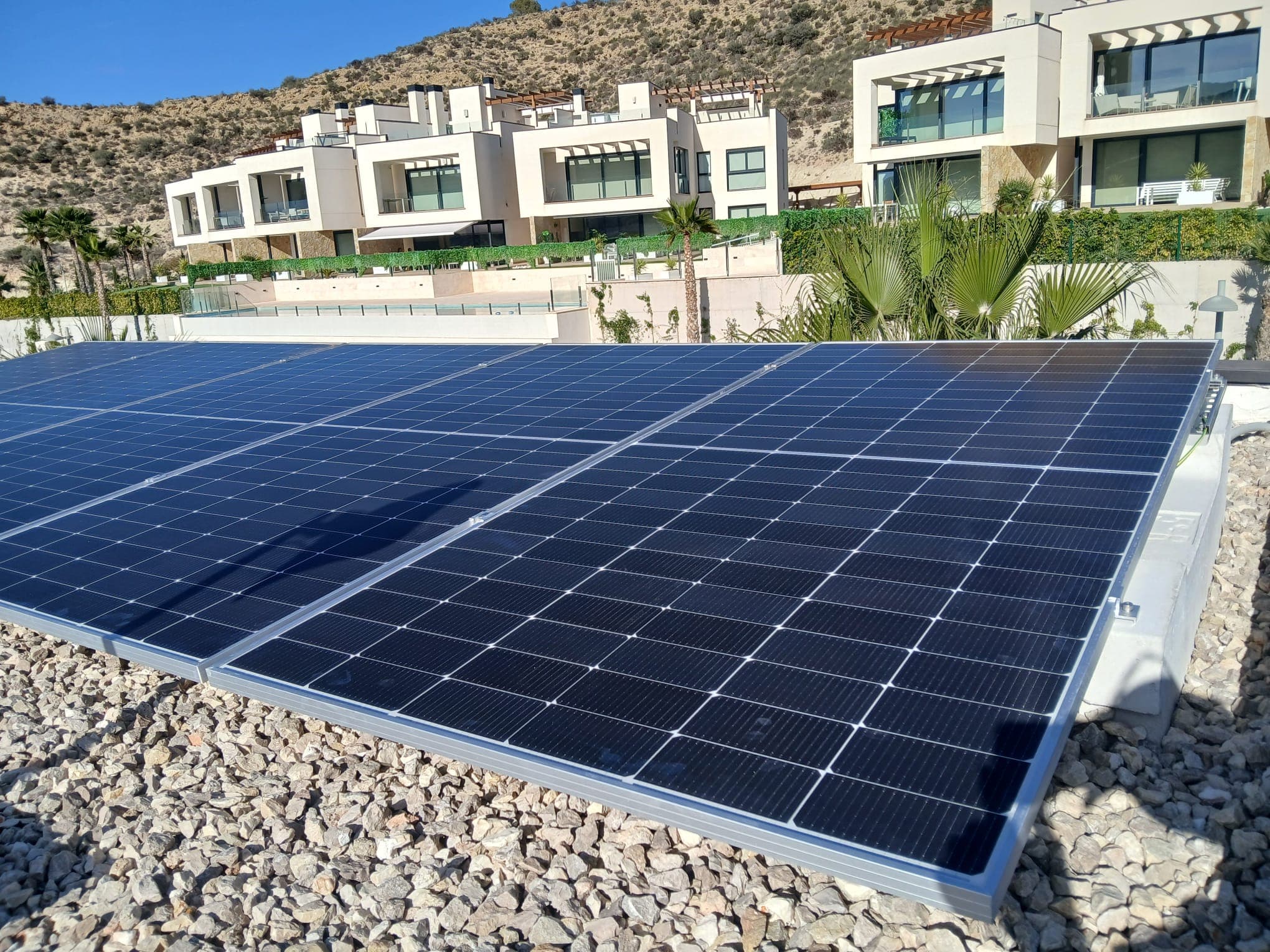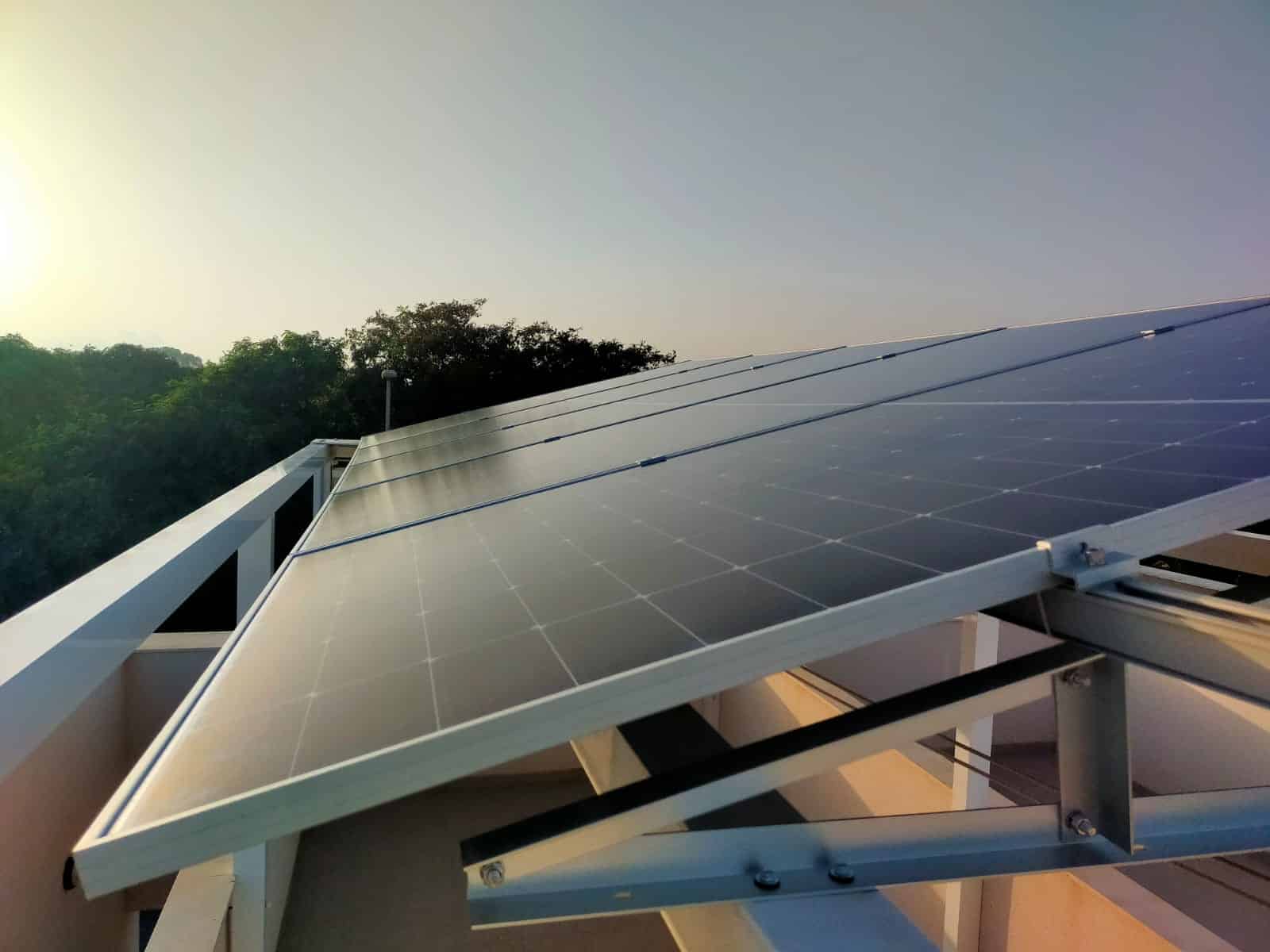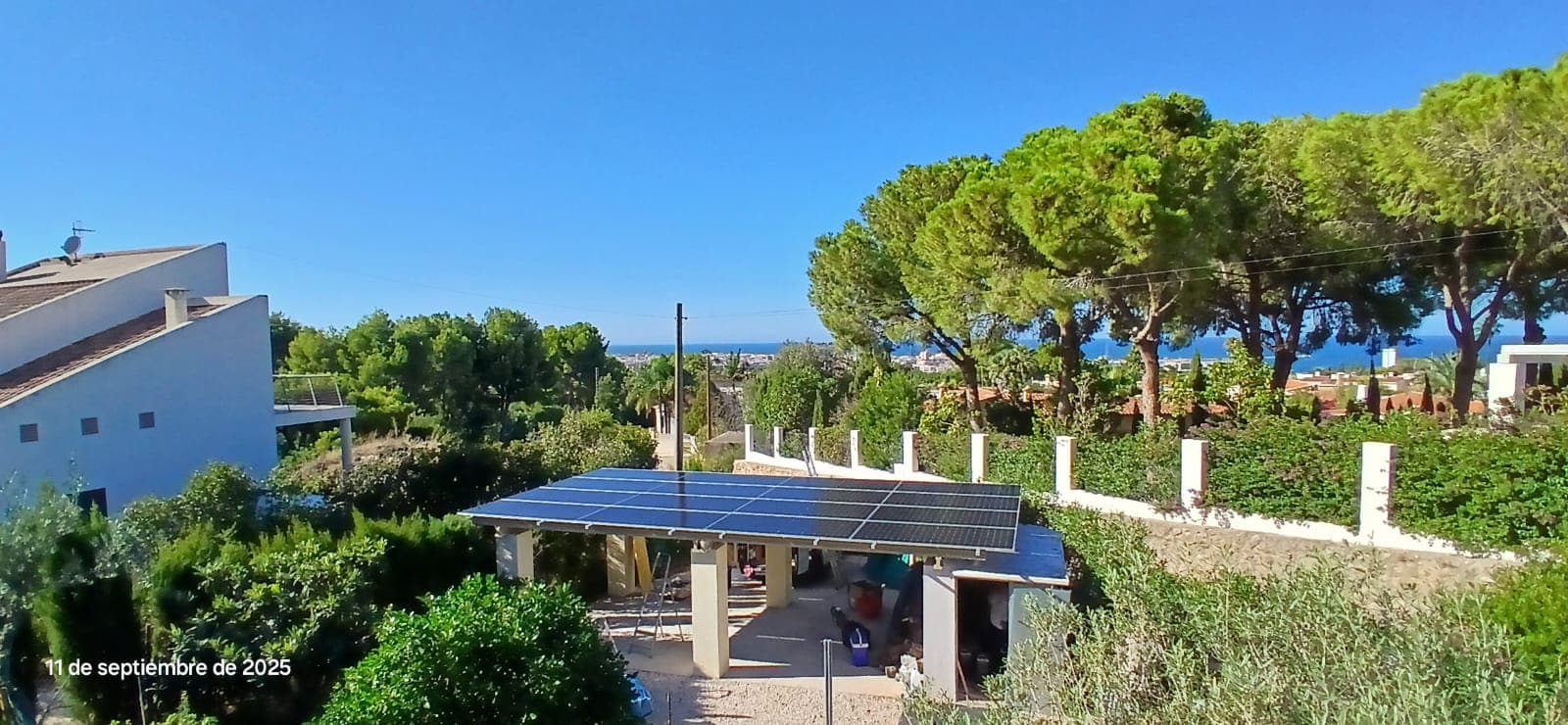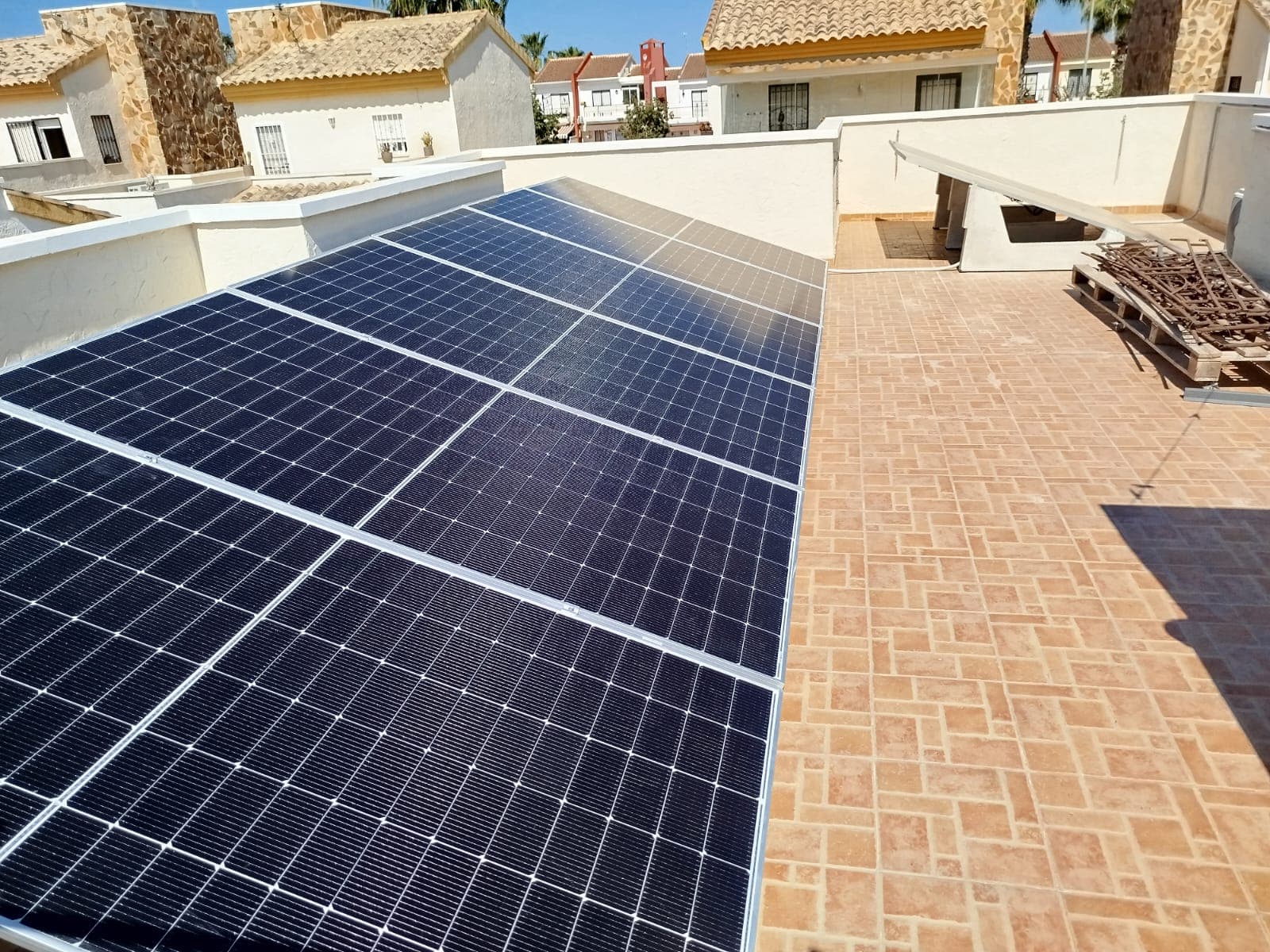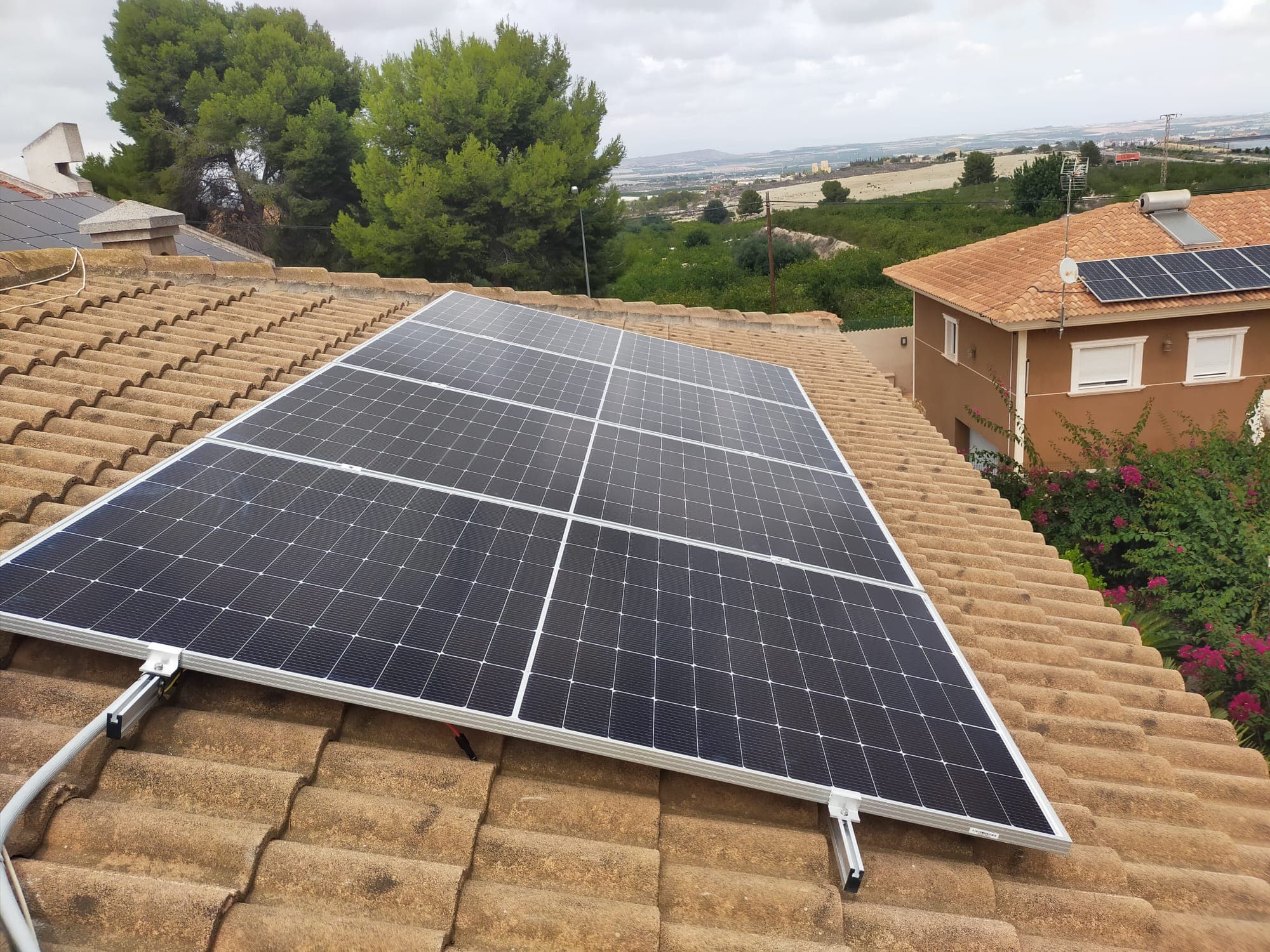
If you are thinking about solar panels for a house in Spain, you probably have more questions than you expected: whether it is worth it, what it costs, whether the roof is right, what the town hall wants, and what happens afterwards. This page takes you through the whole route in six steps, and links to a detailed guide for each.
What solar panels do for a home in Spain
Solar panels turn daylight into electricity. The electricity you use while the panels produce is electricity you no longer buy from the grid; what you do not use goes to the grid and is credited on your bill under Spain’s self-consumption rules. The grid stays connected, so at night and on dull days you use it as before.
Spain gets a lot of sun, and the south-east coast more than most. As an estimate from EU PVGIS data for a roof near Alicante, a system produces roughly 1,550 kWh per kWp a year when it faces south at a good angle, and roughly 1,250 to 1,300 when it faces east or west. That does not mean every house benefits equally: the value depends on how much of the production you use yourself, which depends on when you use power.
Step 1: is it right for your house?
Look at your electricity use first. A household that uses power in the day, for air conditioning, a pool pump, cooking or working from home, uses more of its own production. A house that is empty for most of the year uses little. Our guides on whether solar panels are worth it and when they are not help you place yourself, and there is a separate one for holiday homes.
Step 2: how big a system?
The size follows from your consumption, not from your roof. How many solar panels do I need shows the calculation from your bill.
Step 3: is the roof suitable?
The roof needs a sound structure, a covering in good condition, enough sun and space, and a route for the cables to your electrical panel. Is your roof suitable goes through each. A flat roof works too; see solar panels on a flat roof.
Step 4: what does it cost?
Installations are designed per house, so a fixed price without seeing the roof is guesswork. How much solar panels cost in Spain explains what goes into a quote and what to compare. For choosing between installers, read how to choose a reliable solar installer.
Step 5: permits and paperwork
A rooftop system needs the town hall informed or its permission, depending on the municipality, then the electrical certificate and registration, and a contract that credits the power you export. If the roof is shared, the community of owners has to agree first. What documents do you need sets out who does what. A good installer handles most of it; many of our customers mention the paperwork in their reviews.
Step 6: installation and afterwards
On a typical house the work on site is short; many of our installations are fitted in one working day. The waiting is mostly in the paperwork before and after. How long does installation take gives the stages. Afterwards you follow production in an app, and maintenance is light: see how often to clean solar panels and, near the sea, solar panels in a coastal environment.
Things people ask about later
- Batteries are optional. They store daytime surplus for the evening. See do you need a solar battery.
- Power cuts: a standard system switches off when the grid fails. Back-up needs a system designed for it; see do solar panels work during a power cut.
- The bill will not normally go to zero, because fixed charges remain. See can solar panels eliminate your electricity bill.
- Tax benefits: these change over time and differ per municipality; background is on our page on financial and tax benefits, and we check what applies to your address.
Where to start
If you would rather talk it through, we survey the roof, look at your bills and then put a design and a price on paper. We install across Spain’s south-east coast; how we work is on solar panel installation.