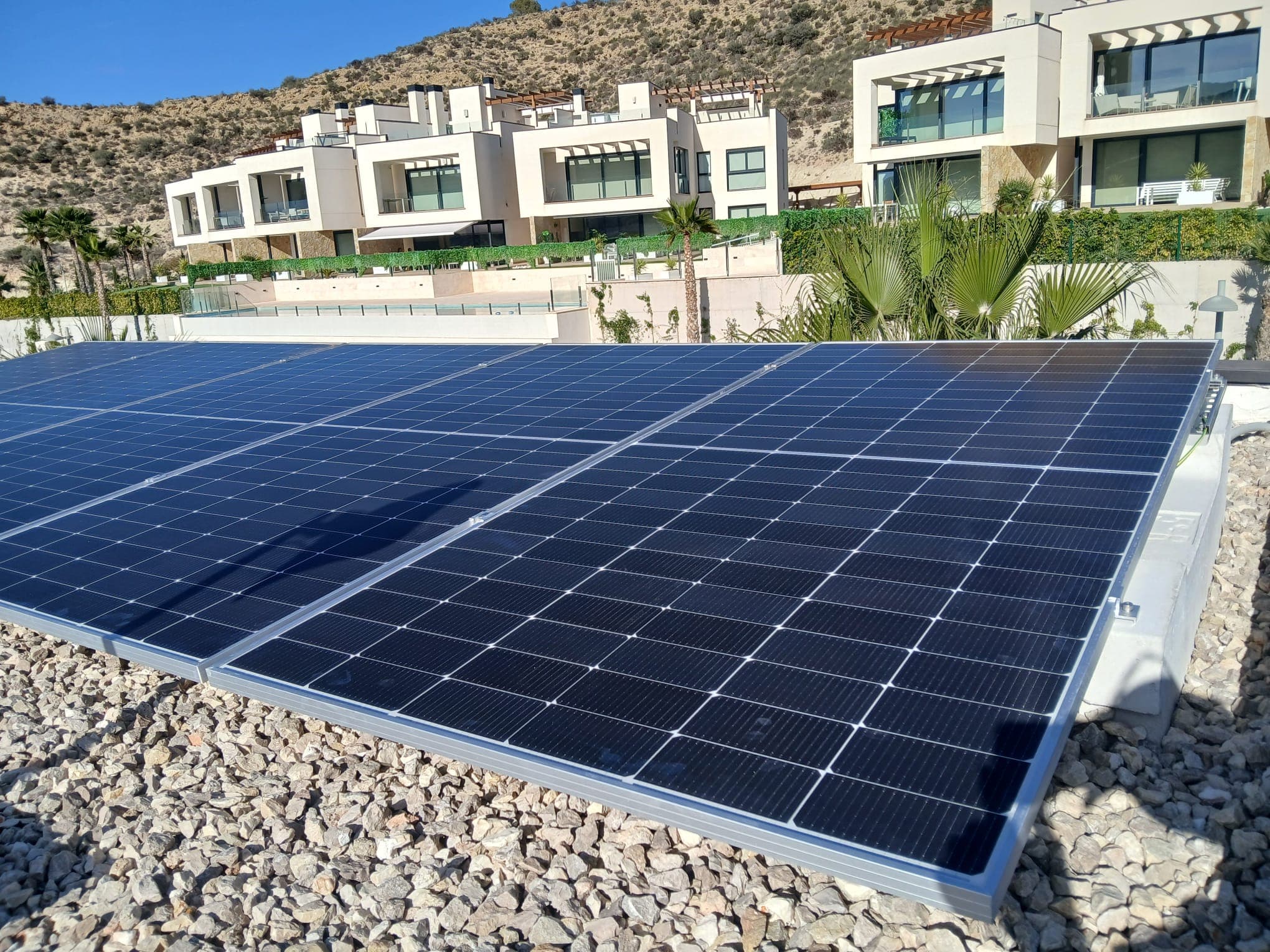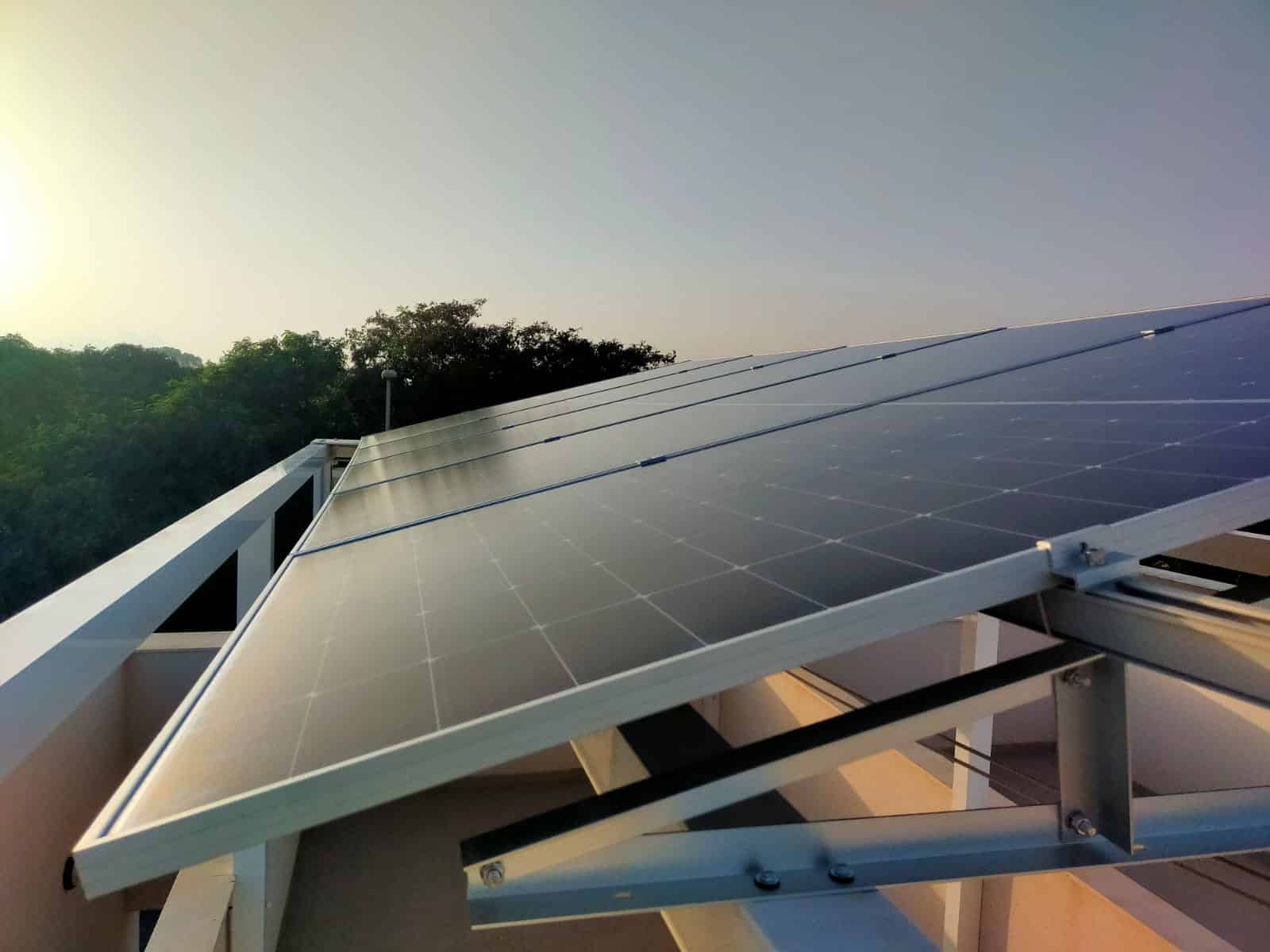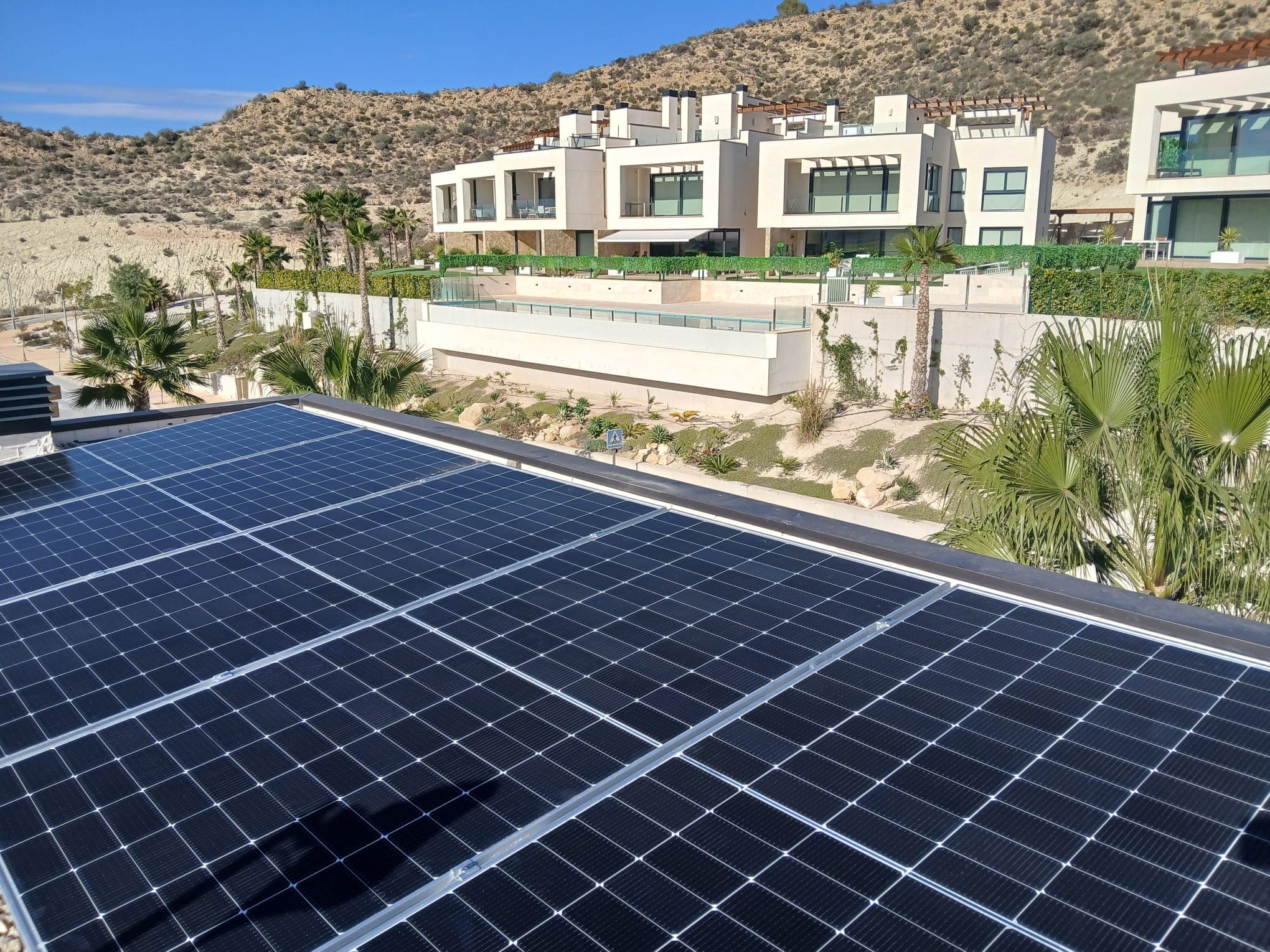
A standard grid-connected solar system switches off when the grid goes down, even on a sunny day. The panels still receive light, but the inverter stops supplying the house. That surprises many owners the first time it happens. Keeping power during a cut is possible, but only with a system designed for it: a battery, an inverter that can run the house on its own, and a switch that separates the house from the grid.
Why a normal system switches off
When the grid fails, the lines in the street are meant to be dead so that technicians can repair them safely. If solar systems kept feeding power into those lines, they could be live. So every grid-connected inverter watches the grid constantly and disconnects within moments when it disappears or goes out of range. This is called anti-islanding protection. In Spain the low-voltage regulations require it (ITC-BT-40 of the REBT), inverters are tested for it, and it is built in.
When the grid returns and stays stable, the inverter reconnects on its own after a short wait. You do not need to do anything.
Three kinds of system, three outcomes
Panels only
The system switches off with the grid. The house is without power like the neighbours’, until the grid returns.
Panels and battery, no back-up
This one catches people out. The battery is there, perhaps full, but the system still switches off, because it has no way to separate the house from the grid safely. A battery alone is not back-up.
Panels, battery and back-up
A back-up system has an inverter that can form its own small grid for the house, and a switch, sometimes called a changeover or back-up box, that disconnects the house from the public grid first. Spanish rules allow a home system to run on its own like this for its own use, as long as it never feeds the public grid while it does. Then the battery, and in daylight the panels, supply the circuits connected to the back-up. When the grid returns, the house is reconnected.
One customer wrote about exactly this set-up:
“A special switch box that makes sure the power keeps coming from the batteries during a power cut. Very important. Without this switch you have nothing during a power cut!”
Jan W., San Miguel de Salinas, Google review, translated from Dutch
What back-up covers
Back-up is designed, not automatic. Things to decide with your installer:
- Which circuits. Usually essentials: fridge and freezer, lights, router, alarm, a few sockets, perhaps a water pump. Large loads like air conditioning, an oven or an electric car charger are often left off, because they would empty the battery fast or exceed what the inverter can deliver.
- How long. As long as the stored energy lasts, plus whatever the panels add in daylight.
- How fast it switches. Some systems switch within a fraction of a second, others take longer. A short gap can restart sensitive equipment.
After a large blackout
The blackout that hit mainland Spain and Portugal on 28 April 2025, with power largely back by the early hours of the next day, made many people ask this question for the first time. Systems without back-up switched off, as they are designed to. A back-up system is built for exactly that situation: it keeps the circuits wired to it running for as long as the battery allows.
Adding back-up to an existing system
It depends on the inverter you have. Some hybrid inverters have a back-up output that only needs the switch and wiring; others need a different inverter or a separate battery inverter with back-up. We look at what is on your wall and tell you what is possible. For the question of whether a battery pays off at all, see do you need a solar battery in Spain. For how a grid-connected system works day to day, see how self-consumption works.
If back-up matters to you, say so when you ask for a quote, and tell us what you want to keep running.