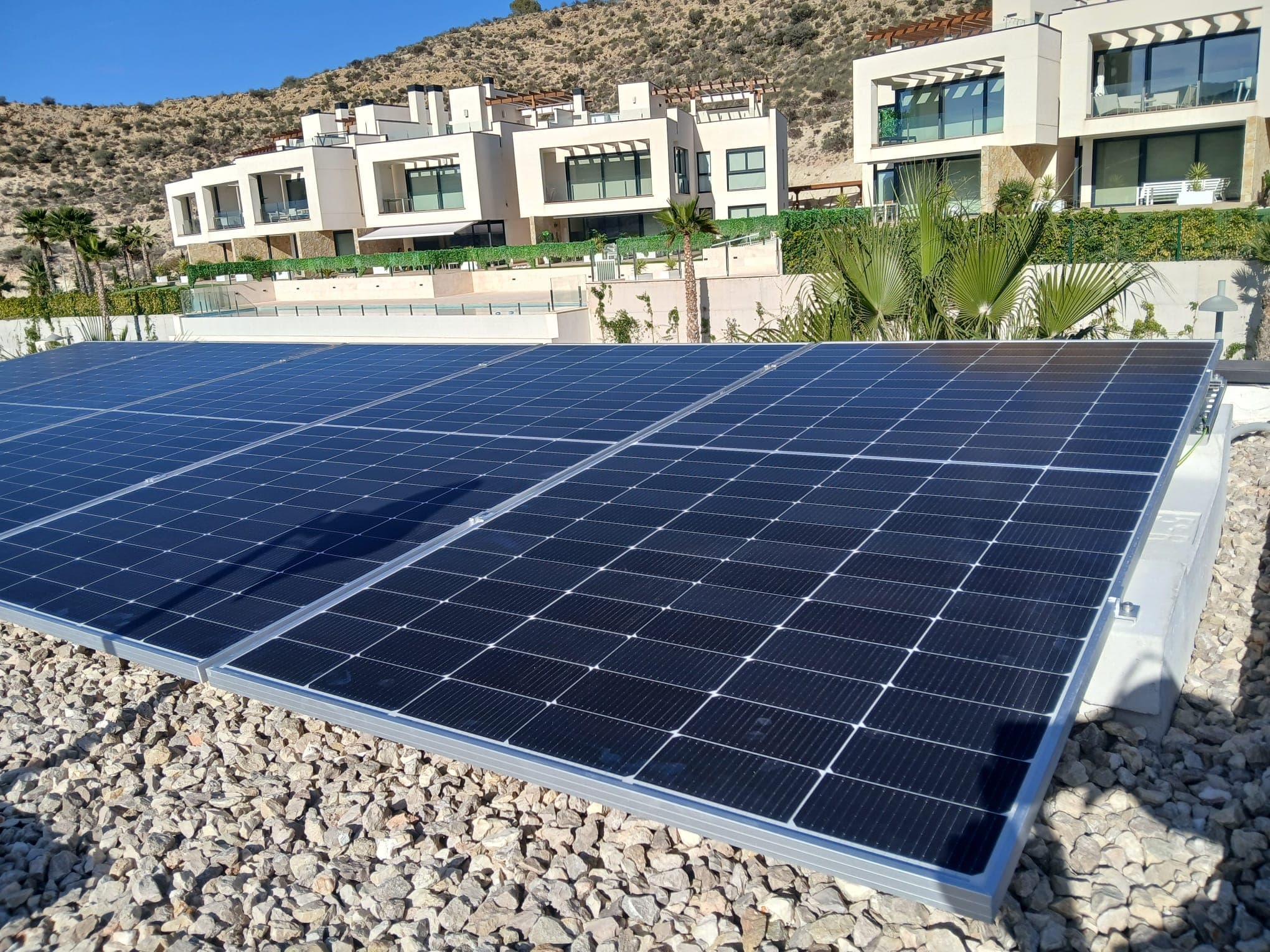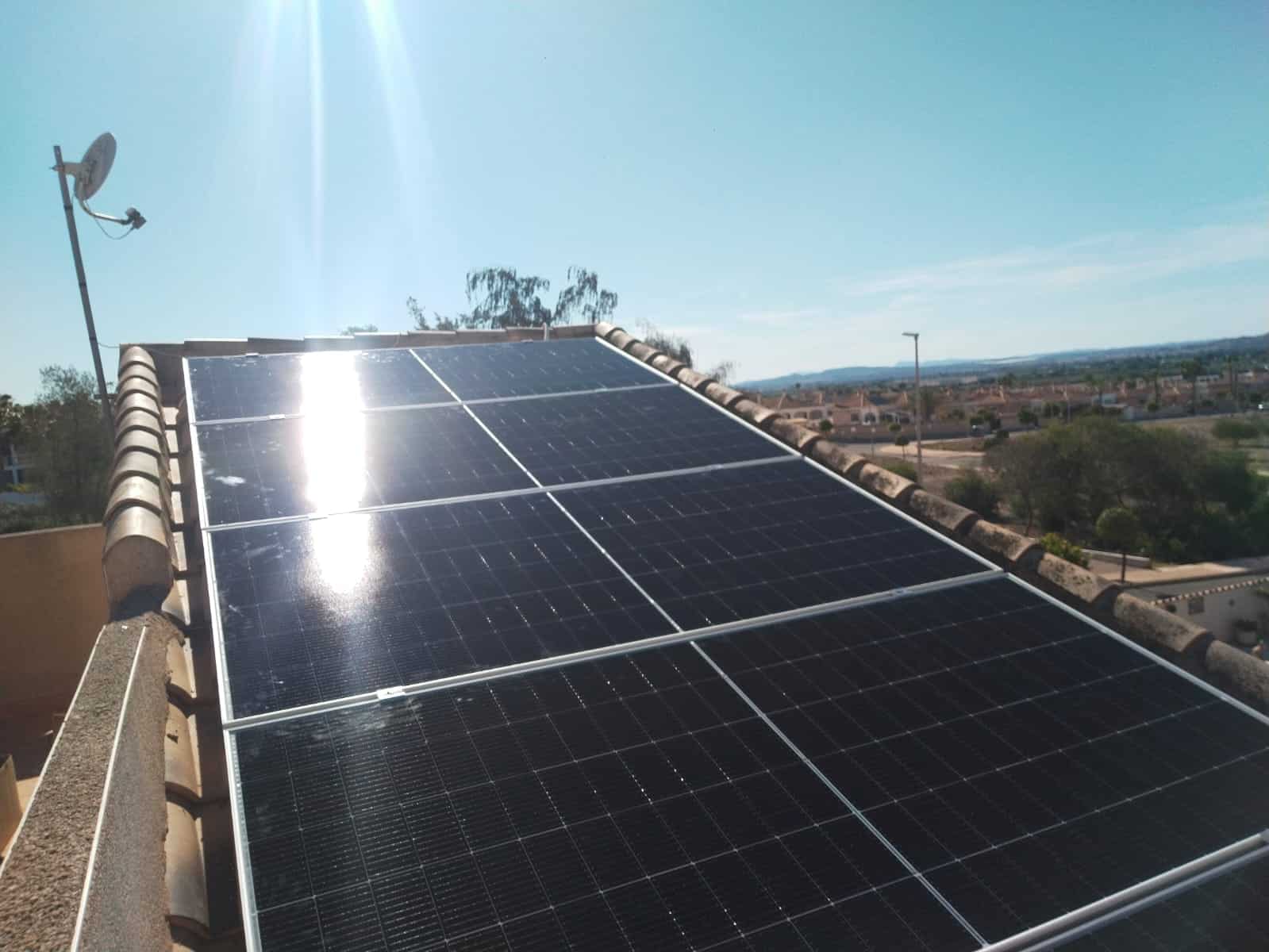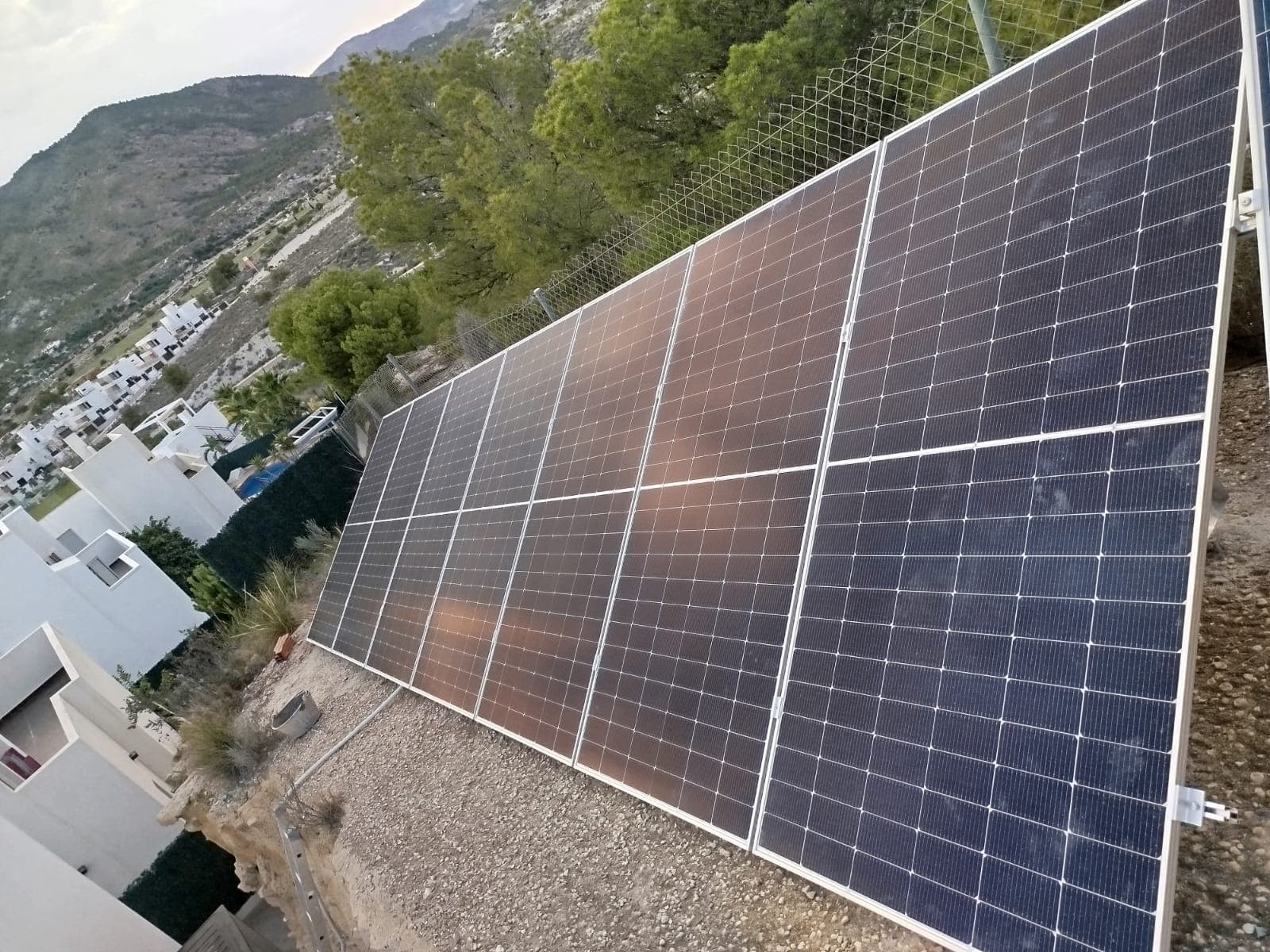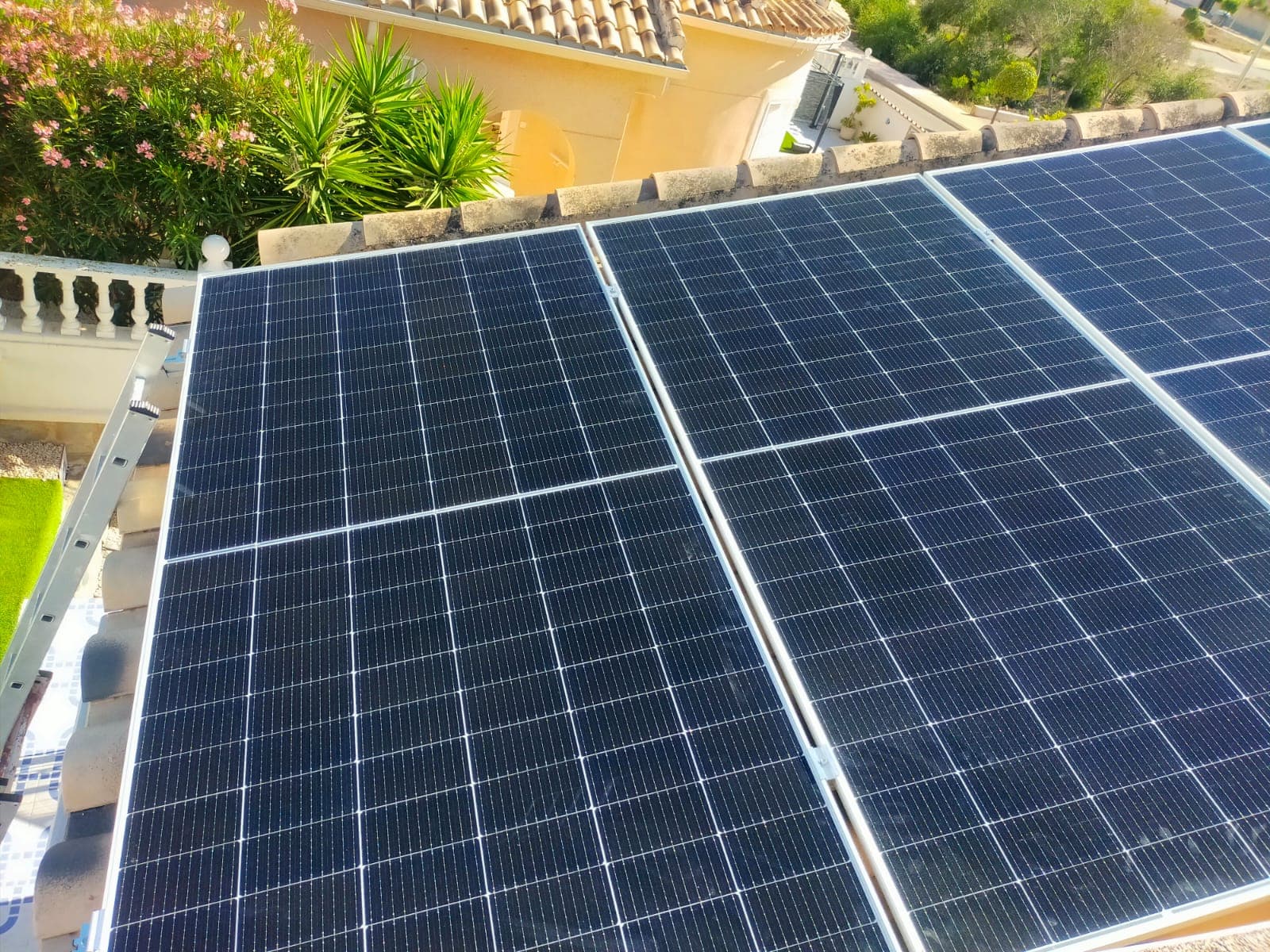
There is no fixed interval that is right for every house. Panels on a steep roof in a spot with regular rain may never need cleaning; panels on a low-angle flat roof near a dusty road, under trees or by the sea may need it more than once a year. The useful question is not how often, but how you can tell that cleaning is worth it.
What makes panels dirty here
- Dust after long dry spells. Rain washes most dust off tilted panels. After weeks without rain, a layer builds up.
- Dust episodes. When dust blows in from North Africa, often called calima, it can leave a film on everything, sometimes followed by muddy rain.
- Bird droppings and leaves. These cover part of a panel and, on some systems, affect more than that one panel.
- Low tilt. Flat-lying panels do not shed dirt as well as tilted ones, and dirt collects along the lower edge.
- Salt near the sea. Covered separately in solar panels near the sea.
Let the app tell you
The app that comes with your inverter shows daily production. The best way to see whether dirt is costing you anything is to compare like with like:
- Pick a clear, sunny day and note the production.
- Compare it with a clear day at the same time of year, ideally just after rain or after the last cleaning.
- If production on clear days has fallen gradually since the last rain, and the panels look dusty, cleaning is likely to help.
- If it dropped suddenly, or on one part of the system only, dirt is probably not the reason. Check for shade, an alarm or a fault, and call us.
Remember that summer heat also lowers output a little on the hottest days; see solar panels in summer heat. More on reading the app in how to monitor your solar panels.
What is safe to do yourself
Panels you can reach from the ground, a terrace or a carport without climbing can be rinsed with care:
- plain water, soft if you can, and a soft brush or sponge
- in the early morning or evening, when the panels are cool
- from where you stand, never standing or kneeling on the panels
What not to do
- Do not climb onto the roof to clean panels. Falls from roofs are the real risk in solar maintenance.
- Do not use a pressure washer, abrasive pads or strong detergents. They can damage the glass coating, and the panel maker’s instructions may exclude them.
- Do not spray cold water on hot panels.
- Do not touch cables, connectors or anything behind the panels.
Check the cleaning instructions from the panel maker; they are usually part of the warranty conditions.
When to call someone
For panels on a roof, cleaning needs proper access and equipment. We work with a cleaning partner for that, and we can advise when it is worth doing. If you notice damage, a loose panel or corrosion while looking, leave it and let us know.
For the general maintenance of your system, see solar panel installation, where we describe what we do after the system is running.