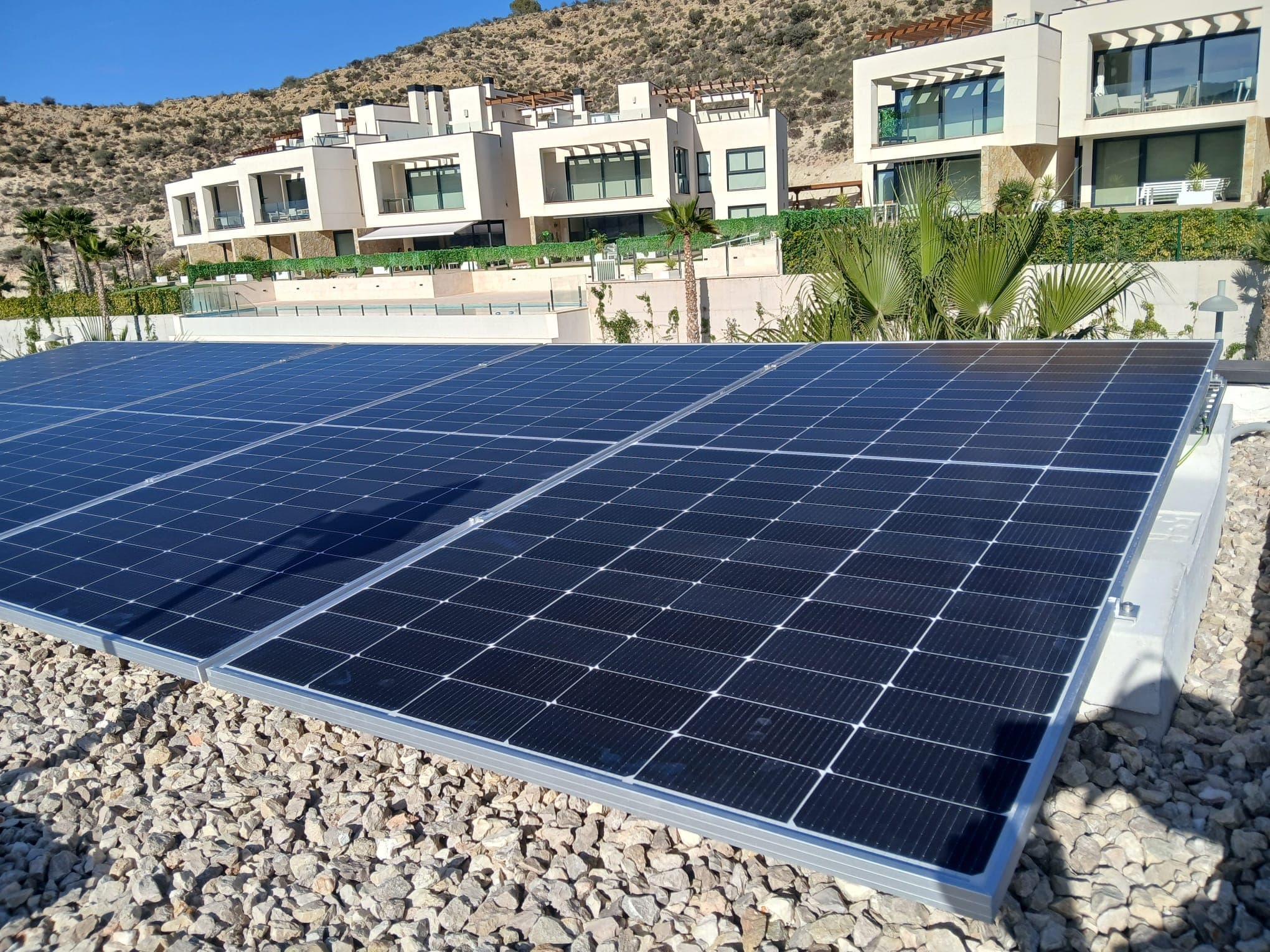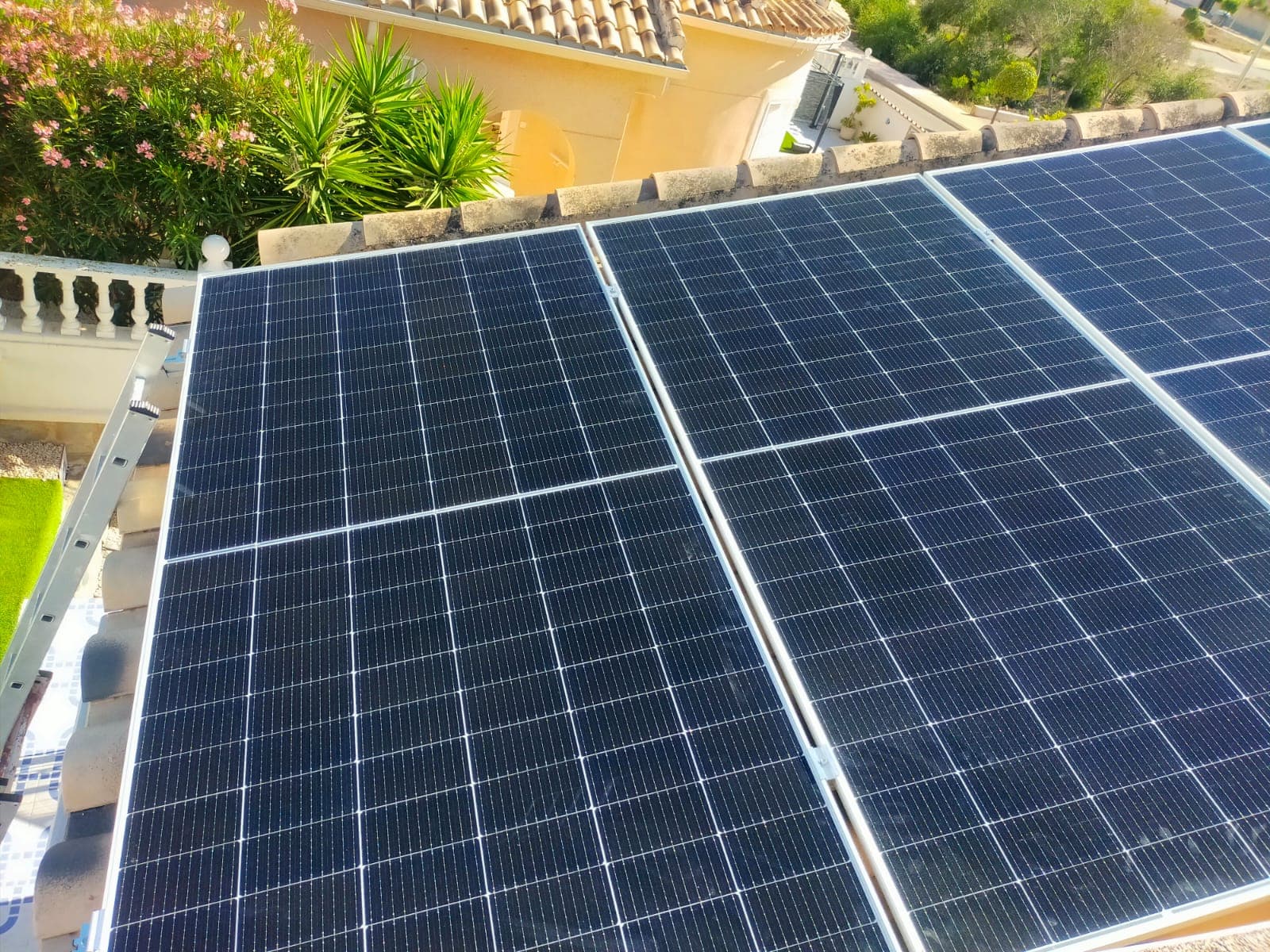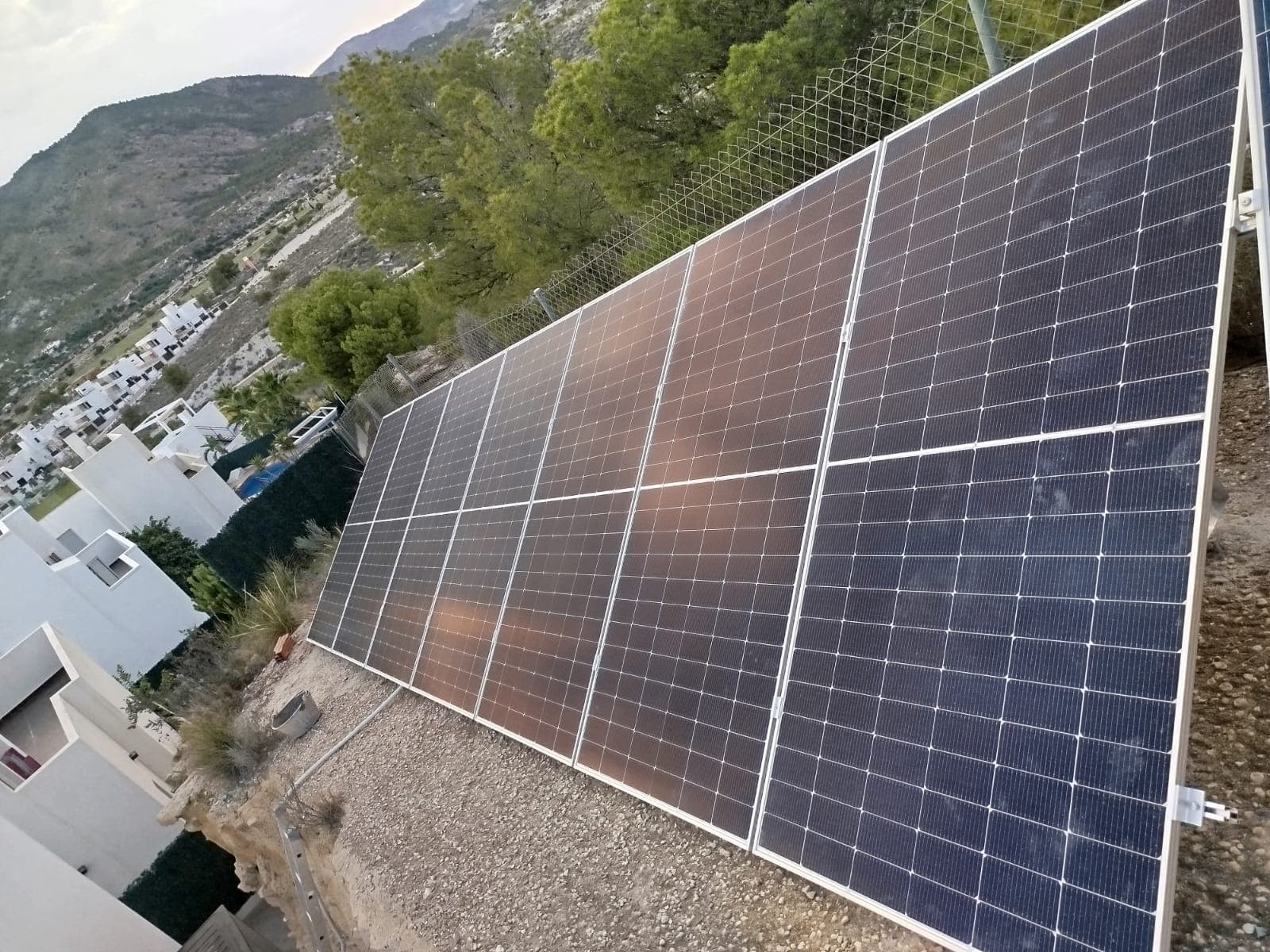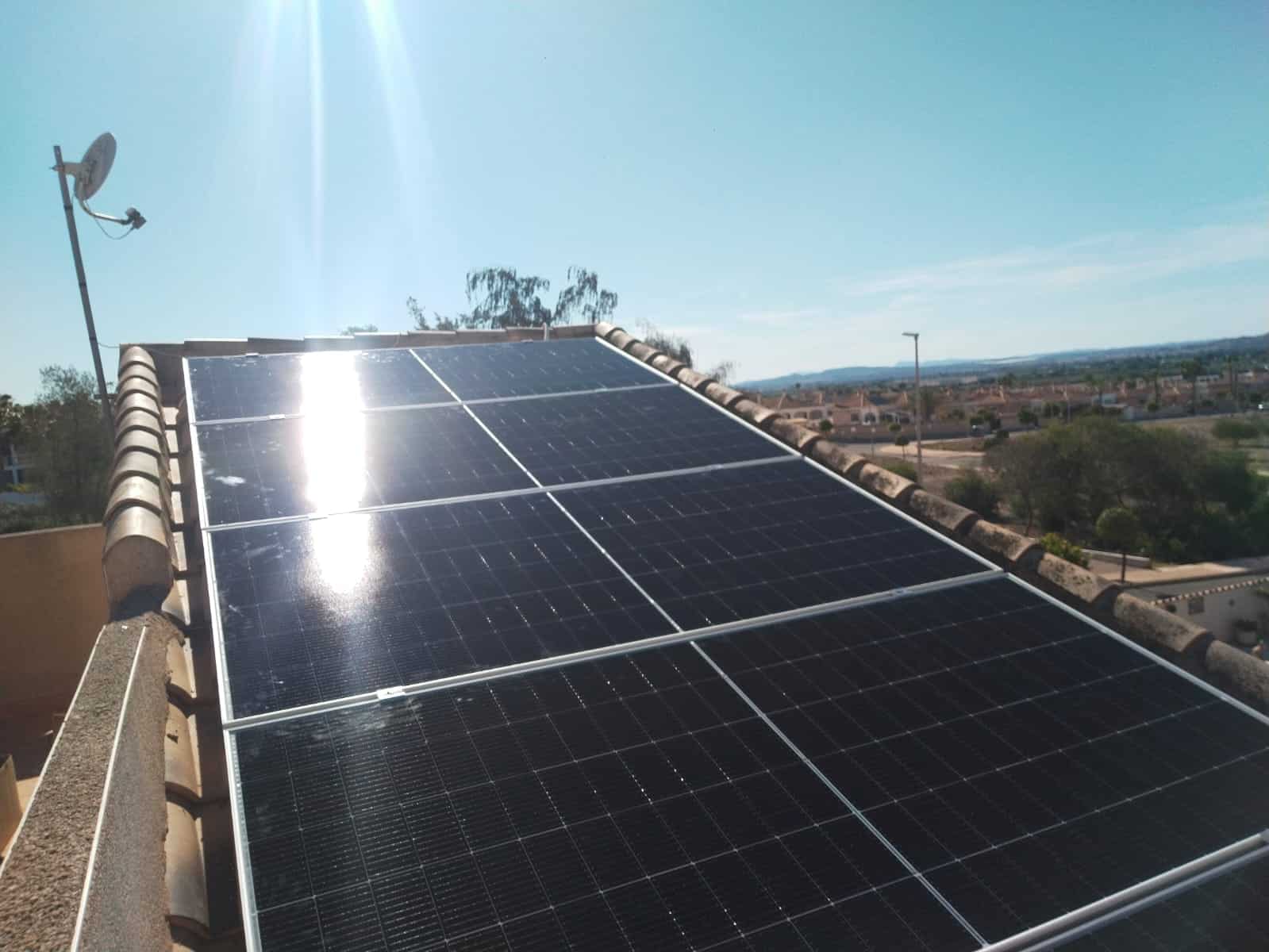
Yes, solar panels become a little less efficient as they get hotter. It is a property of the silicon cells, and every panel datasheet states it. But heat does not make summer a bad season: the extra sunshine and the long days more than make up for it, and in this part of Spain the summer months are still the most productive of the year.
Sunlight and heat are two different things
A panel’s output depends on two things that are easy to confuse:
- Irradiance: how much sunlight falls on the panel. More light, more electricity.
- Cell temperature: how hot the cells inside the panel are. Hotter cells, slightly less electricity for the same light.
On a clear summer day both are high. The first effect is much larger than the second, so production is high, just not quite as high as the same sunlight would give on a cool, clear spring day.
The temperature coefficient
Panels are rated under standard test conditions, which include a cell temperature of 25 °C. The datasheet then gives a temperature coefficient of power: how much output falls for each degree the cells run above 25 °C. For current panels it is a few tenths of a per cent per degree, and closer to zero is better: two current datasheets we checked give −0.29 % per °C for a TOPCon panel and −0.24 % per °C for a heterojunction panel. The exact figure for the panels on your roof is on their datasheet.
Cells on a roof in summer run well above the air temperature, because they absorb sunlight. As an example to show the sum, not a measurement: with a coefficient of −0.30 % per °C and cells at 60 °C, that is 35 degrees above 25 °C, so the panel delivers about 10 % less than it would under the same light at 25 °C. On a cooler day with the same sun, the loss would be smaller.
What reduces the heat effect
- Airflow behind the panels. Panels mounted with a gap above the roof run cooler than panels laid tight against a hot surface. Mounting systems are designed to leave that gap.
- A lower temperature coefficient. Some panel technologies lose less per degree than others. It is one of the things to compare when choosing panels; see what type of solar panels suit the Spanish climate.
- A light-coloured or ventilated roof. Less heat from below helps a little.
- Keeping the inverter cool. Inverters also reduce output when they overheat. Shade and ventilation for the inverter matter as much as for the panels.
Heat is not the same as shade or a full inverter
If production looks low on a summer afternoon, heat is one possible reason, but not the only one:
- Shade from a chimney, wall or tree moves over the roof during the day. See how shading and orientation affect production.
- Inverter limits: if the panels can deliver more than the inverter is rated for, the inverter caps the output at its maximum. That shows as a flat top on the daily curve in the app.
- Dust after a dry spell or a dust episode reduces light reaching the cells.
A curve that is smooth but a little lower on the hottest days is heat. A dip at the same hour every day is shade. A flat top is the inverter.
Does heat shorten a panel’s life?
Panels are built and tested for outdoor use, including heat cycles. Temperature mainly affects output on the day, not the life of a well-made panel. Long-term degradation is a separate subject, and it is stated as a warranted figure by the manufacturer.
What it means for the sums
When we estimate production for your roof, the loss from heat is already in it: yield estimates such as PVGIS take temperature into account. For a roof near Alicante that is roughly 1,250 to 1,550 kWh per kWp a year, depending on which way the roof faces, as an estimate. So the heat effect is not something to add on top; it is part of the figure.
We install on roofs across the province, including hot inland spots and the city of Alicante. If you want a figure for your own roof, ask for a quote.