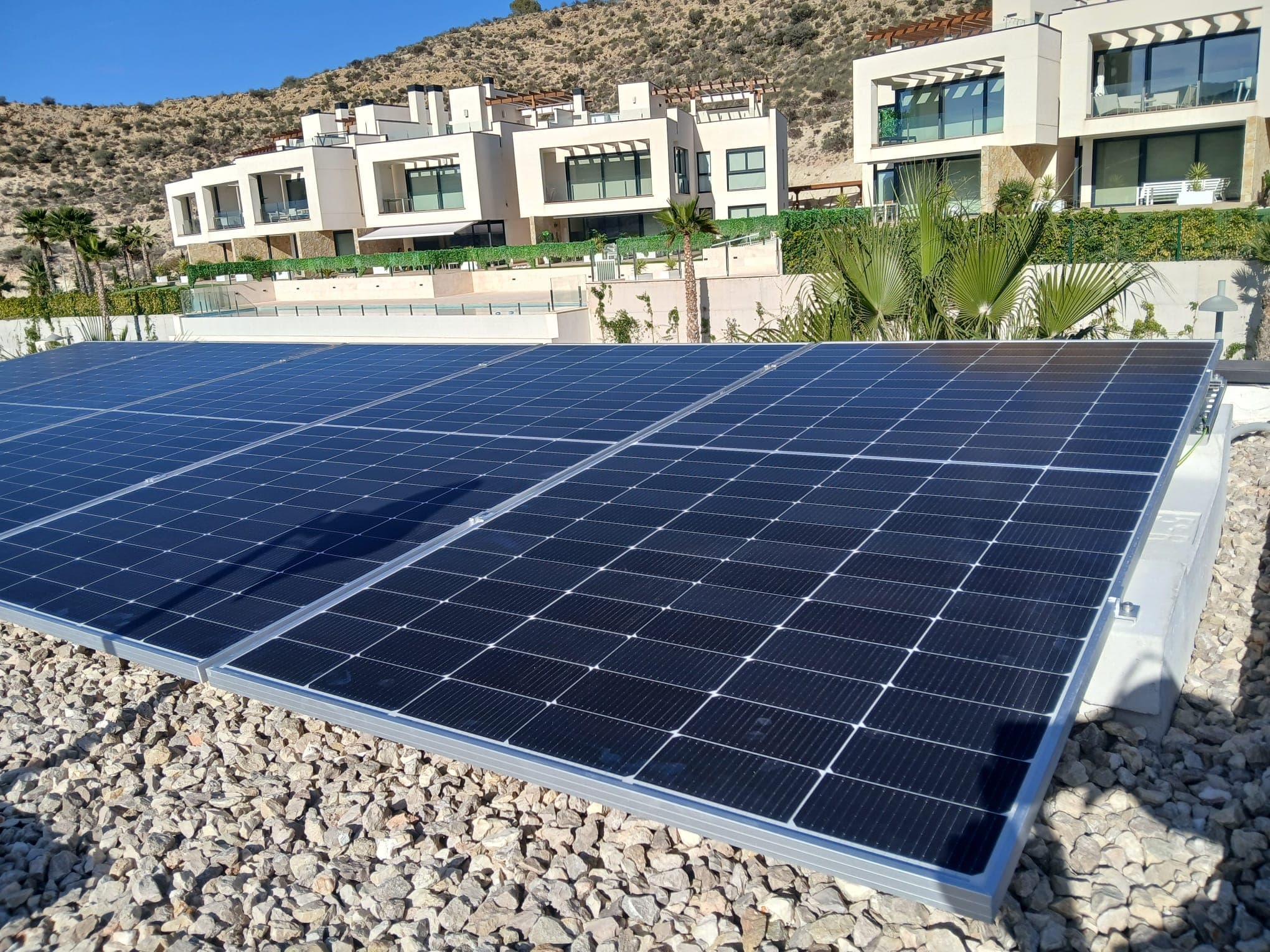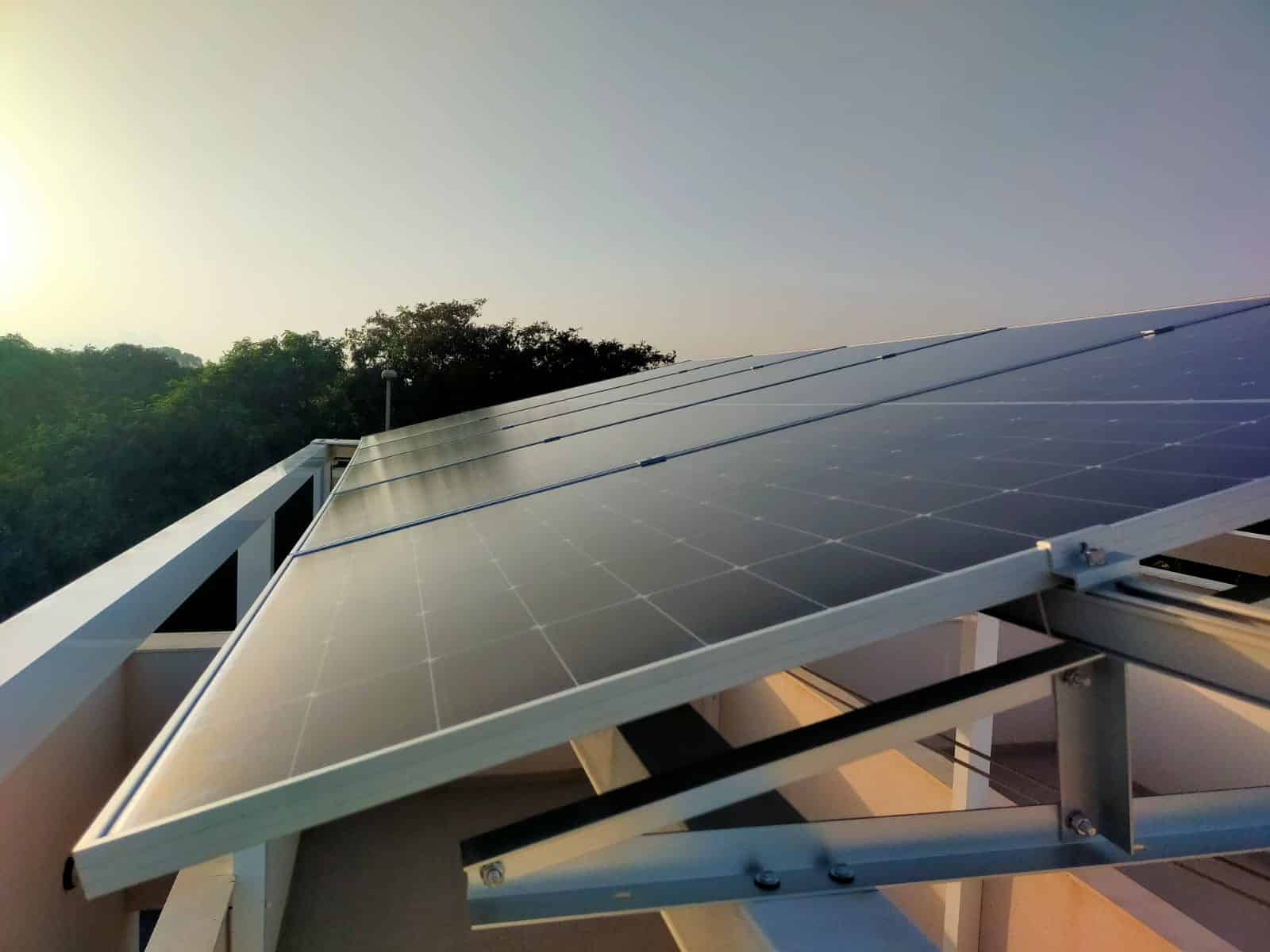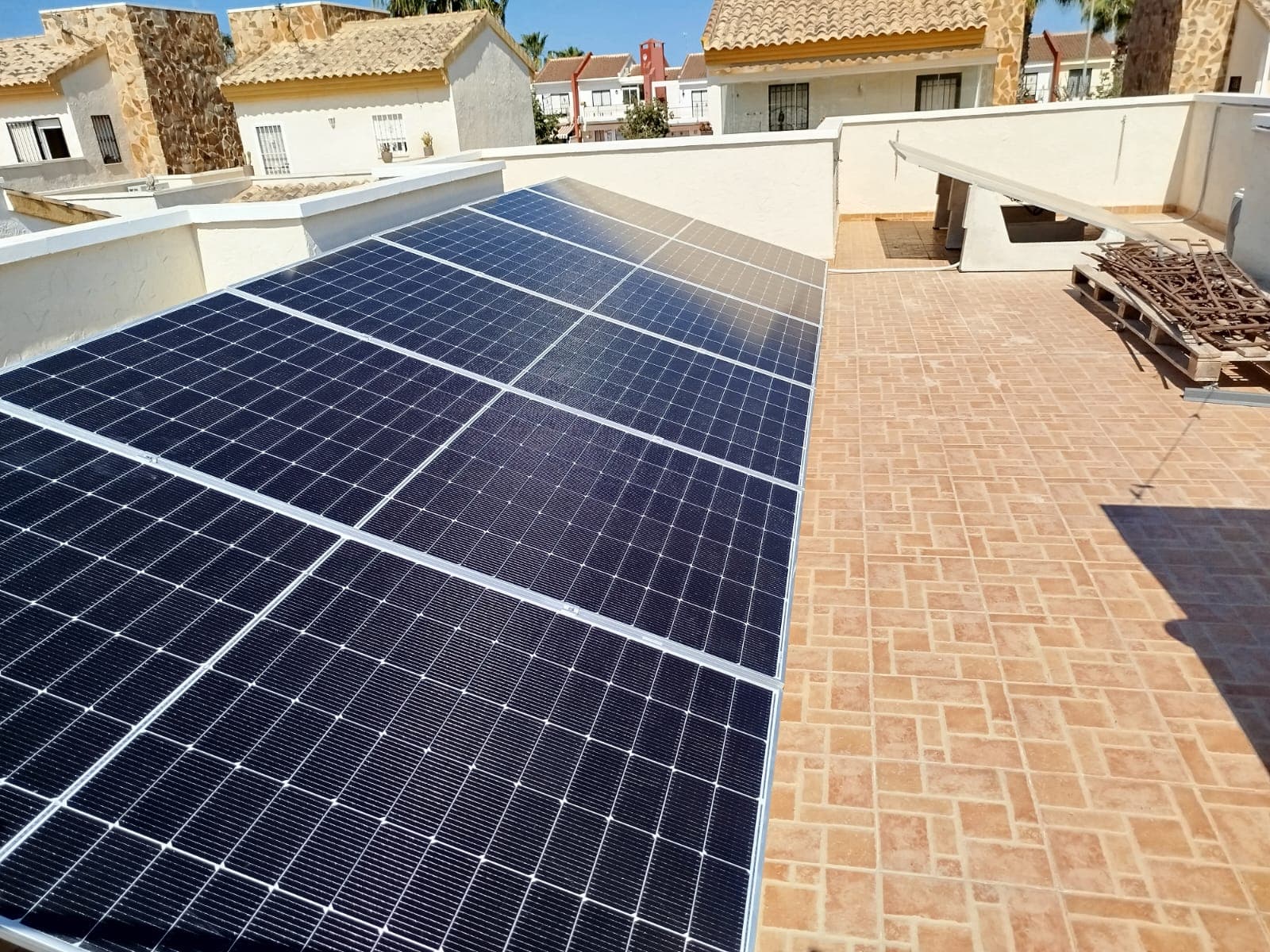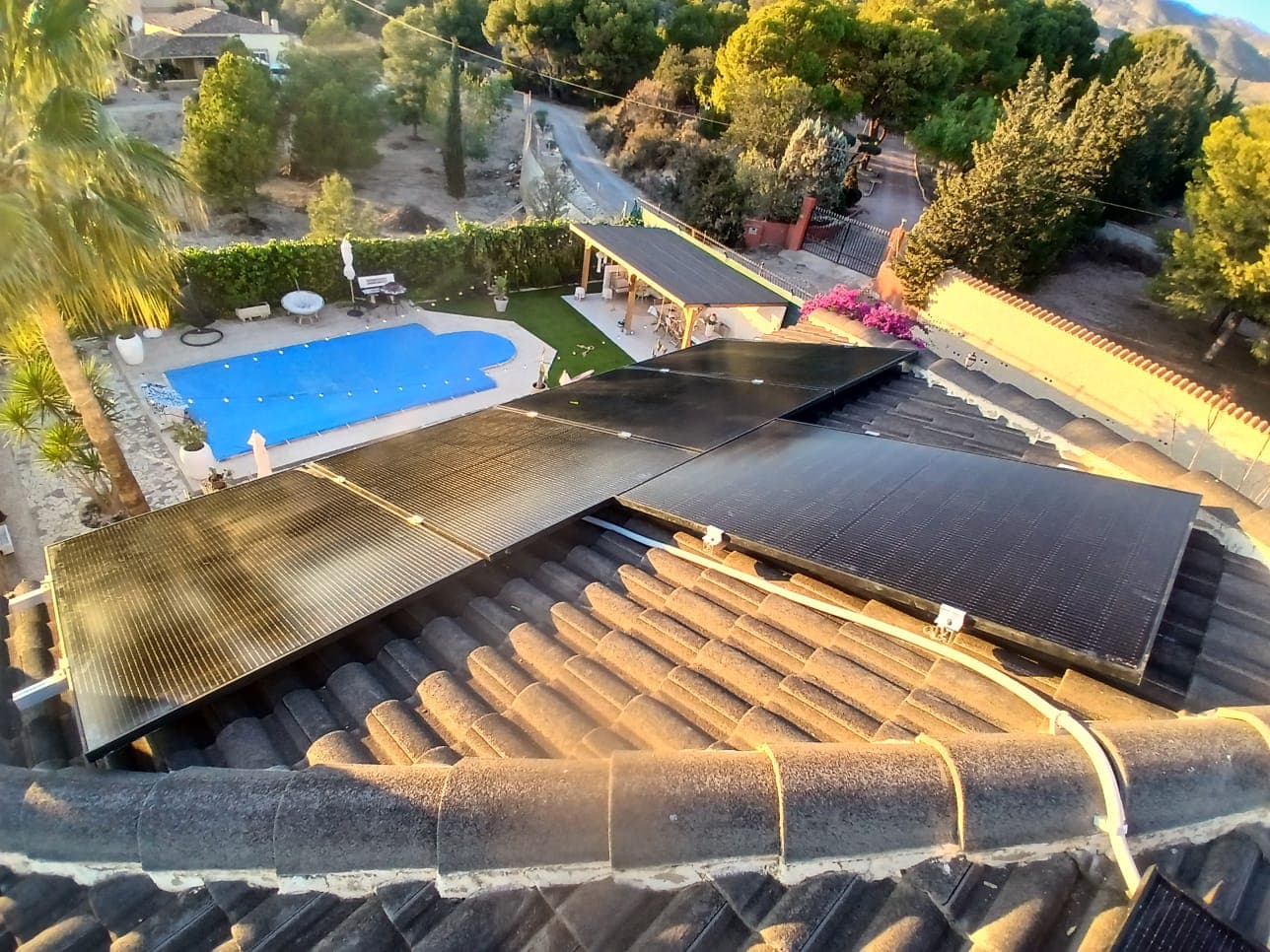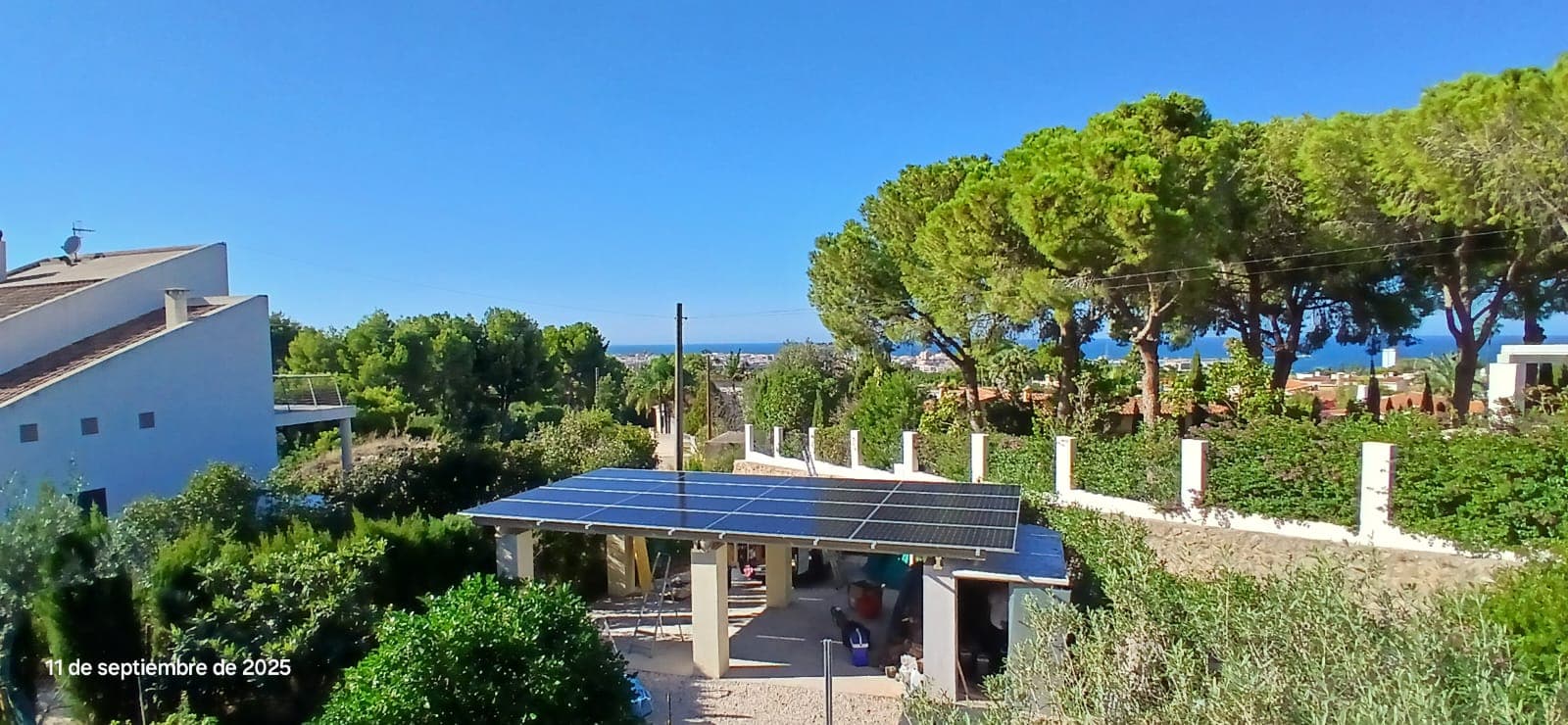
For most houses the roof is the obvious place for solar panels: it is already there, it is high, and it is usually out of the shade. A carport becomes interesting when the roof is small, shaded, awkward to reach, or you would rather not put panels on it. It also gives the car shade, which on the Costa Blanca is worth something on its own.
When a carport makes sense
- The roof is too small for the system your use needs, or partly shaded.
- The roof covering is fragile or protected, or the community does not allow panels.
- You already have a carport or pergola over the drive that gets full sun.
- You want to charge an electric car and like the idea of doing it under the panels.
An existing carport in Dénia
In Dénia we fitted panels to a carport that was already there. The structure did not need rebuilding; it was adapted so it could safely carry the panels, and the panels were connected to the house’s electrical system. Using an existing structure like that keeps the extra work small. A new carport is a different project: it is a structure in its own right, with its own foundations and its own paperwork.
What changes compared with the roof
The structure
On a roof, the building is the structure. A carport has to be designed to carry the panels and the wind that acts on them from above and below, because air can get under a carport roof in a way it cannot under panels close to a tiled roof. An existing carport has to be checked for that before panels go on.
Paperwork
In the Valencian Community, solar panels on an existing private building go through a declaración responsable to the town hall rather than a full licence, plus the electrical registration. The same regional law says solar installations on buildings, car parks, supports and pergolas do not count towards the buildable area, boundary distances or maximum height of the plot (Decreto-ley 14/2020). A new carport still has to meet the building rules and the town hall’s procedure for the structure itself, and municipalities handle that differently, so it is one of the first things we check for your address. See what documents you need.
Cost components
We do not publish prices on this page, because they depend too much on the site. The difference is in what goes into the price:
- On a roof: panels, inverter, mounting, cabling, labour, paperwork.
- On an existing carport: the same, plus adapting and checking the structure.
- On a new carport: the same, plus the structure itself, foundations, and possibly a longer cable run to the house.
A new structure is usually the largest extra item, so a carport tends to make sense when the roof cannot do the job, rather than as a first choice.
Shade and orientation
A carport can often be placed and angled for the sun, where a roof is fixed. On the other hand it stands lower, so trees, walls and neighbouring houses shade it more easily.
Maintenance
Panels on a carport are easier to see and reach than panels on a roof. Cleaning and checks still need care; panels are not for climbing on.
Charging an electric car
A carport and an EV charger go together naturally, and we install chargers as well. Be realistic about timing, though: the panels help most when the car is plugged in during the day. If you mostly charge overnight, the car runs on grid power or on a battery, not directly on the panels.
Which one for you?
If the roof can carry the system you need, it is usually the simpler choice. If it cannot, a carport is a sound second place, especially if there is already a structure over the drive. We look at both during the survey. Across the Costa Blanca, and for solar panels in Dénia in particular, ask for a quote and tell us what is on your plot. How we install is on solar panel installation.