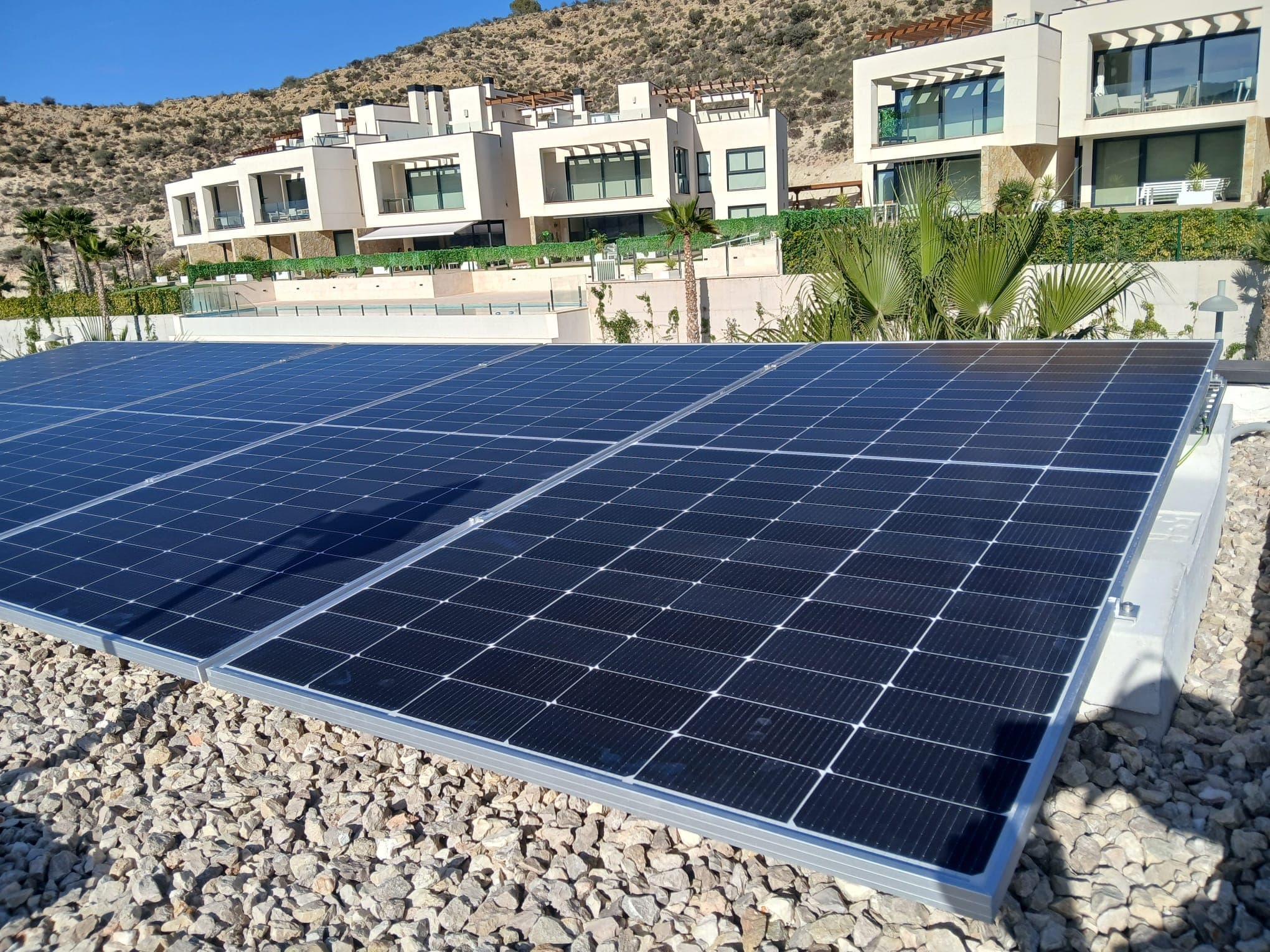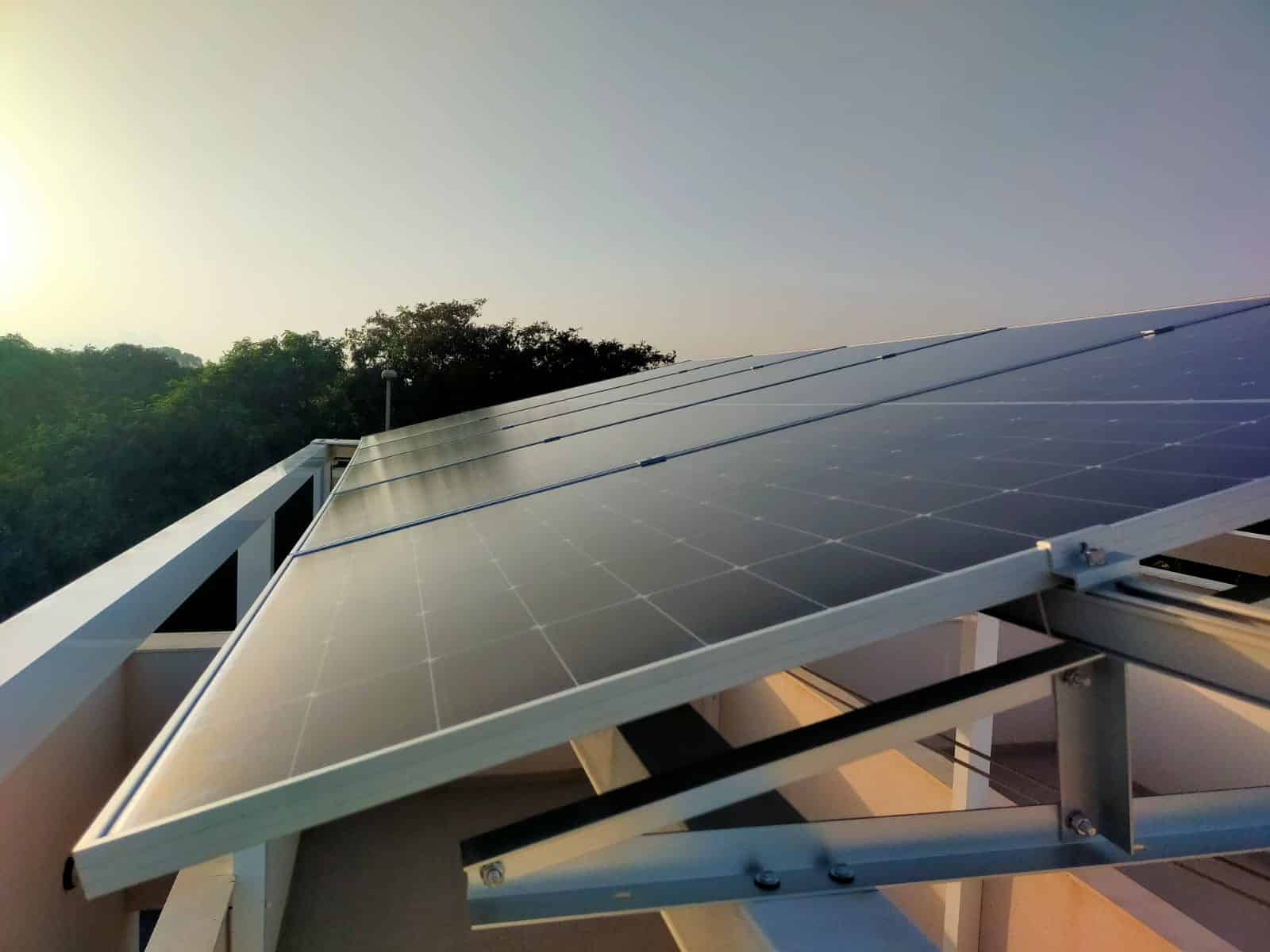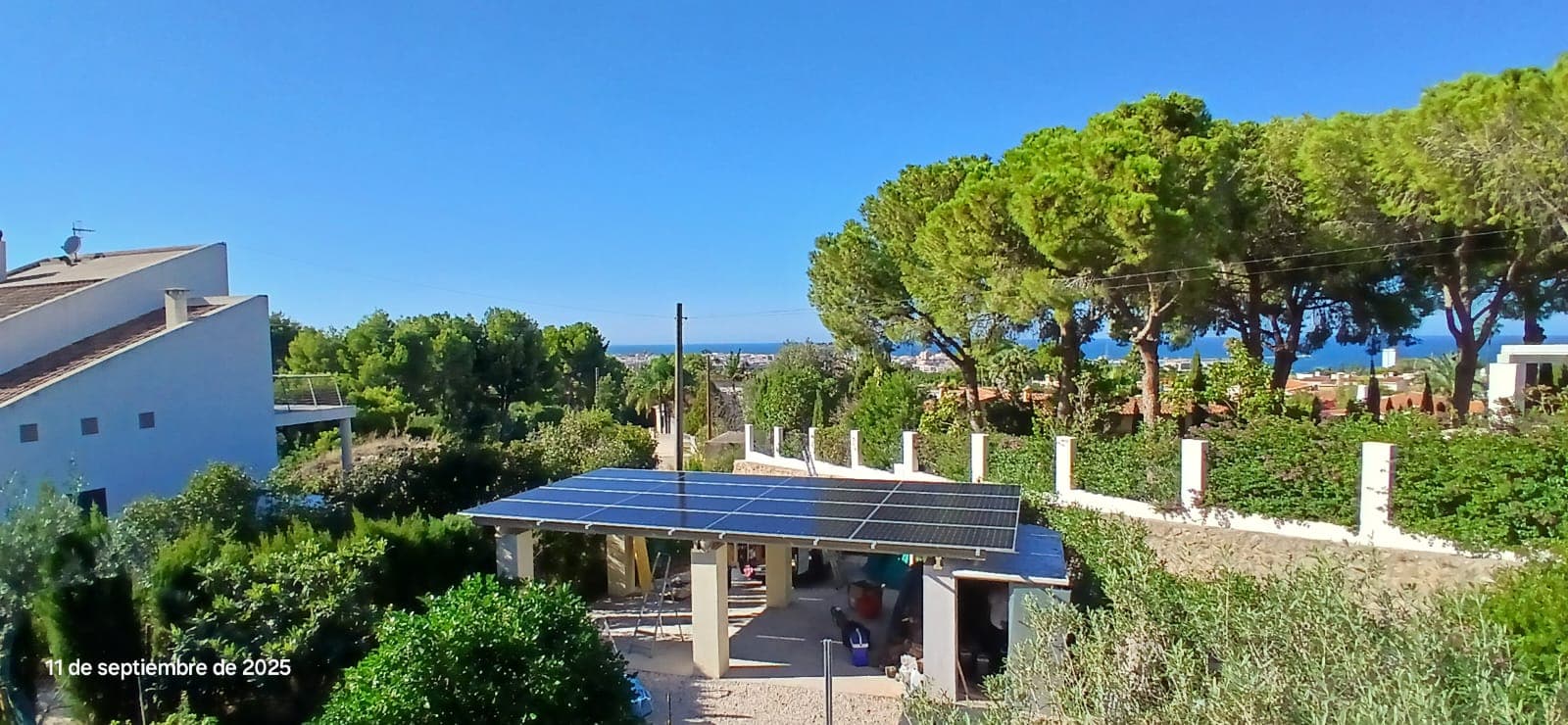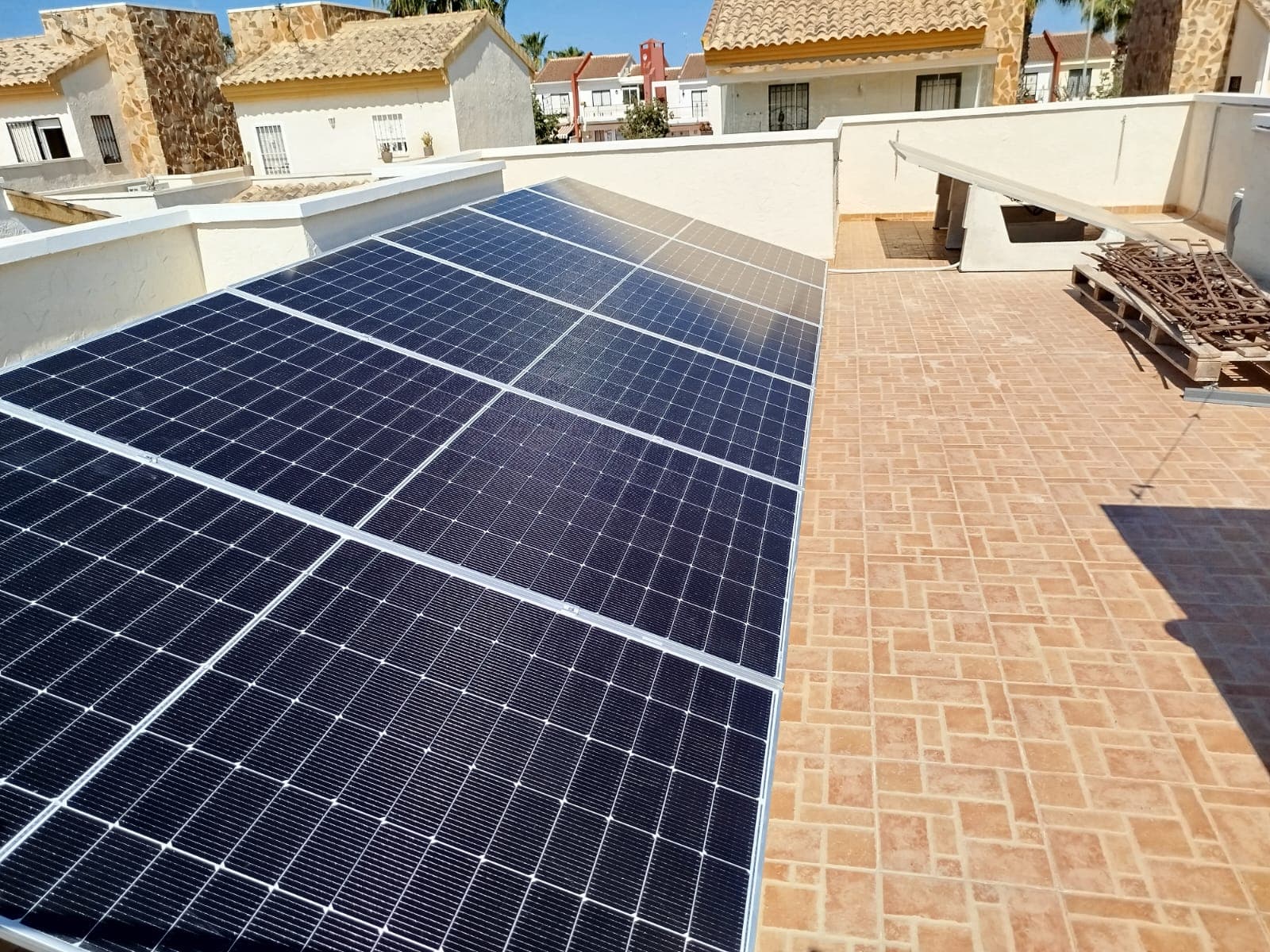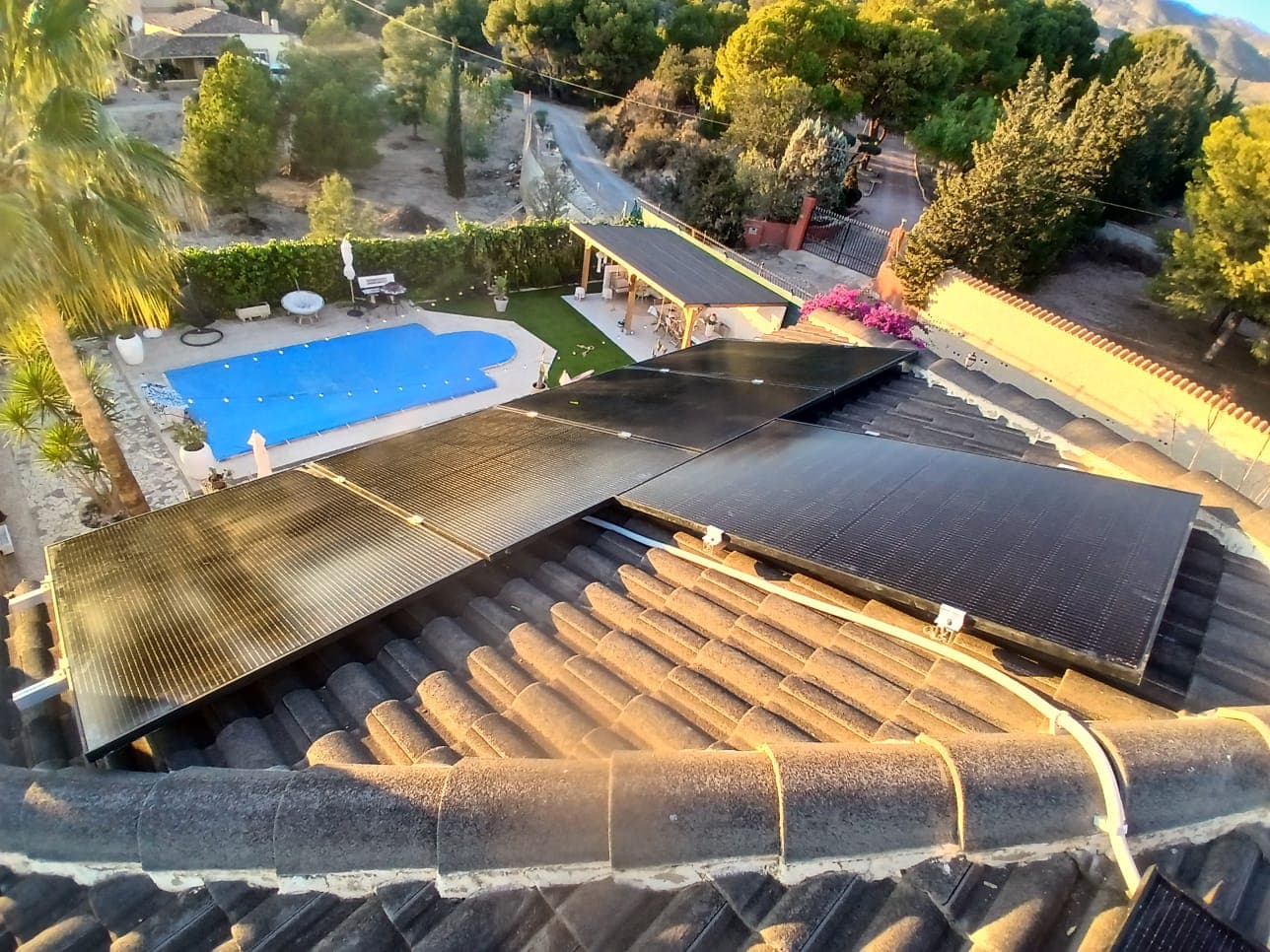
On a villa with a pool, the electricity bill is usually driven by two things: the pool pump and the air conditioning. Both run in daylight, and both run hardest in the months when solar panels produce the most. That overlap is why solar often fits these houses well. It also means the size of the system should follow those loads, not the size of the roof.
This guide is about solar panels that make electricity (photovoltaic panels). They are not the same as solar pool heating, which uses collectors to warm the water directly. This guide does not cover pool heating.
Start with what the appliances use
Every pump, air-conditioning unit and heater has a label with its electrical power in watts or kilowatts. Power multiplied by the hours it runs gives the energy it uses, in kWh:
kWh per day = power in kW × hours running per day
A pump rated at 1.1 kW that filters 8 hours a day uses about 8.8 kWh a day. That is an example to show the sum, not a figure for your pump; read your own label and timer. Variable-speed pumps use less at low speed, so for those the manufacturer’s figures or a plug-in meter tell you more than the label.
Air conditioning is harder to pin down, because units cycle on and off and use more on hot afternoons. Your bills say more than any rule of thumb: compare a summer month with a spring month and the difference is roughly what cooling costs you.
Move what you can into daylight
Solar power is worth most when you use it as it is made. On a villa that is often easy to arrange:
- set the pool pump timer to run in the middle of the day instead of at night
- let the air conditioning cool the house in the early afternoon rather than all evening
- run the dishwasher, washing machine and a heat-pump water heater on a timer around midday
- charge an electric car at home during the day if you are there
Shifting the pool pump alone can change how much of the production the house uses. It costs nothing but a change on the timer.
How we size the system
We take your consumption, ideally the hourly data from your distributor’s portal, and look at how much of it falls in daylight. Then we size the system to cover a good share of that daytime use without producing a large surplus most of the year, because surplus is worth less than power you use yourself. As an estimate from EU PVGIS data for a roof near Alicante, a system produces roughly 1,550 kWh per kWp a year when it faces south at a good angle, and roughly 1,250 to 1,300 when it faces east or west.
From there the sum is: daytime kWh you want to cover, divided by the yield per kWp for your roof, gives the kWp of panels. The number of panels follows from the power of each panel. How many solar panels do I need walks through that calculation.
A villa often has more than one place for panels: the main roof, a flat roof over the garage, a pool house or a carport. Several smaller areas can work together on one inverter or on two, as long as each is sunlit enough.
What about evenings?
Air conditioning in the evening and a pool pump that has to run at night are the loads panels cannot cover directly. That is where a battery may help, if the evening use is large and regular. Whether it pays depends on your figures; see do you need a solar battery in Spain.
Where we work
We install on villas across the Costa Blanca, from Dénia in the north to the south of the province. To see what your house needs, ask for a quote and tell us about the pool and the air conditioning. For how an installation goes, see solar panel installation.