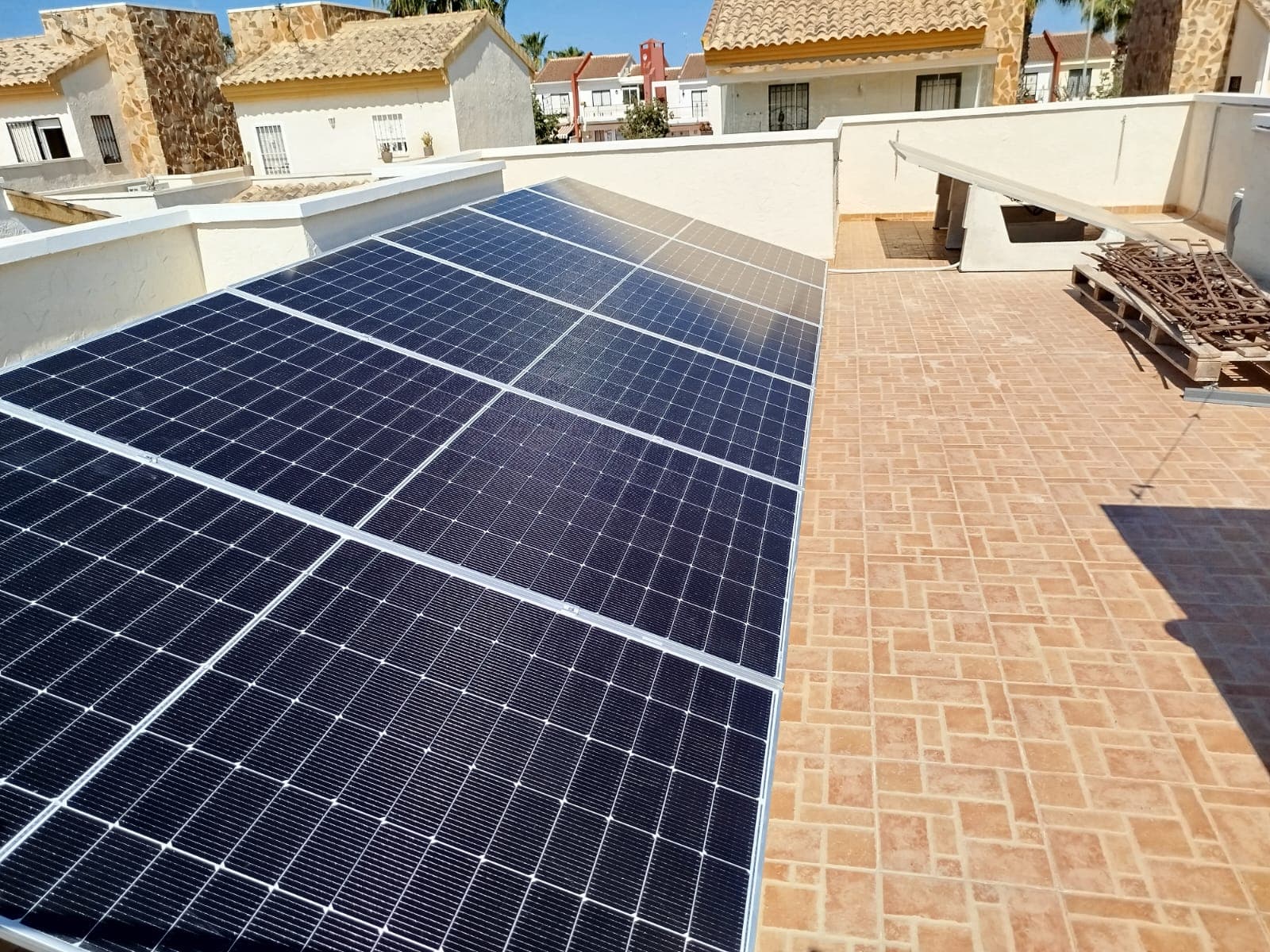
It depends on your electricity use, not on the size of your house or your roof. A small house with a pool and air conditioning can need more panels than a large one that is empty half the year. This guide shows how to get from your bill to a number, and where that number has to be checked against the roof.
Step 1: how much electricity do you use?
Your bills show consumption in kWh per billing period. Add up twelve months to get your annual use. Better still, download your consumption from your distributor’s online portal: it shows use per hour, which tells us how much falls in daylight.
If you have just bought the house, or the bills belong to a previous owner, tell us what you plan to run. A pool, air conditioning, an electric car or a heat pump all change the picture.
Step 2: how much of it can solar cover?
Panels produce in daylight. What you use while they produce is power you no longer buy; what you use at night still comes from the grid, unless you add a battery. So the useful target is usually your daytime use plus a margin, not your total use.
Covering all of your annual use on paper is possible, but in practice much of that production would be exported in the middle of the day and imported again at night. Exported power is worth less to you than power you use yourself, which we explain in selling excess solar electricity in Spain.
Step 3: from kWh to kWp
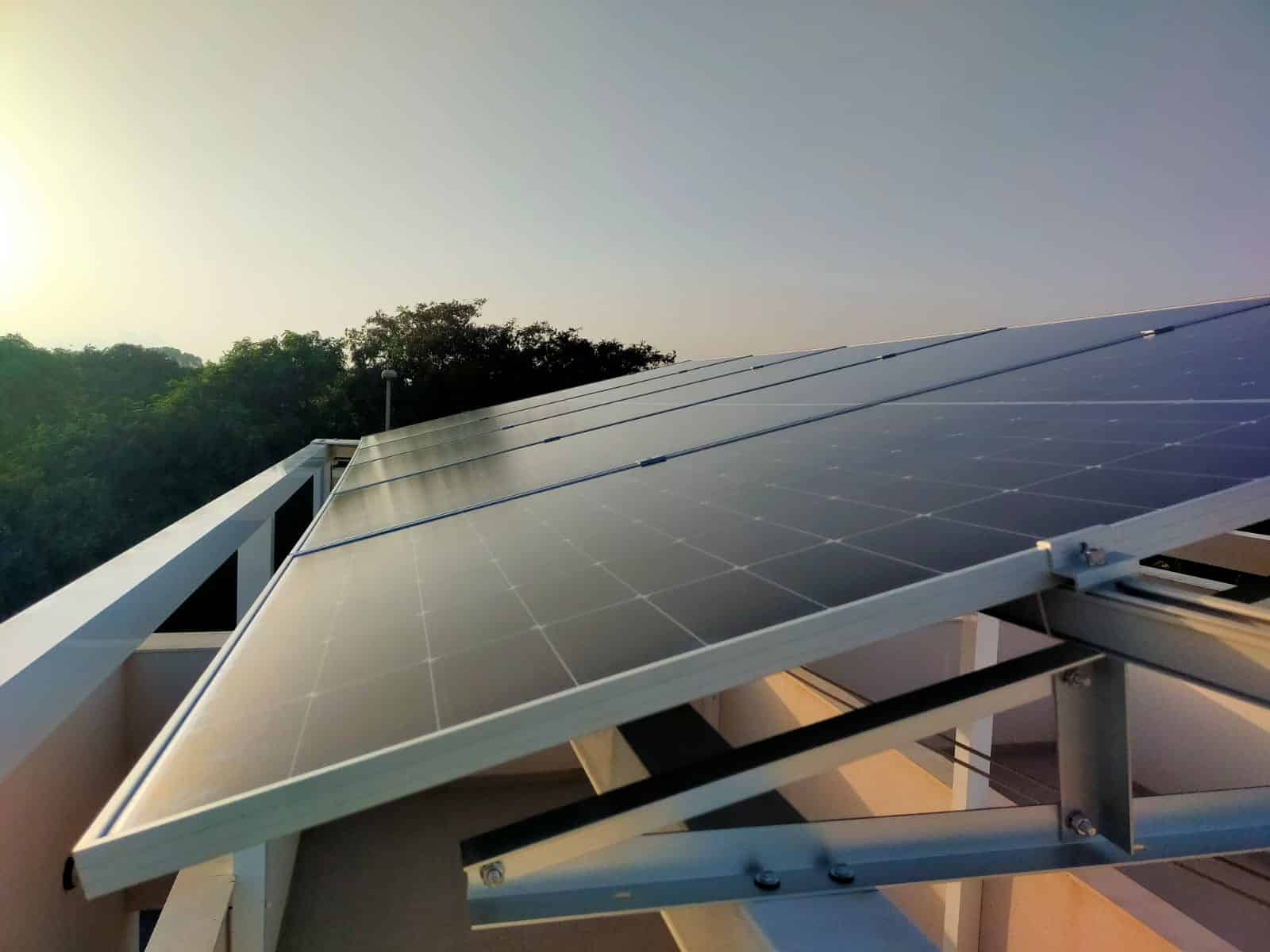
A kWp (kilowatt peak) is the rated power of panels. How many kWh one kWp produces in a year depends on where the roof faces, its angle and any shade. As an estimate from EU PVGIS data for a roof near Alicante, a system produces roughly 1,550 kWh per kWp a year when it faces south at a good angle, and roughly 1,250 to 1,300 when it faces east or west.
The sum is:
kWp needed = kWh you want to cover per year ÷ kWh per kWp per year for your roof
Step 4: from kWp to a number of panels
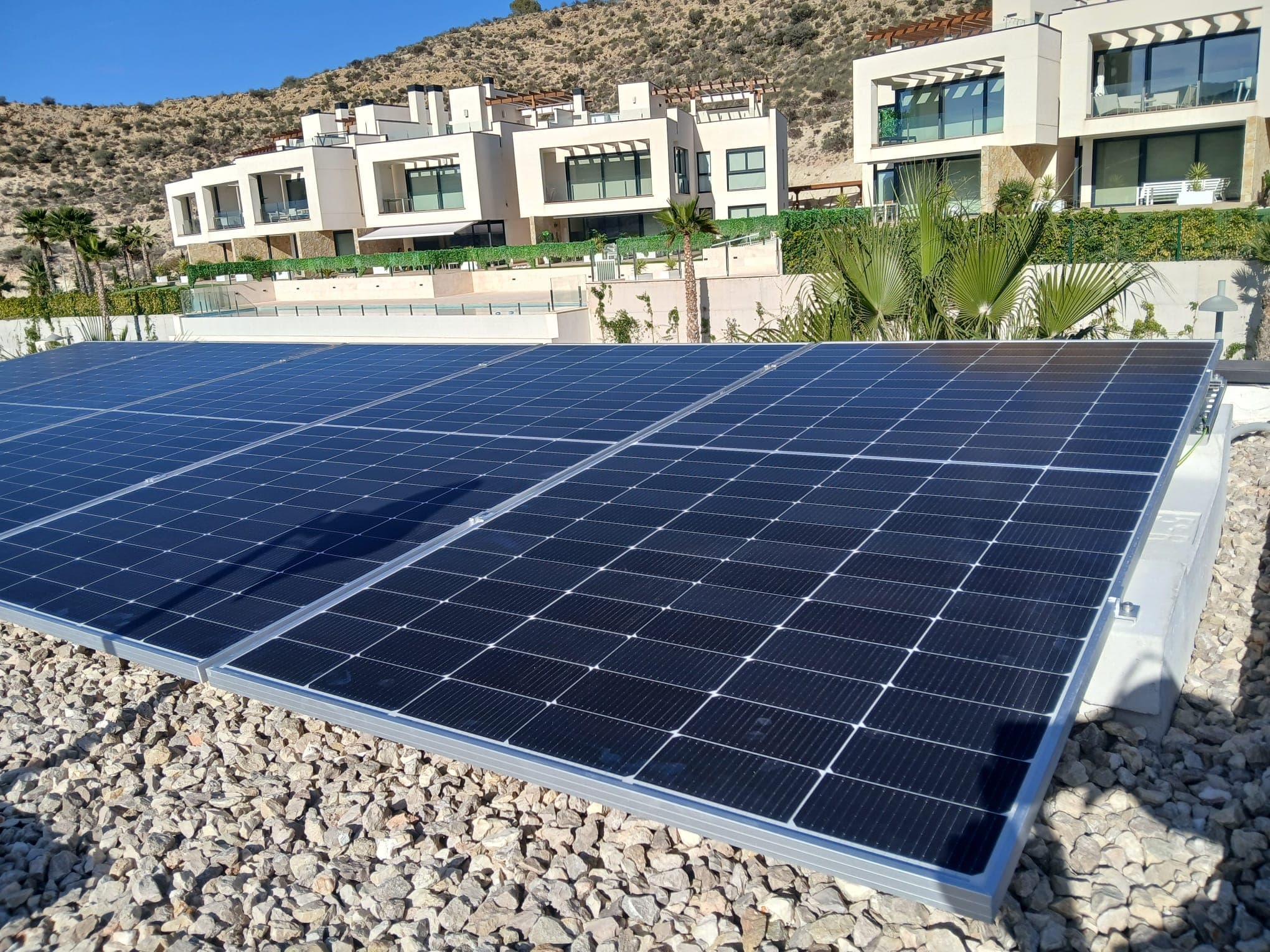
Divide the kWp by the power of one panel. Panels fitted to homes today are commonly rated somewhere around 400 to 500 watts each, so a 4 kWp system is roughly eight to ten panels. The exact model decides the final count, and we tell you which panels we propose and why.
A worked example
This is an example to show the sum, not a figure for your house.
- A household uses 6,000 kWh a year. The hourly data shows about half of it in daylight: 3,000 kWh.
- The roof faces south-west with no shade, so we assume 1,500 kWh per kWp per year from the PVGIS range.
- 3,000 ÷ 1,500 = 2 kWp to cover the daytime use as it stands. If the owners move the pool pump and laundry into daylight, daytime use rises and a larger system becomes useful.
- With panels of 450 watts, 2 kWp is four to five panels; 4 kWp would be about nine.
The step from the last line to a design is where the roof comes in.
Step 5: does it fit on the roof?
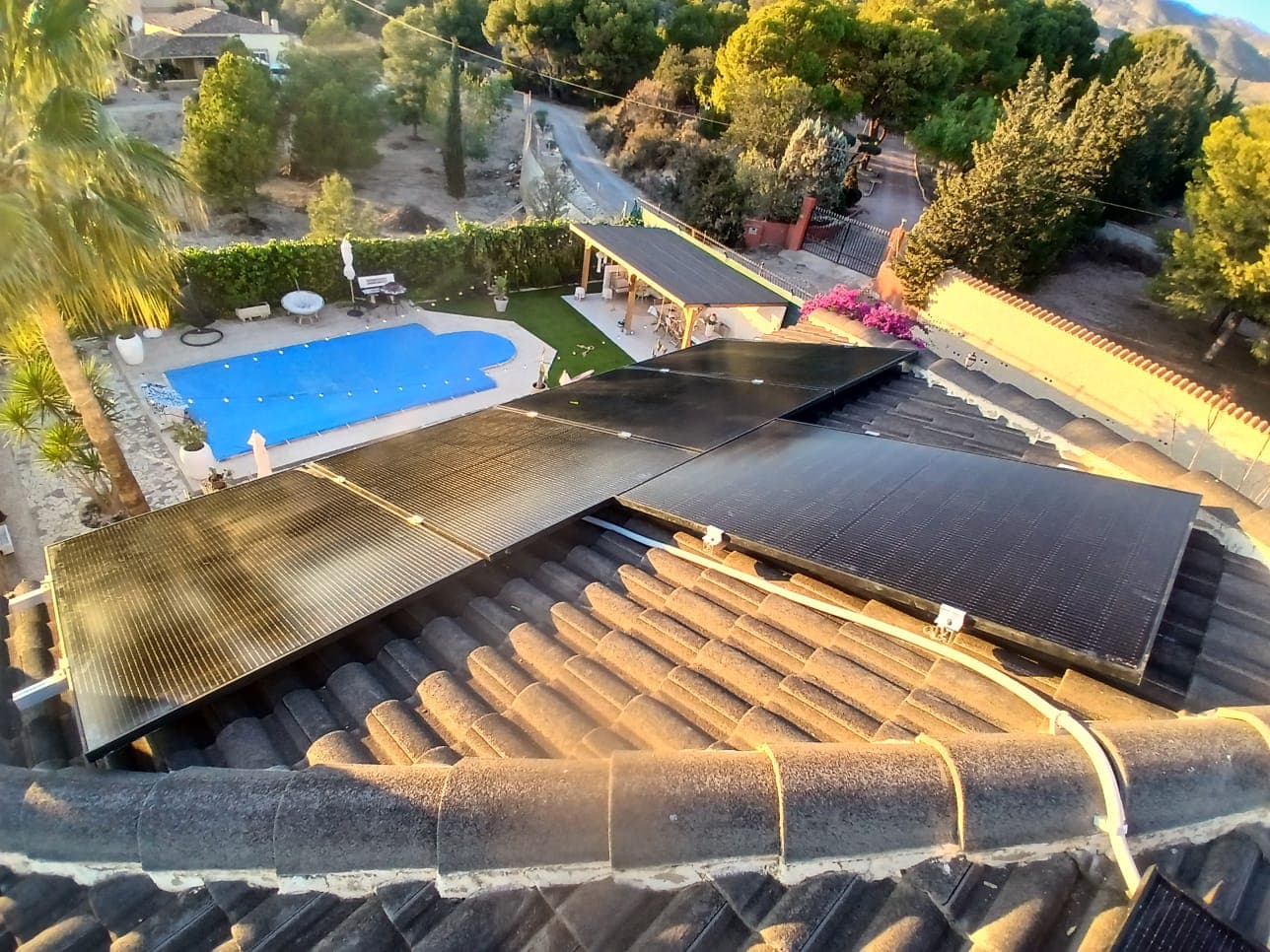
The number of panels your use calls for and the number your roof can take are two different questions. Roof area, shape, obstacles, shade and the structure all limit what fits. How much roof space do you need covers the space side, and is your roof suitable the condition of the roof.
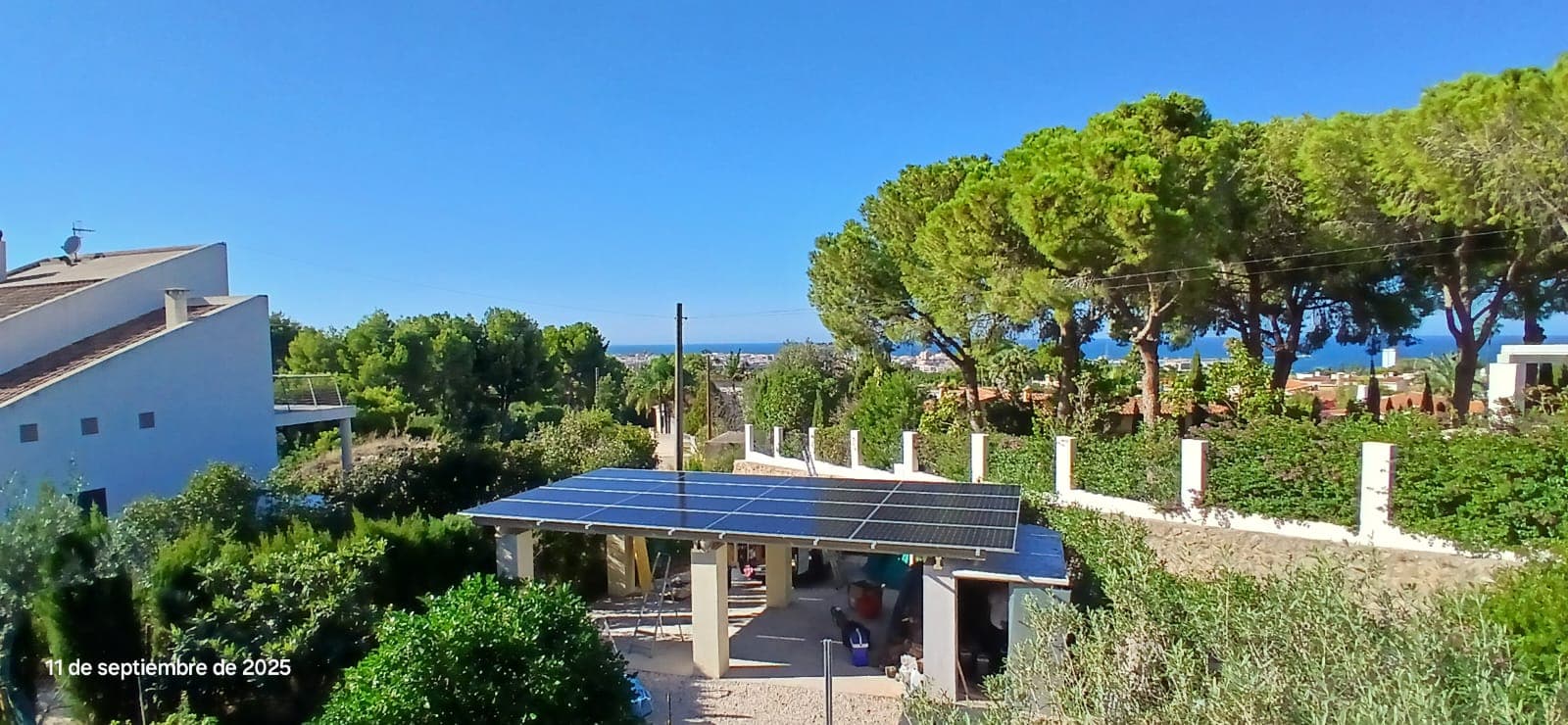
When one roof is not enough, other surfaces can help. One customer in Algorfa split a system over two structures:
“We are very happy with the installation of our 14 solar panels: 10 on the flat roof of our house and 4 on our garden shed.”
Brigitte D., Algorfa, Google review, translated from Dutch
Leave room to grow
If you expect to use more power later, an electric car or a heat pump for example, it is worth choosing an inverter with headroom. One customer wrote that we planned for three more panels to be added to the same inverter later. That costs little at the start and saves replacing the inverter later.
For a pool and air conditioning in particular, see solar panels for villas with pools and air conditioning. When you want a real figure for your house, ask for a quote; we survey the roof and work from your consumption. How we install is on solar panel installation.