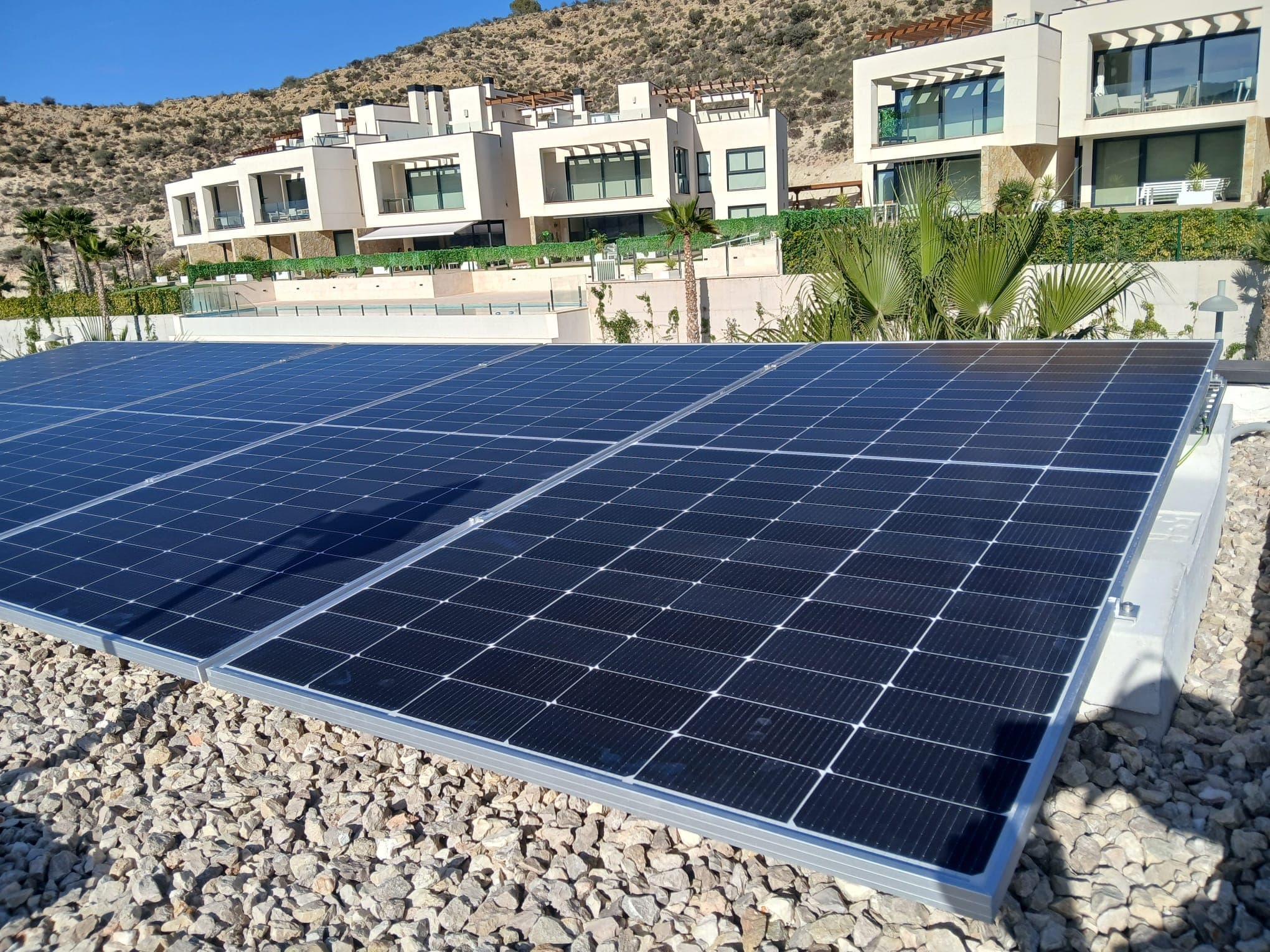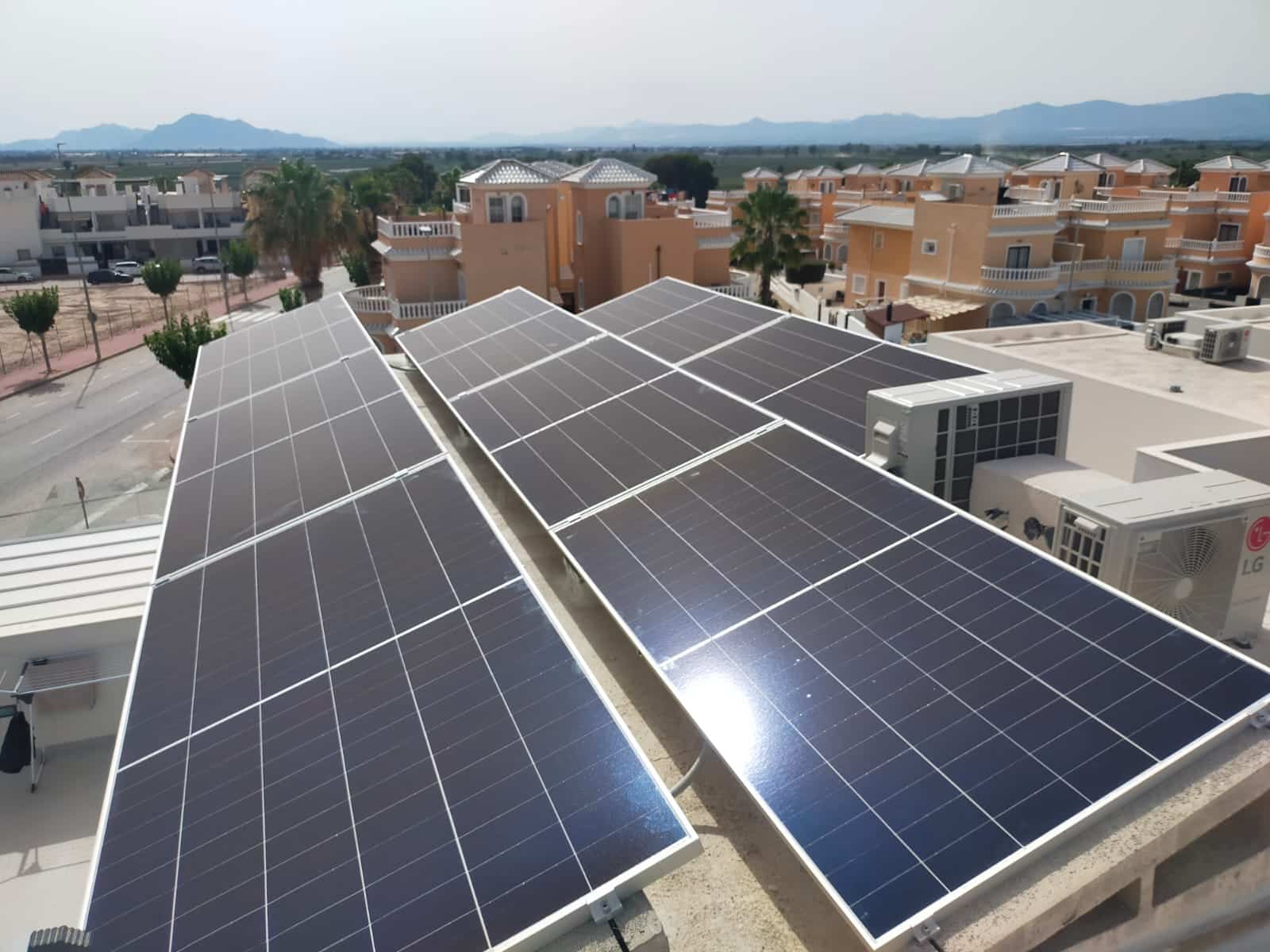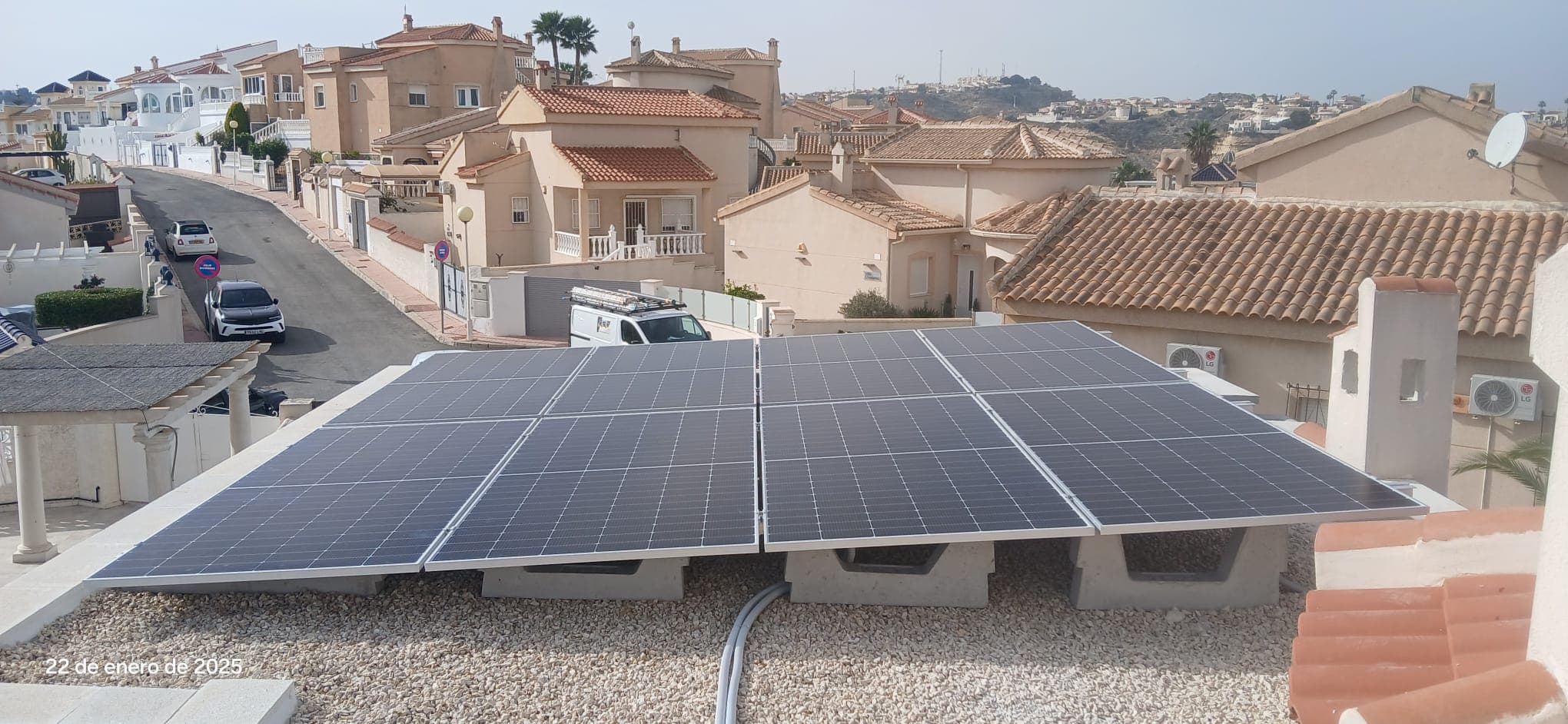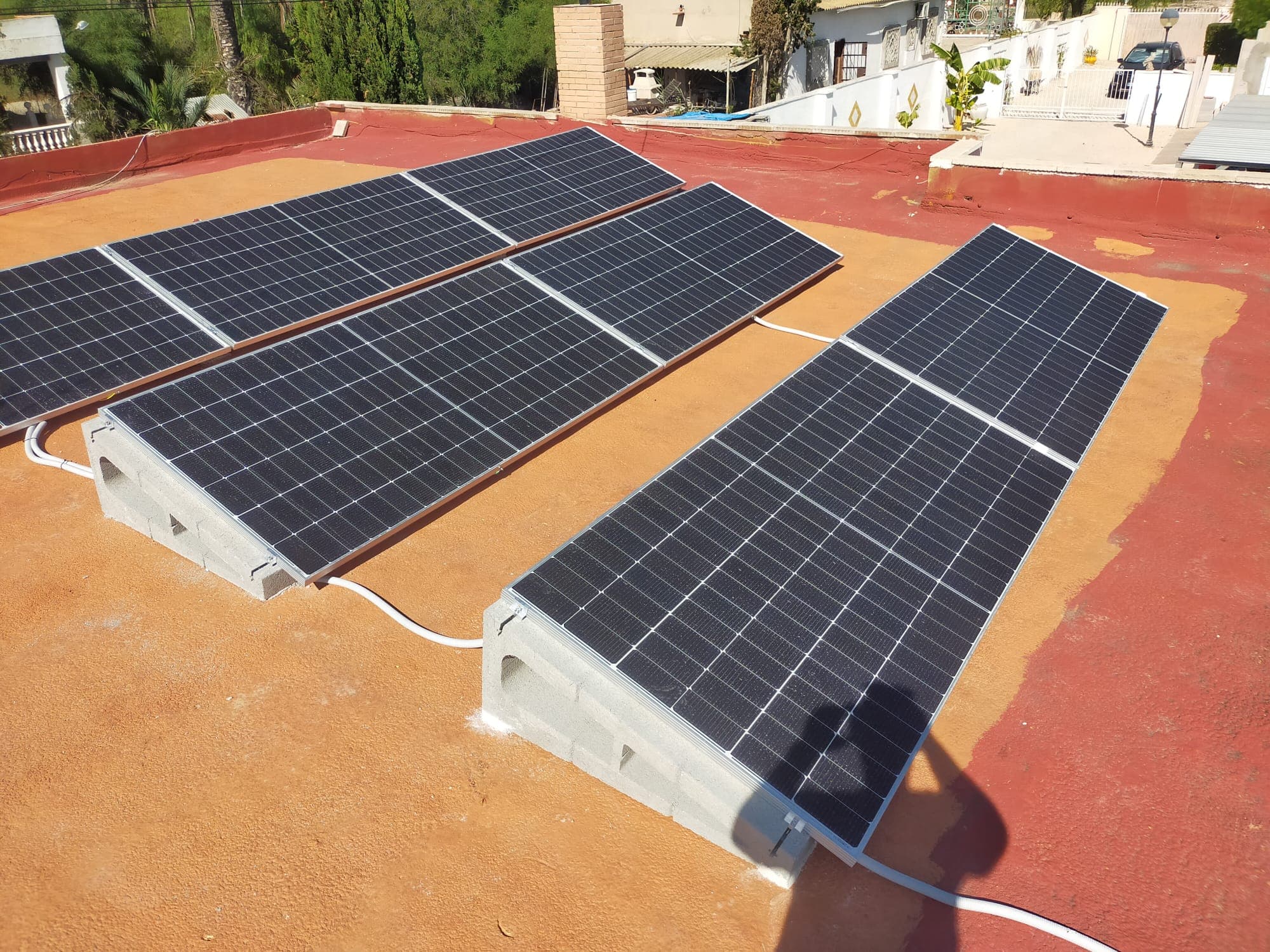
When your panels produce more than the house uses, the surplus flows to the grid. For almost every home in Spain that surplus is not sold for cash. It is credited against your electricity bill under a scheme called simplified compensation (compensación simplificada de excedentes), set out in Real Decreto 244/2019. Knowing how that credit works explains why power you use yourself is worth more than power you export.
For how the system itself works, see how solar self-consumption works in Spain.
Self-use versus export
Every kWh the panels produce ends up in one of two places:
- Used in the house as it is produced. You do not buy that kWh from the grid, so you save the full price you would have paid for it, including the grid charges and taxes on it.
- Exported to the grid. It is recorded by the meter and credited at the price for surplus energy, which is lower.
The difference between those two values is why the size of a system should follow your daytime use.
Who qualifies for simplified compensation
Your system qualifies if:
- it uses a renewable source, such as solar
- its installed power is no more than 100 kW (for solar, the inverter’s power)
- you have a compensation agreement with your electricity retailer
- the installation receives no other special payment scheme
A normal home system meets these easily. The retailer sets up the agreement once the installation has been registered.
How the credit is worked out
Each billing period, which by law is at most a month:
1. The meter records, hour by hour, how much you imported and how much you exported. 2. The exported energy is valued at the price for surplus. 3. That value is deducted from the cost of the energy you imported in the same period, before taxes. 4. Taxes are then calculated on the reduced amount.
The credit can at most cancel out the value of the energy you imported that month. It cannot turn the energy part of the bill negative, and the law does not carry any leftover credit into the next month. It does not reduce the power term or the meter rental either. Which parts of the bill stay is explained in can solar panels eliminate your electricity bill.
The price you get for surplus
It depends on your contract:
- Regulated tariff (PVPC) with a reference retailer: the surplus is valued at the average hourly market price minus the cost of deviations, a formula set in the regulation. Red Eléctrica publishes the resulting prices. It follows the wholesale market, so it changes every hour and is often low around midday when there is a lot of solar power on the grid.
- Free-market contract: the surplus is valued at the price agreed with your retailer, as stated in your contract. Offers differ, so compare them.
A worked example
This example uses made-up prices to show the mechanism. Look at your own contract for yours.
- In a sunny month you import 200 kWh from the grid and export 300 kWh.
- Your contract values imported energy at price A per kWh and surplus at price B, and B is lower than A.
- Energy cost before compensation: 200 × A.
- Value of the surplus: 300 × B.
- If 300 × B is less than 200 × A, the whole surplus value is deducted. If it is more, the deduction stops at 200 × A and the rest is lost that month.
That last line is why a large surplus in summer can go partly unused, and why a system much larger than your daytime use adds less than it seems.
“Virtual batteries” and solar wallets
Some retailers offer a virtual battery or solar wallet: surplus value that exceeds the monthly limit is kept as a balance and used on later bills, sometimes against other items too. This is a commercial product of that retailer, not a right under the regulation. Read the conditions: some charge a monthly fee, some limit what the balance can be used for, and the balance may be lost if you switch retailer. A virtual battery is not a physical battery and gives no power during a power cut.
Can I be paid in cash instead?
Only by choosing the third type of self-consumption, selling surplus as a producer. That means registering as a producer, dealing with the market and tax obligations, and giving up simplified compensation. For a home it is rarely worth it.
What to check on your contract
- Is it PVPC or free market?
- What price does it give for surplus, and is it fixed or tied to the market?
- Is there a virtual battery, what does it cost, and what can the balance be used for?
- Is there a fee for the compensation service?
We help customers set up the compensation agreement, and sometimes switch retailer when another offer suits a solar home better. Whether solar is worth it overall is worked out in are solar panels worth it in Spain. For a quote that includes the export side, ask us.