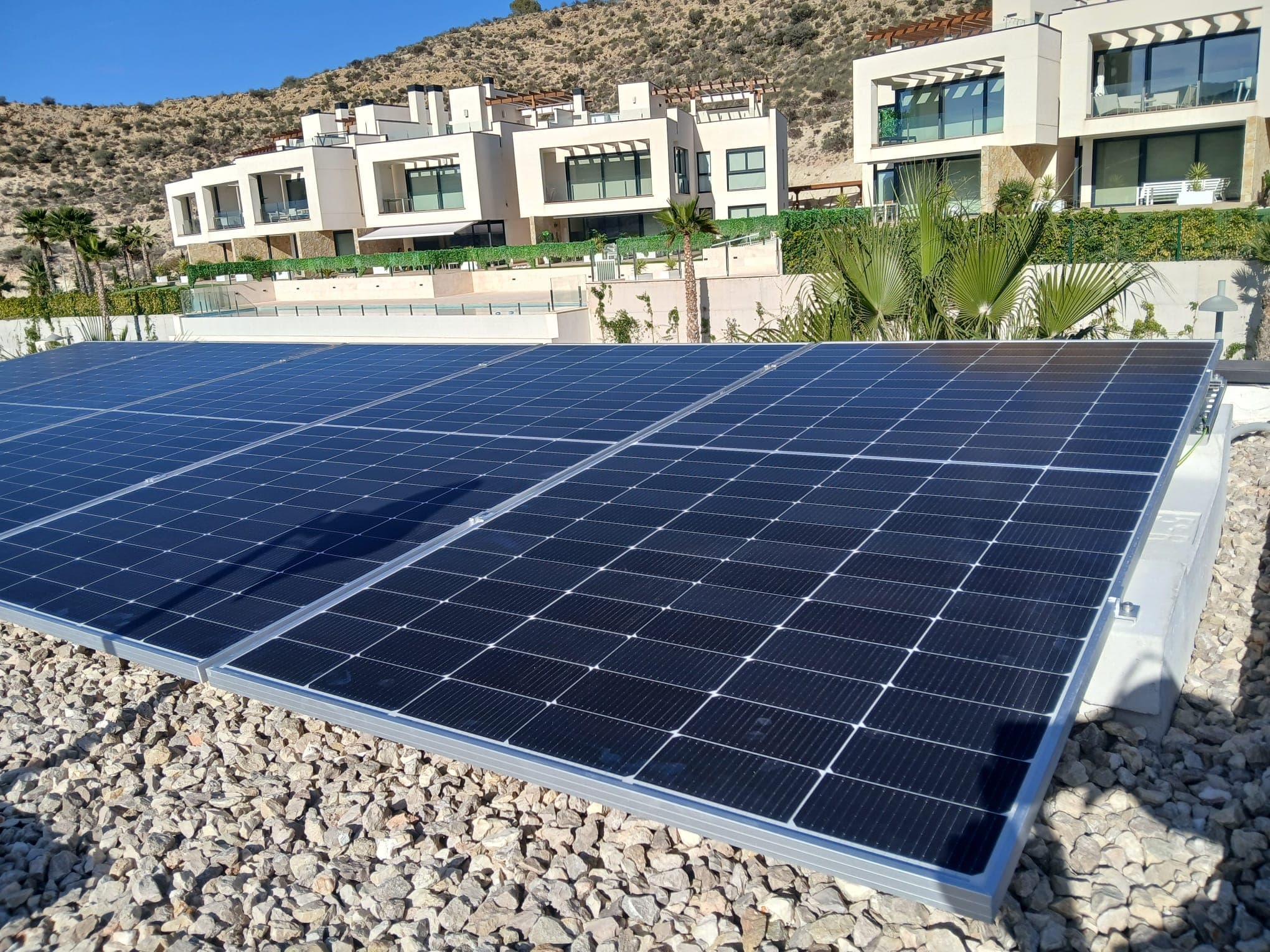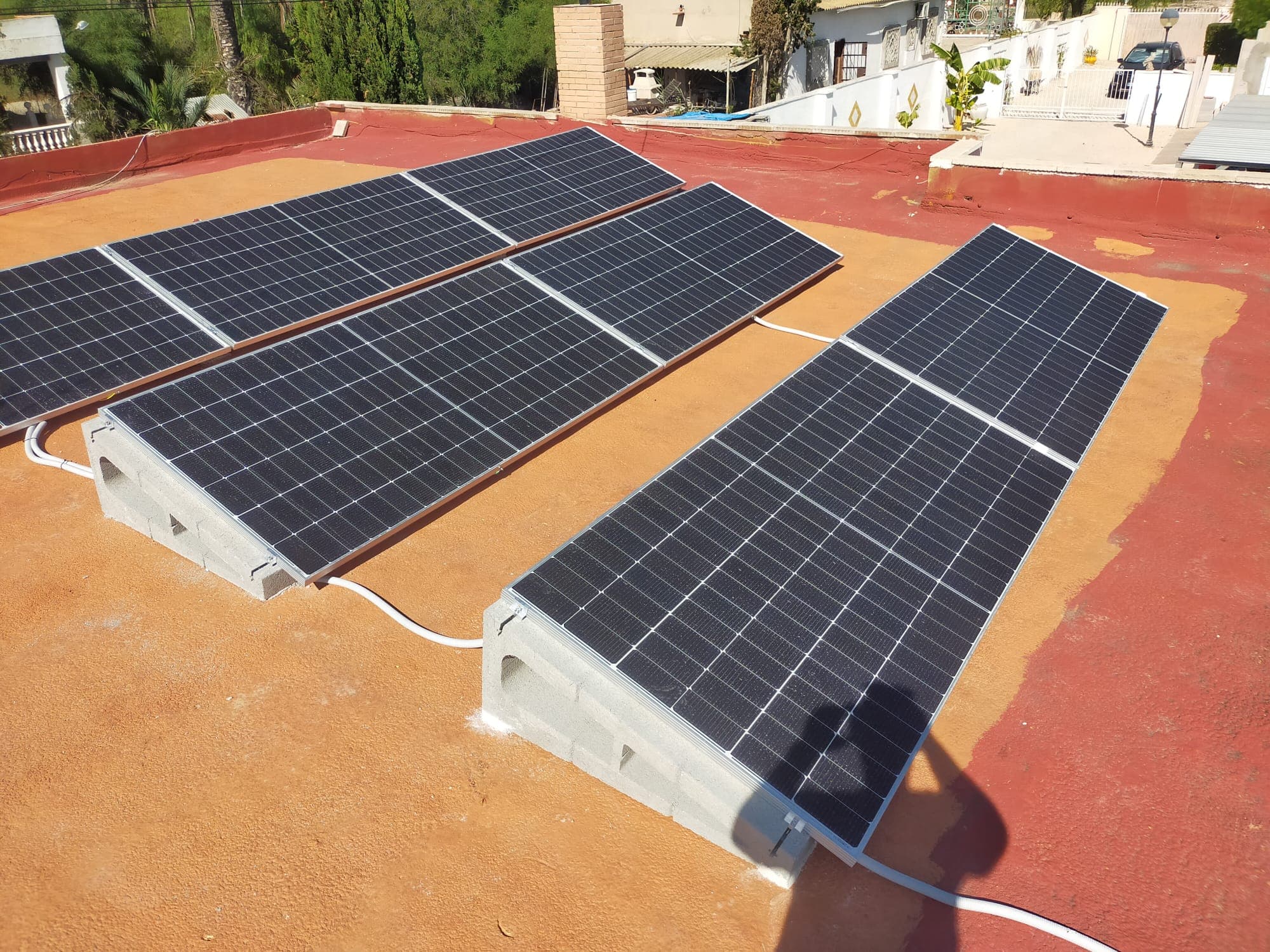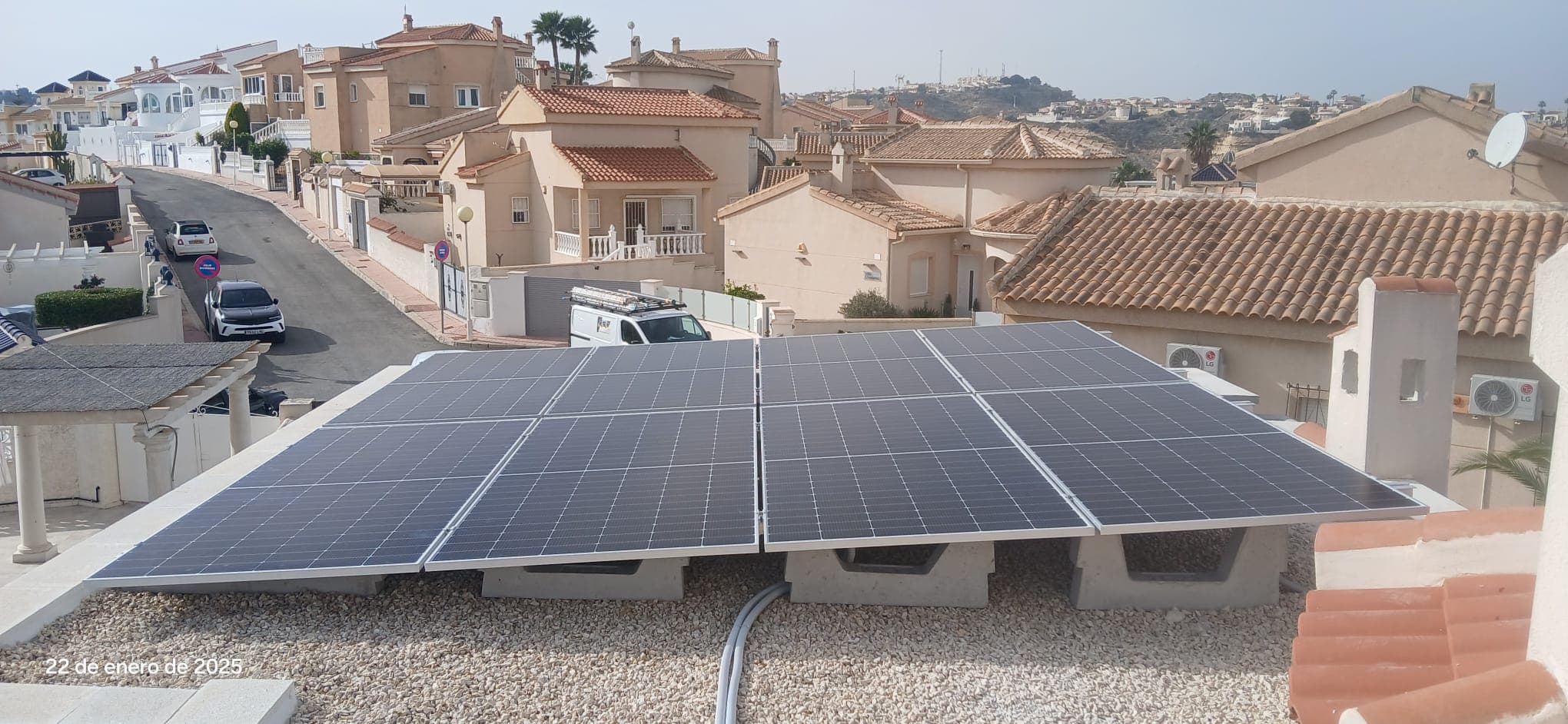
Solar panels can cut the energy part of your electricity bill a long way, and in sunny months that part can come close to nothing. The bill as a whole does not normally reach zero, because some charges do not depend on how much energy you buy. This guide goes through a Spanish household bill line by line, so you know what to expect and can check any promise you are given.
What is on a household bill
Most homes in Spain are on the 2.0TD access tariff, for contracts up to 15 kW. The bill is built from these parts:
- Power term (término de potencia): a charge for the kW you have contracted, per day, whether you use electricity or not.
- Energy term (término de energía): the kWh you imported from the grid, priced by time period.
- Surplus compensation: a deduction for the solar power you exported, if you have a compensation agreement.
- Electricity tax (Impuesto Especial sobre la Electricidad): a percentage of the power and energy amounts, currently 5.11269632 %, with a small minimum per MWh.
- Meter rental: a fixed monthly amount if you rent the meter from the distributor, €0.81 a month for a standard single-phase meter.
- Other items: on regulated-tariff (PVPC) bills, a small daily amount towards financing the bono social. Free-market bills may show it or include it in the price.
- IVA: on the total, currently 21 % for households.
Tax rates change from time to time. In spring 2026, for example, IVA on electricity and the electricity tax were cut temporarily. The figures above are those in force in October 2026.
What solar changes
- Energy term: yes. Every kWh you use from your own panels is a kWh you do not import.
- Surplus compensation: yes. Exported power is deducted from the energy cost, up to the value of the energy you imported that month. See selling excess solar electricity.
- Electricity tax and IVA: partly. They are percentages, so they fall when the amount they are calculated on falls.
- Power term: no. It depends on the kW you contract, not the kWh you use.
- Meter rental: no.
Time of day matters
On 2.0TD, weekday energy is priced in three periods:
- Peak (punta): 10:00 to 14:00 and 18:00 to 22:00
- Standard (llano): 08:00 to 10:00, 14:00 to 18:00 and 22:00 to 24:00
- Off-peak (valle): 00:00 to 08:00, and all day at weekends and on national holidays
Solar covers much of the late-morning peak and the afternoon. The evening peak, when cooking and lights come on and the sun is going down, is when the panels help least. That is where shifting use to the daytime, or a battery, makes a difference. See do you need a solar battery.
So, can the bill reach zero?
With simplified compensation, the best case in a sunny month is that the energy part is fully offset. What remains is the power term, the meter rental, any other fixed items, and the taxes on those. On a PVPC contract, strictly, the credit offsets the energy cost itself and not the grid charges included in the energy line, so a little more remains.
Some retailers offer a virtual battery that carries surplus value forward and can be used against other items too. That can bring a bill lower, on their terms and sometimes for a fee. It is a commercial product, not a rule.
Before and after, line by line
The table below shows which lines move. We have not put euro amounts in it, because they depend on your contract and your use; a redacted real bill from before and after an installation will replace it when we have one we may publish.
What you can do
- Check your contracted power. If it is higher than you need, lowering it cuts the power term, with or without solar.
- Use power in daylight. Timers on the pool pump, dishwasher and washing machine.
- Choose a contract that suits a solar home, with a fair surplus price. We help customers with this.
- Size the system to your daytime use, not to a zero-bill target. Beyond the monthly limit, extra surplus earns nothing.
For the full sums, read are solar panels worth it in Spain.