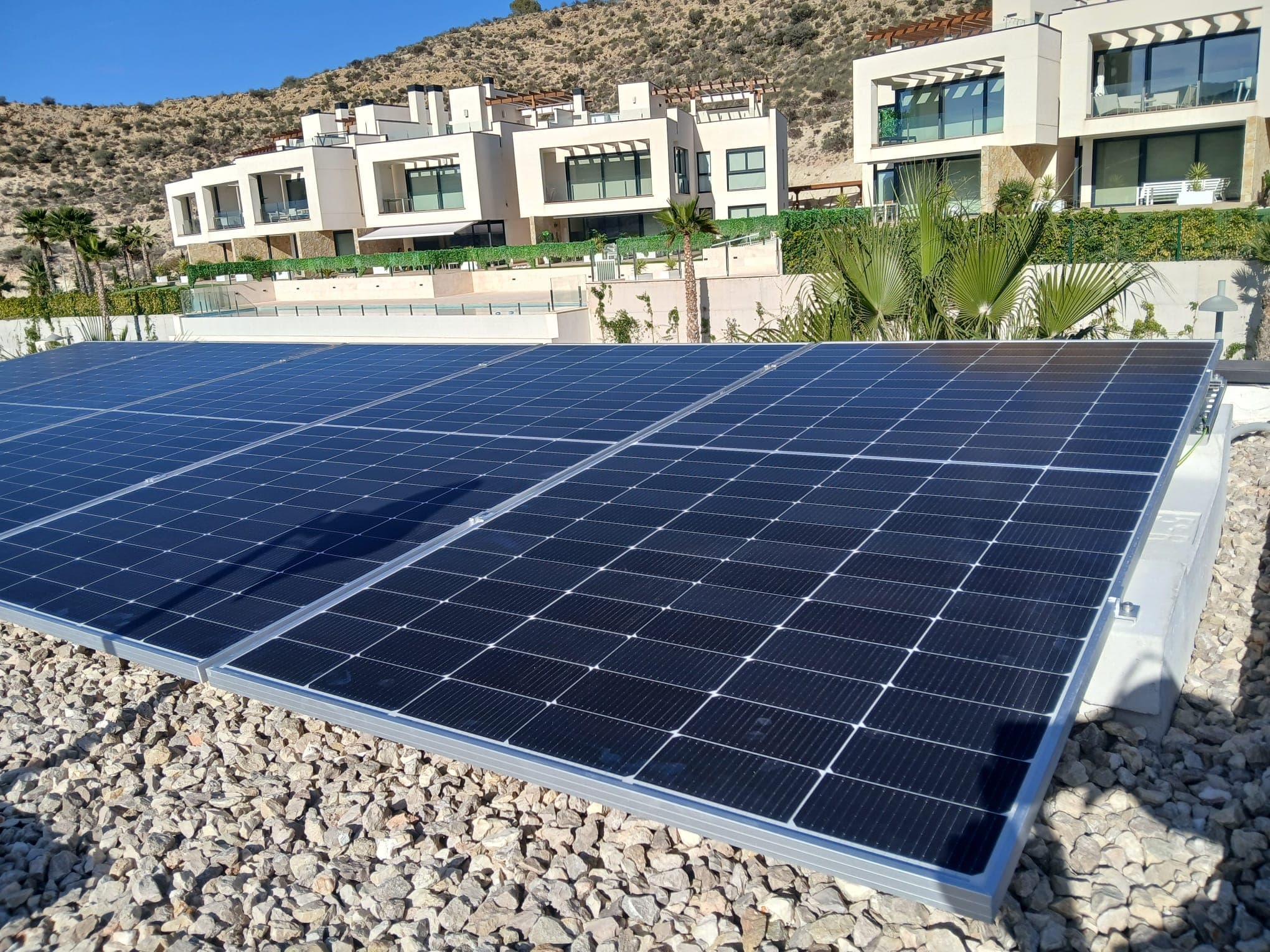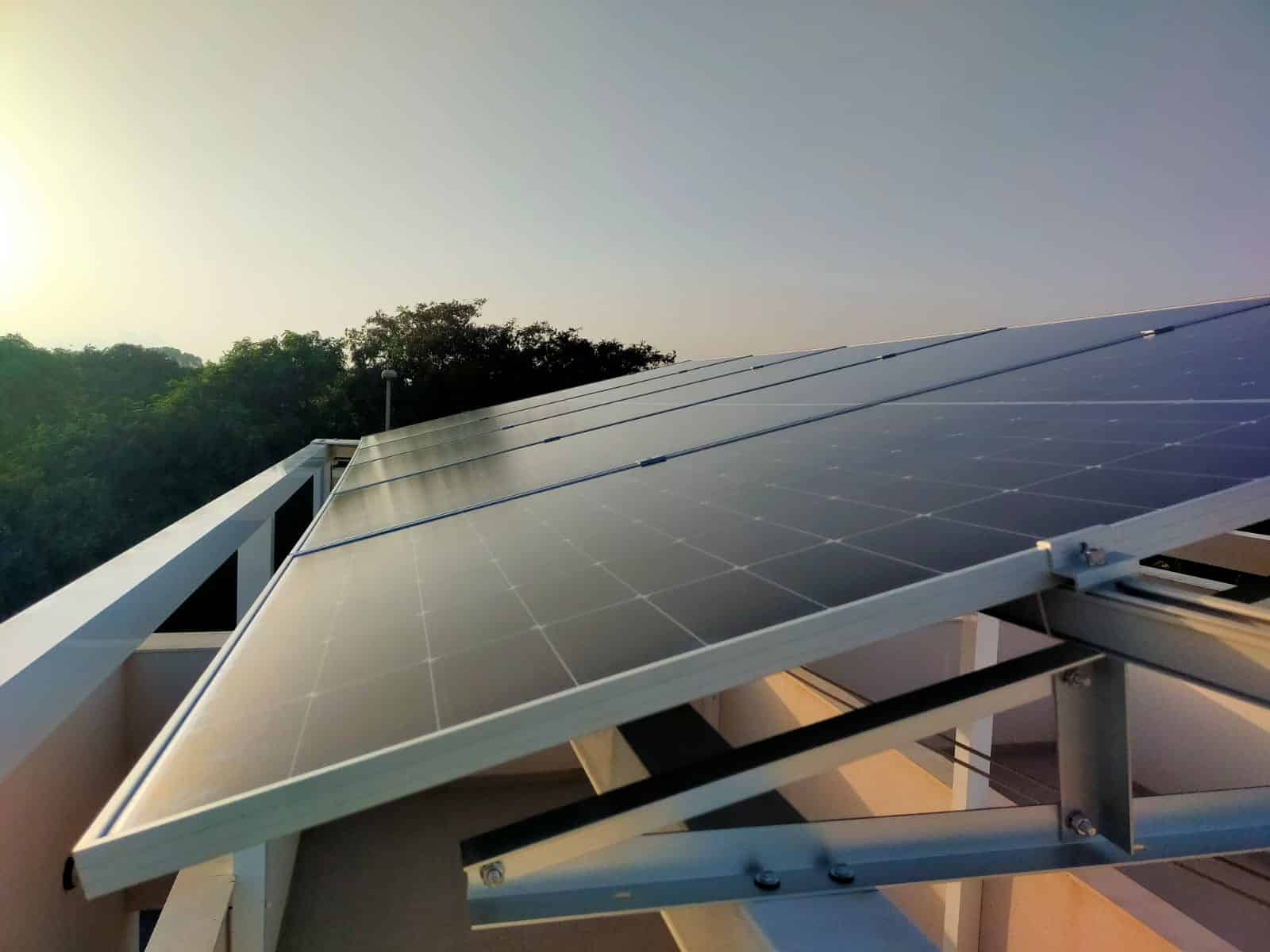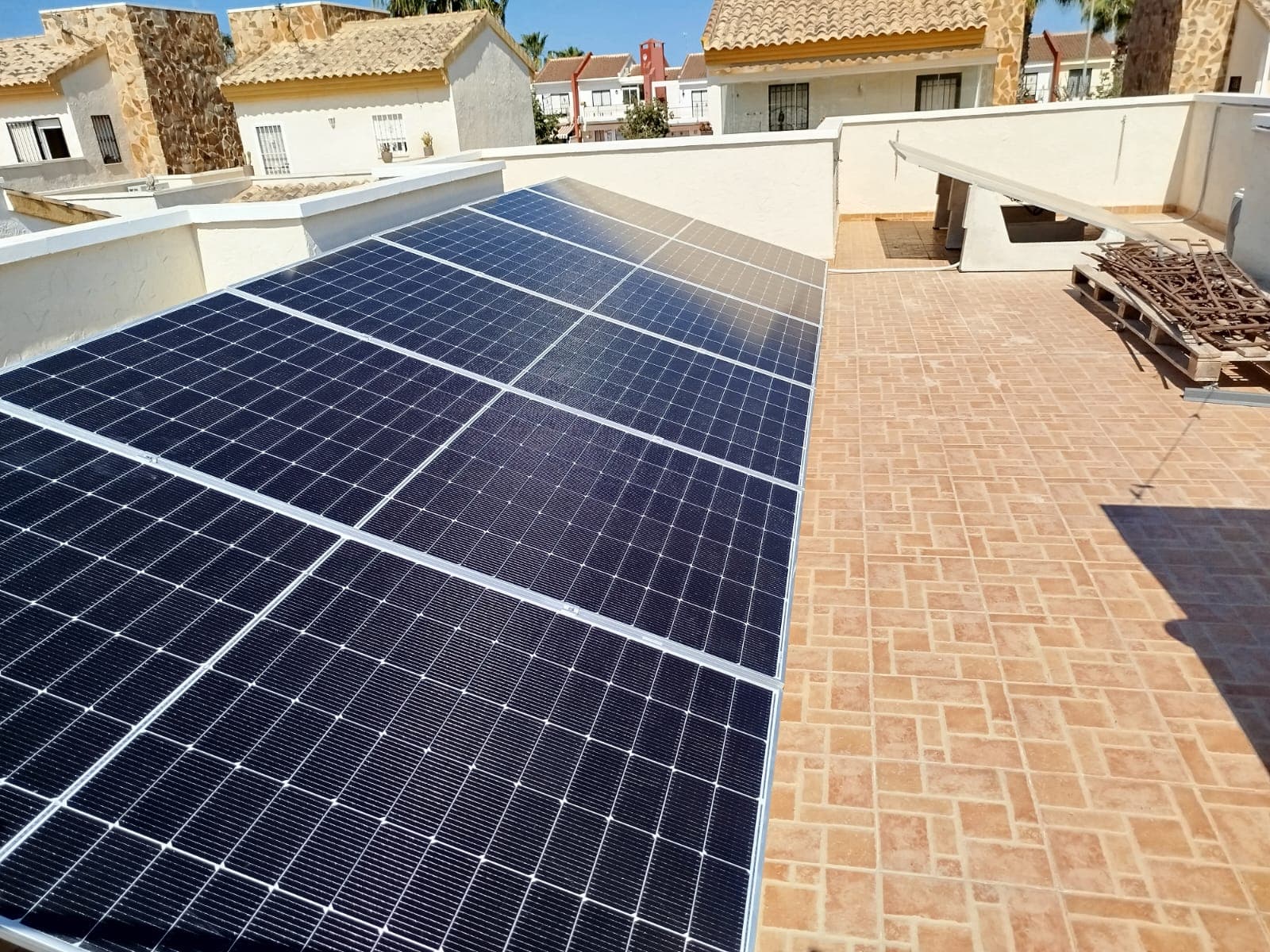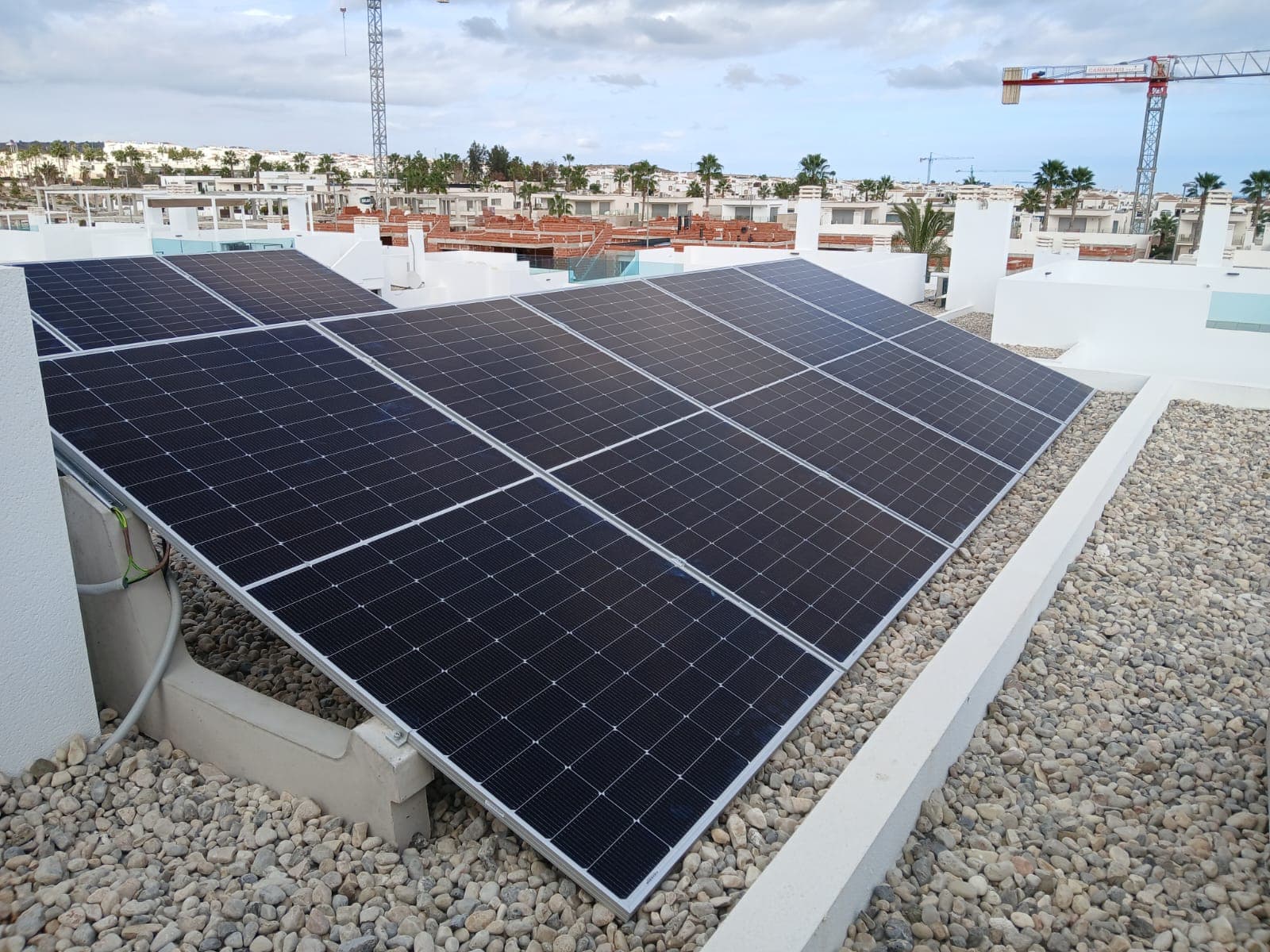
Yes. Flat roofs, roof terraces and solariums are common on the Costa Blanca, and they are often a good place for solar panels. The panels do not lie flat: they sit on frames that tilt them towards the sun. What makes a flat roof different from a sloping one is how those frames are held down, how the waterproofing is protected, and how the rows are spaced.
How panels are mounted on a flat roof
On a sloping roof, panels follow the slope and are fixed to the structure under the tiles. On a flat roof they stand on frames that give them an angle. The frames are held in place in one of two ways, or a combination:
- Ballast: the frames are weighted, usually with concrete blocks, so wind cannot lift them. Nothing goes through the roof, but the roof has to carry the extra weight.
- Mechanical fixing: the frames are anchored to the roof structure. This adds less weight, but every fixing passes through the waterproofing and has to be sealed properly.
Which one is right depends on how much weight the roof can take, how exposed it is to wind, and what the roof is made of. That is decided on site, from the structure and the wind exposure, not from a standard rule. We do not give fixing instructions for doing it yourself: a frame that is not held down correctly is a risk to the roof and to people below.
Wind on a flat roof
Wind flowing over a flat roof lifts panels more at the edges and corners than in the middle. Tilted panels catch more wind than flat-lying ones, so the angle is a balance between production and wind load. Parapets help in some places and create turbulence in others. On the coast this is a real design question; our guide on protecting solar panels from strong winds goes into it.
Protecting the waterproofing
The waterproof layer of a flat roof is the thing that must not be damaged. Before installing we look at its condition, because it is far easier to repair or renew it before panels go on than after. Frames stand on protective pads, cables are routed so they do not chafe, and drainage paths are kept clear so water can still reach the outlets.
Row spacing and shade
On a flat roof panels are placed in rows, and one row can shade the next when the sun is low in winter. The steeper the tilt, the more space the rows need. Sometimes a lower angle with more panels gives more electricity over the year than a steeper angle with fewer. An east-west layout, with panels in low back-to-back pairs, fits more panels on the same area and spreads production over the morning and afternoon.
Using the roof as a terrace
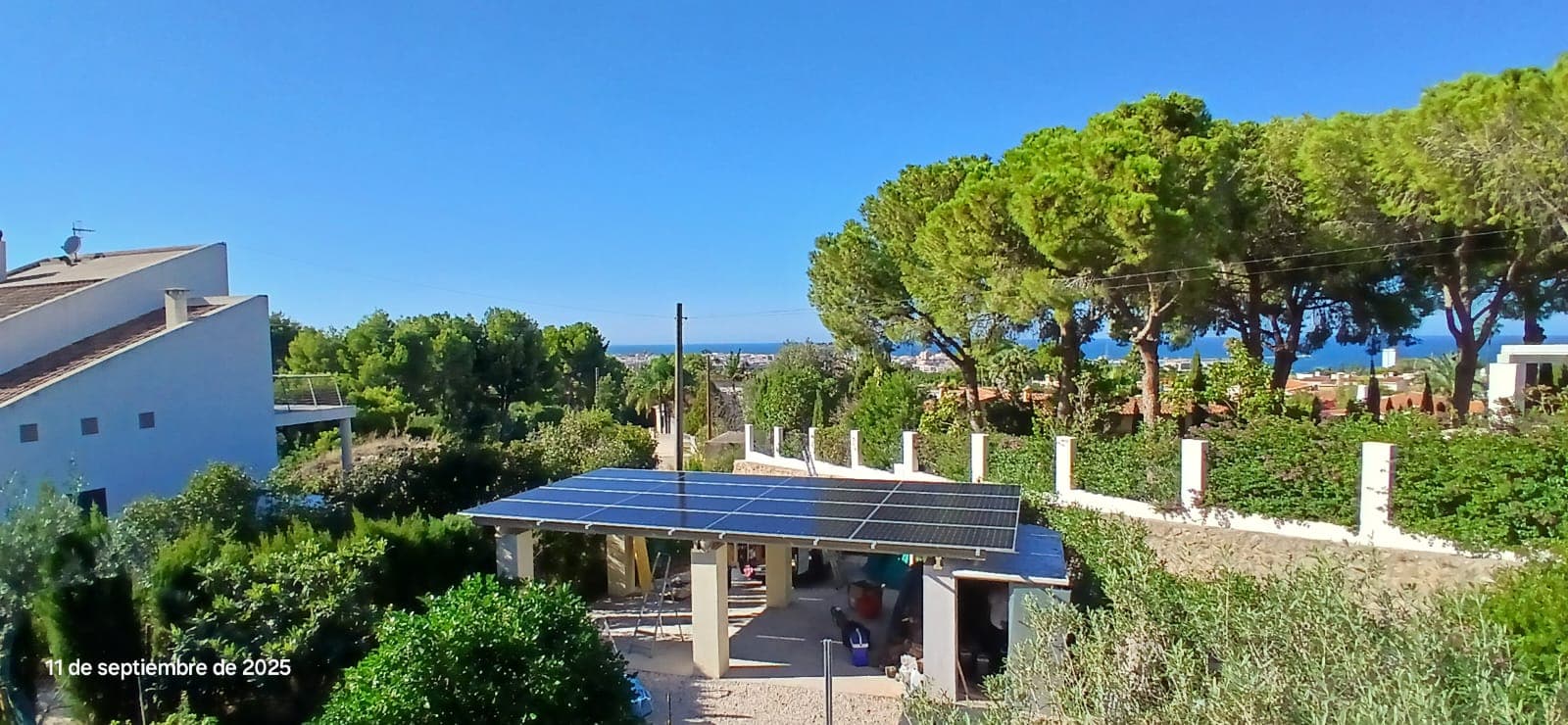
Many flat roofs here are also solariums. Panels can share the space: we can keep a part free, raise the frames, or place panels over a pergola instead. Tell us how you use the roof, and we design around it. For structures, see solar panels on pergolas and terraces.
An example from Algorfa
One customer split a system over the flat roof of the house and a garden shed:
“We are very happy with the installation of our 14 solar panels: 10 on the flat roof of our house and 4 on our garden shed.”
Brigitte D., Algorfa, Google review, translated from Dutch
Before you decide
Whether your particular roof is suitable is covered in is your Spanish roof suitable for solar panels. We work across the province, including flat-roofed houses in and around Alicante. How an installation goes is on solar panel installation.