Costa Blanca and Murcia
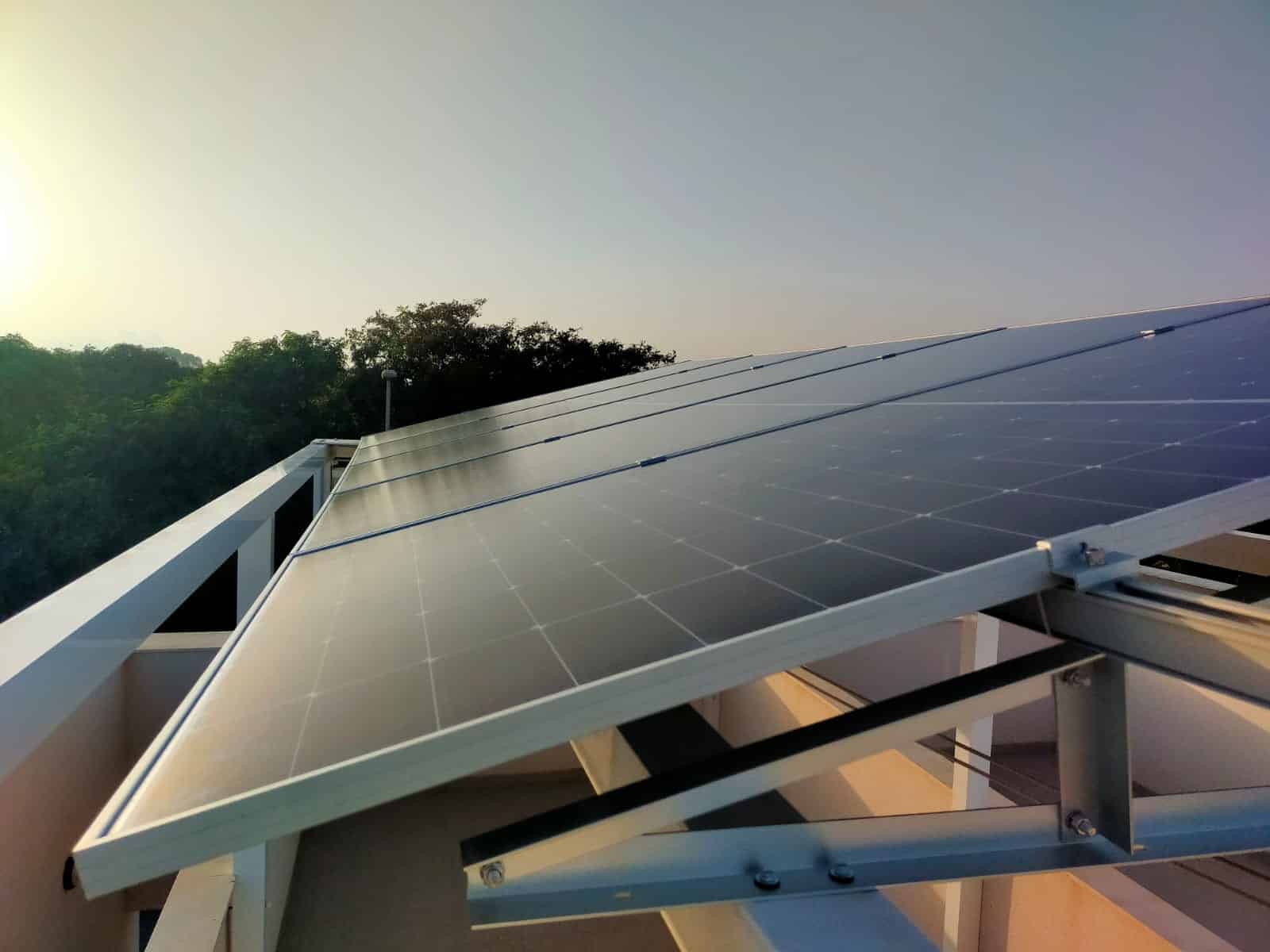
Professional solar panel installation on the Costa Blanca
High-quality solar solutions for villas, apartments and holiday homes across the Costa Blanca.
Who we are
A family-run solar company that listens first
Sunrise Energy is a family-run solar company with many years of experience installing solar panels on the Costa Blanca. We believe in a personal approach: we listen, advise and design a solar system that truly fits your home, lifestyle and budget.
From Alicante and Elche to Benidorm and the surrounding area, we install systems that are built for the Spanish climate.
How we advise
We think with you, and sometimes that means advising against
Before anything is quoted, we look at how you actually live: what you use, when you use it, and what the house will need in a few years. The system follows from that, not from the largest number of panels that fits the roof.
Permits and paperwork, arranged for you
Depending on your town, an installation needs a building permit or a declaration to the town hall, legalisation of the system, registration to be paid for the power you export and often a new energy contract. Where your municipality offers an IBI tax discount, we apply for that too. Joëlle handles all of it and tells you where each step stands.
“Joëlle really takes care of all the administrative hassle: changing energy supplier, permits, the IBI discount, keeping you informed.”
Jeroen H., Google review, translated from Dutch A battery only when your usage calls for it
When you ask for a battery, we first look at when you use electricity: your bills, your daytime and evening use, whether the house is lived in all year. If most of your power goes in daylight hours, or the house stands empty for months, a battery rarely earns its cost back, and we tell you so before we quote one.
“She thought along with us about what was really needed, for the future too.”
Jacco K., Google review, translated from Dutch Sized for your house, with room to grow
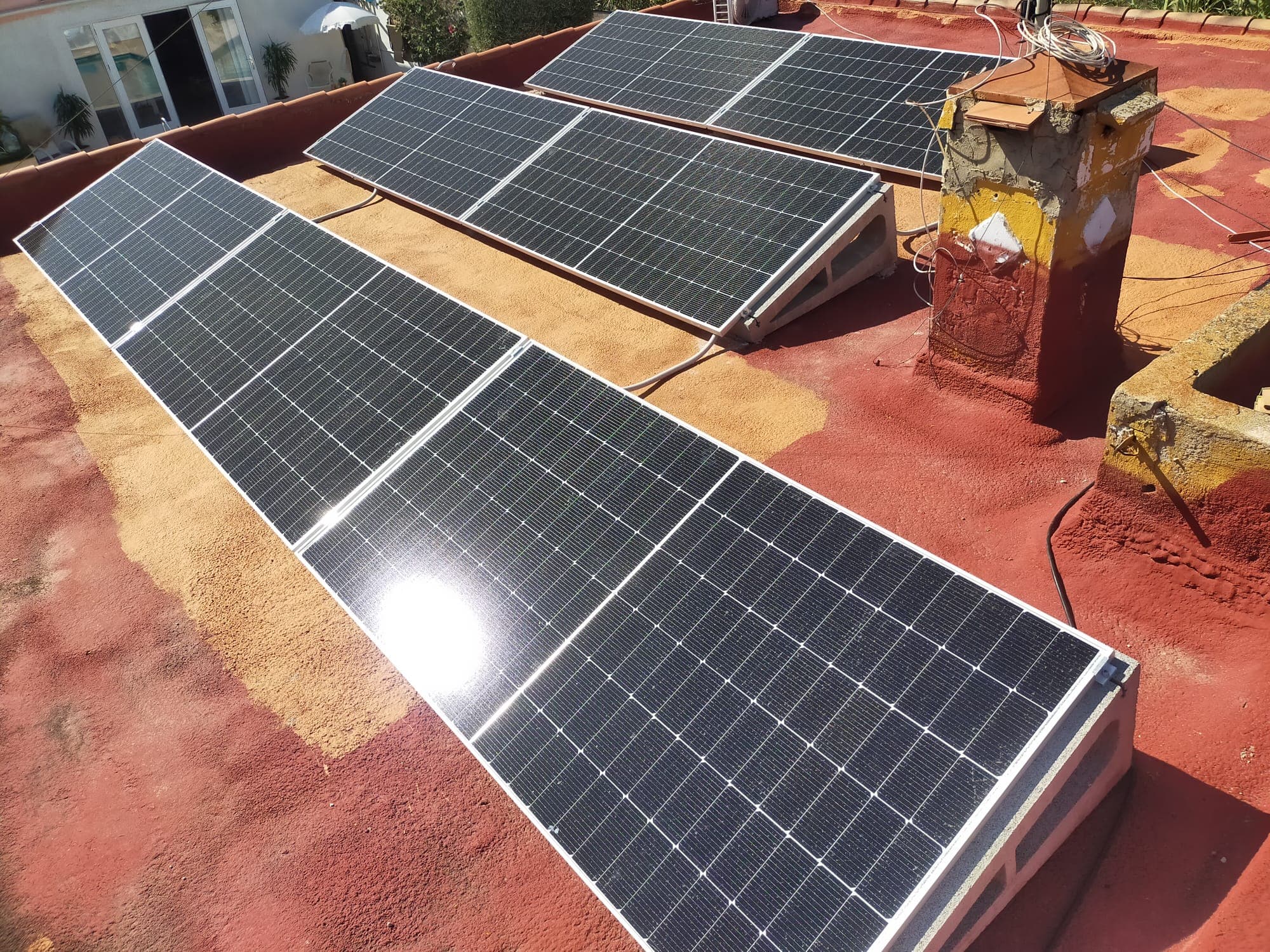
José comes to look at the roof before we quote: where the panels fit best, where the inverter goes, what the structure can take. The system is sized to what you use, and planned so it can be extended later without starting over.
“Everything was discussed properly in advance, with good advice on where the panels should go. They also thought ahead, so three more panels can be added to the same inverter if needed.”
Bram M., Google review, translated from Dutch
What it could save you
A range for your bill, not a promise
Move the slider to your monthly electricity bill. You get the careful case and the good case for the same system, because your roof, the way it faces and when you use power decide where you land. The survey pins that down.
An estimate, not a guarantee
- System size
- 5.0 kWp
- Sized to roughly your own use. The survey decides the real size.
- Generated per year
- 6,250 to 7,750 kWh
- Saved per year
- €600 to €990
- Pays for itself in
- 7 to 15 years
Indicative investment: €7,000 to €8,500. These are estimates, not guarantees. We only give firm figures once we have seen your roof and your consumption.
What these figures assume
The low figure is the careful case: less sun on the roof, less power used during the day, a higher price. The high figure is the good case.
- Yield per kWp per year
- 1,250 to 1,550 kWh. EU PVGIS data for this coast. East or west roofs sit at the low end, south-facing roofs at the high end.
- Share of the power you use yourself as it is generated
- 35% to 55%
- Investment per kWp, plus fixed costs of
- €1,100 to €1,400 + €1,500
- Electricity price
- €0.20 / kWh
- Paid for power you export
- €0.04 / kWh
Facts, not promises
What you can check for yourself
1,250 to 1,550
kWh per kWp per year
What a roof on this coast produces: east or west at the low end, south at the high. Source: EU PVGIS.
5.0
Average Google rating
From 91 reviews, read on 21 September 2026.
3
Languages
English, Spanish and Dutch, from the first visit to the last permit.
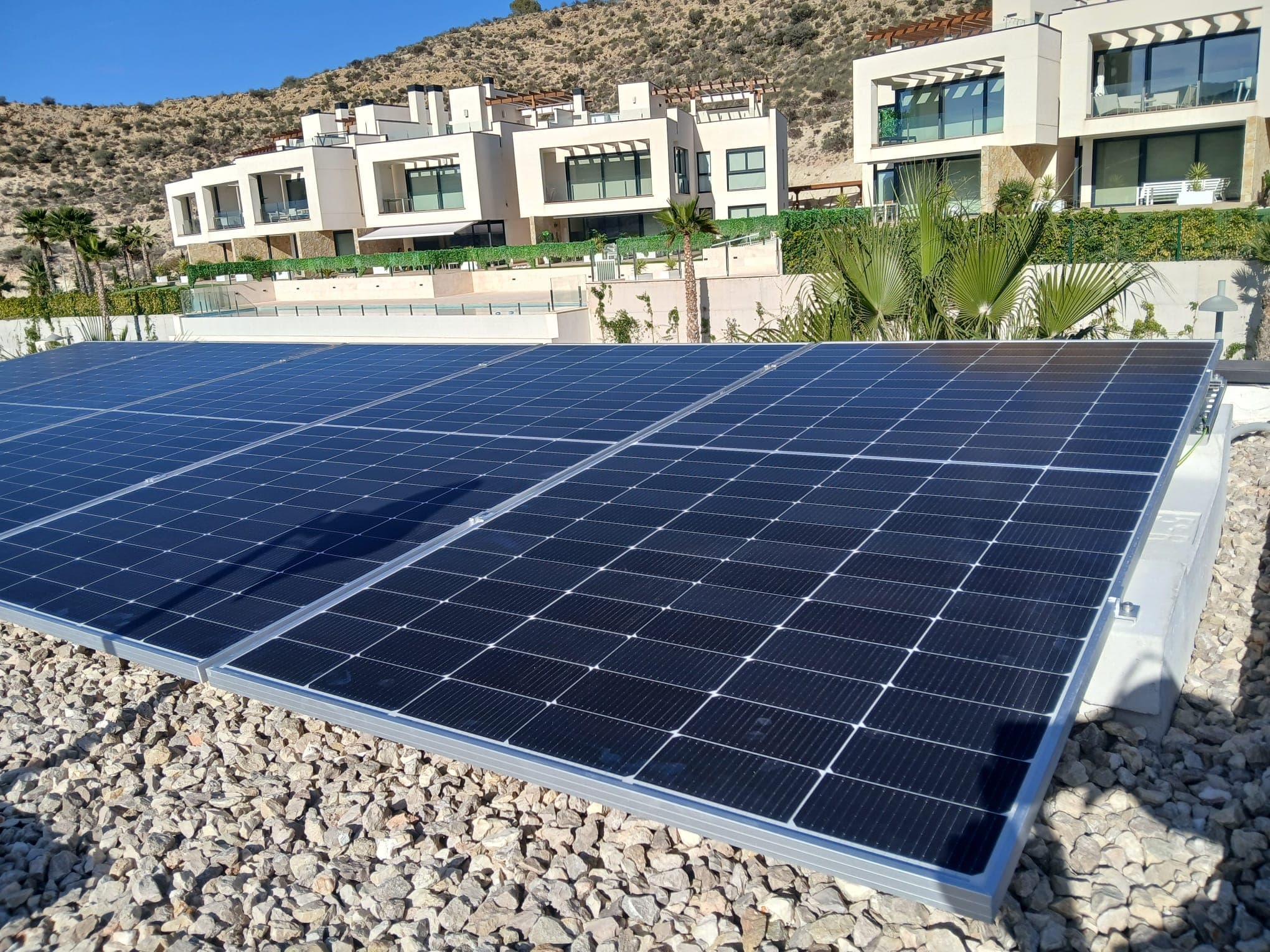
Local solar expertise on the Costa Blanca
Installing solar panels here takes more than technical knowledge. High sunshine hours, heat and coastal conditions demand the right materials, system design and installation approach.
What we install
Our solar panel solutions
- 01
Solar panels on standard roofs
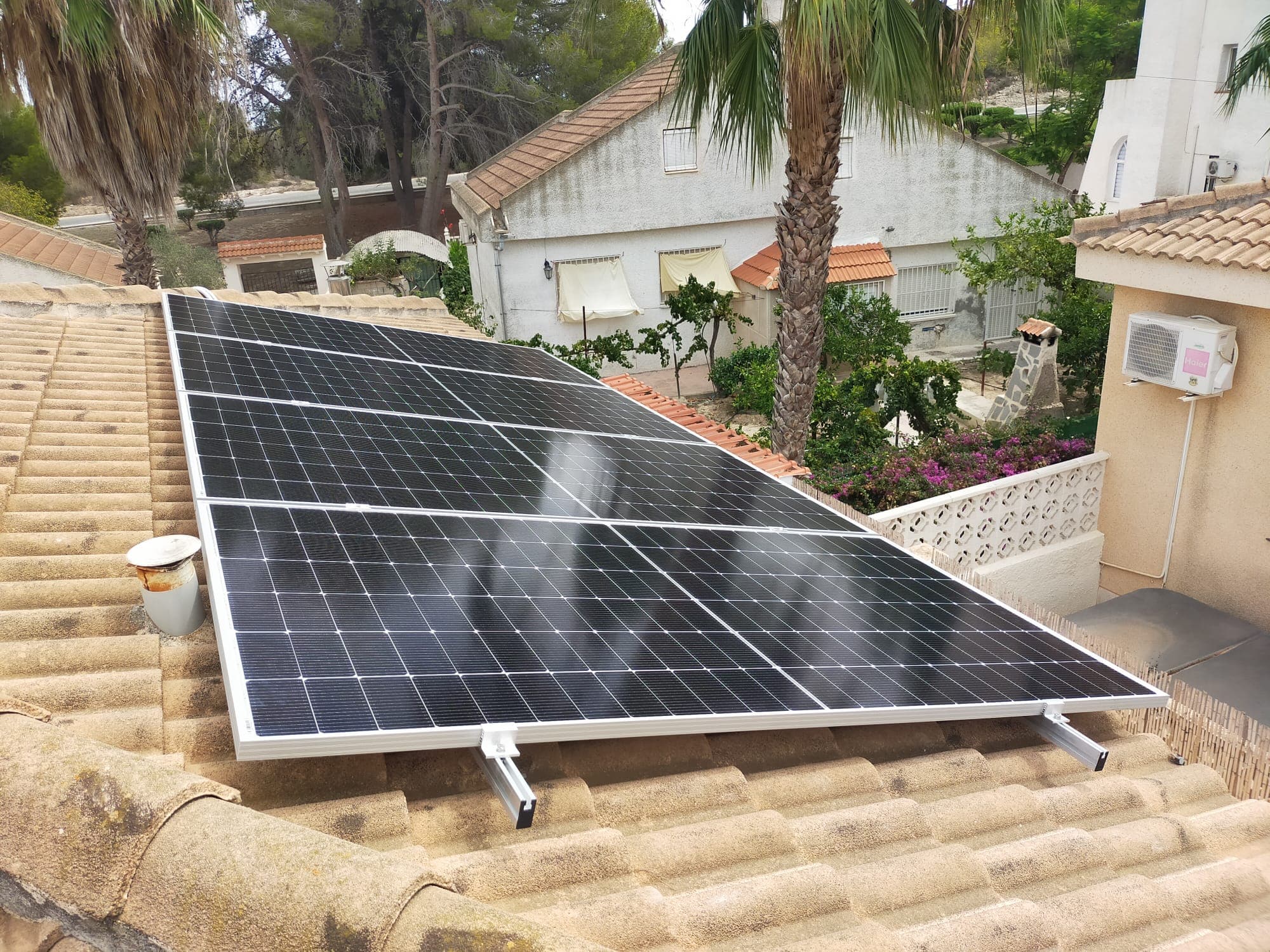
The most common and efficient way to generate your own energy. We install on both sloped and flat roofs, on private homes and second homes, always tailored to orientation, available space and consumption.
- 02
Solar panels outside your home
Not all panels need a roof. Carports, pergolas, terraces and garden installations are ideal when roof space is limited or you want to combine generation with a structure you were going to build anyway.
- 03
High-efficiency and bifacial panels
High-efficiency panels deliver maximum output where space is limited. Bifacial panels generate from both sides, which makes them effective for carports and pergolas where light reflects from below.
- 04
All-black design panels
Solid performance with a clean, modern appearance, chosen when how the system looks on the house matters as much as what it produces.
How we work
Built for heat, salt and a lot of sun
High sunshine hours, summer heat and coastal air are hard on a system that was specified for a milder climate. Materials, mounting and system design all have to account for it, which is why we survey the roof before we quote rather than after.
Every installation is carried out by our own certified installers and signed off against Spanish regulations.
Before you start
Questions we get asked most
Sunrise Energy
More questions
Answers come from our own frequently asked questions, written by the Sunrise Energy team.
Are there financial or tax benefits for solar panels in Spain?
Depending on the municipality, property and personal circumstances, financial or tax benefits may be available when installing solar panels. These may include an IBI property tax reduction or an IRPF income tax deduction, provided that the applicable requirements are met. Available schemes and their conditions vary by municipality and may change over time. Sunrise Energy Solutions is happy to inform customers about the options that may be relevant to their specific situation. We apply for the IBI reduction for you; we do not handle the IRPF deduction.
Who carries out the installation?
Certified and experienced installers, working to Spanish regulations. Correct installation is what determines safety, performance and how long the system keeps performing, so it is not something we subcontract away from our own team.
Which areas do you cover?
The Costa Blanca and Murcia, including Alicante, Elche, Benidorm, Torrevieja and Jávea. We know the local housing types and what the coastal climate does to a system over time.
Our work
Recent installations
Every roof here decided something about the system on it. These are three of them.
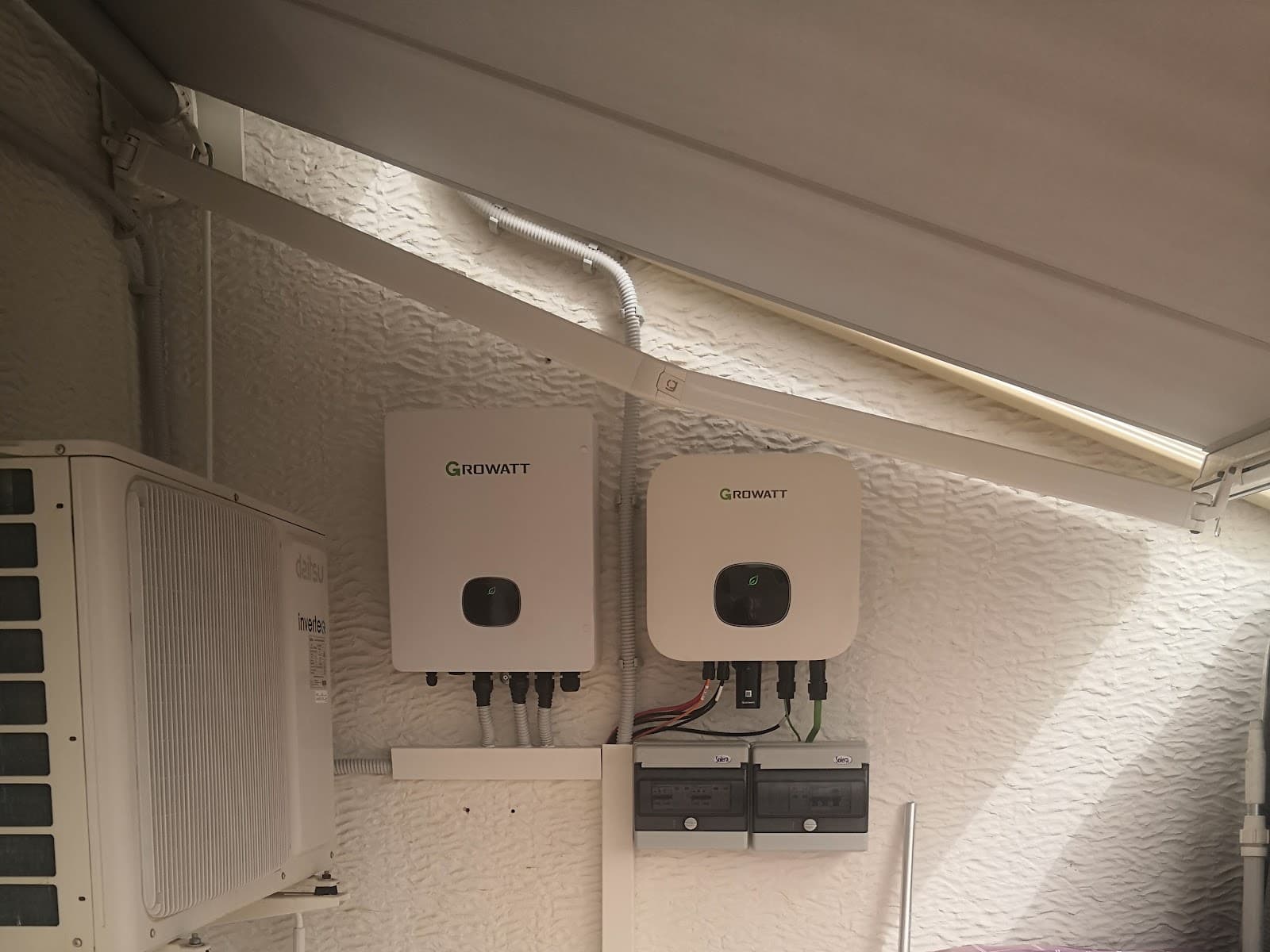 San Miguel de SalinasWith battery
Sixteen panels with a battery and backup in San Miguel de Salinas
Sixteen panels, a battery and a switch box that keeps the house running from the battery during a power cut.
- Panels
- 16
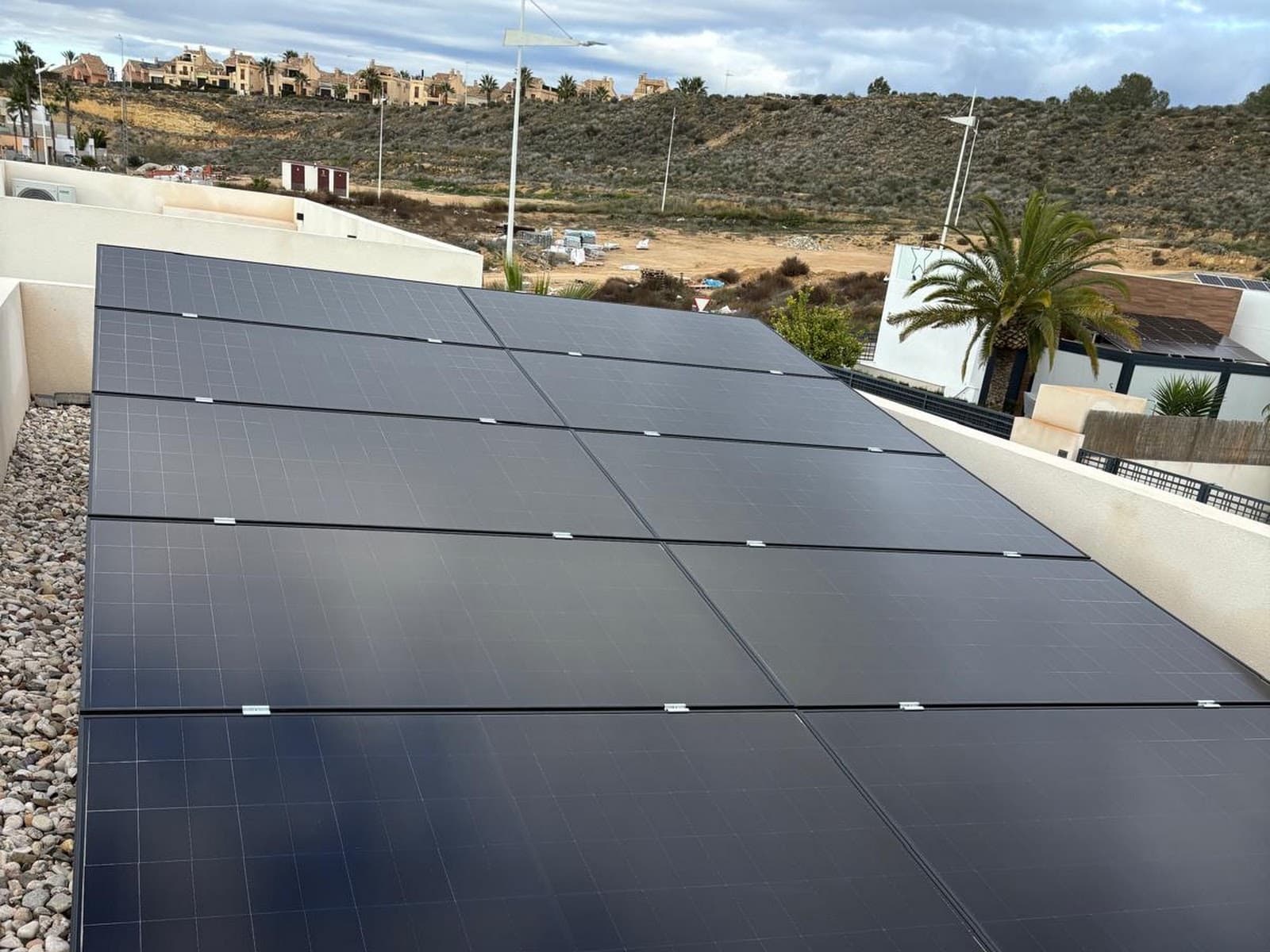 Algorfa
Fourteen panels across two roofs in Algorfa
Ten panels on the flat roof of the house and four on the garden storage building, laid out together with the owners.
- Panels
- 14
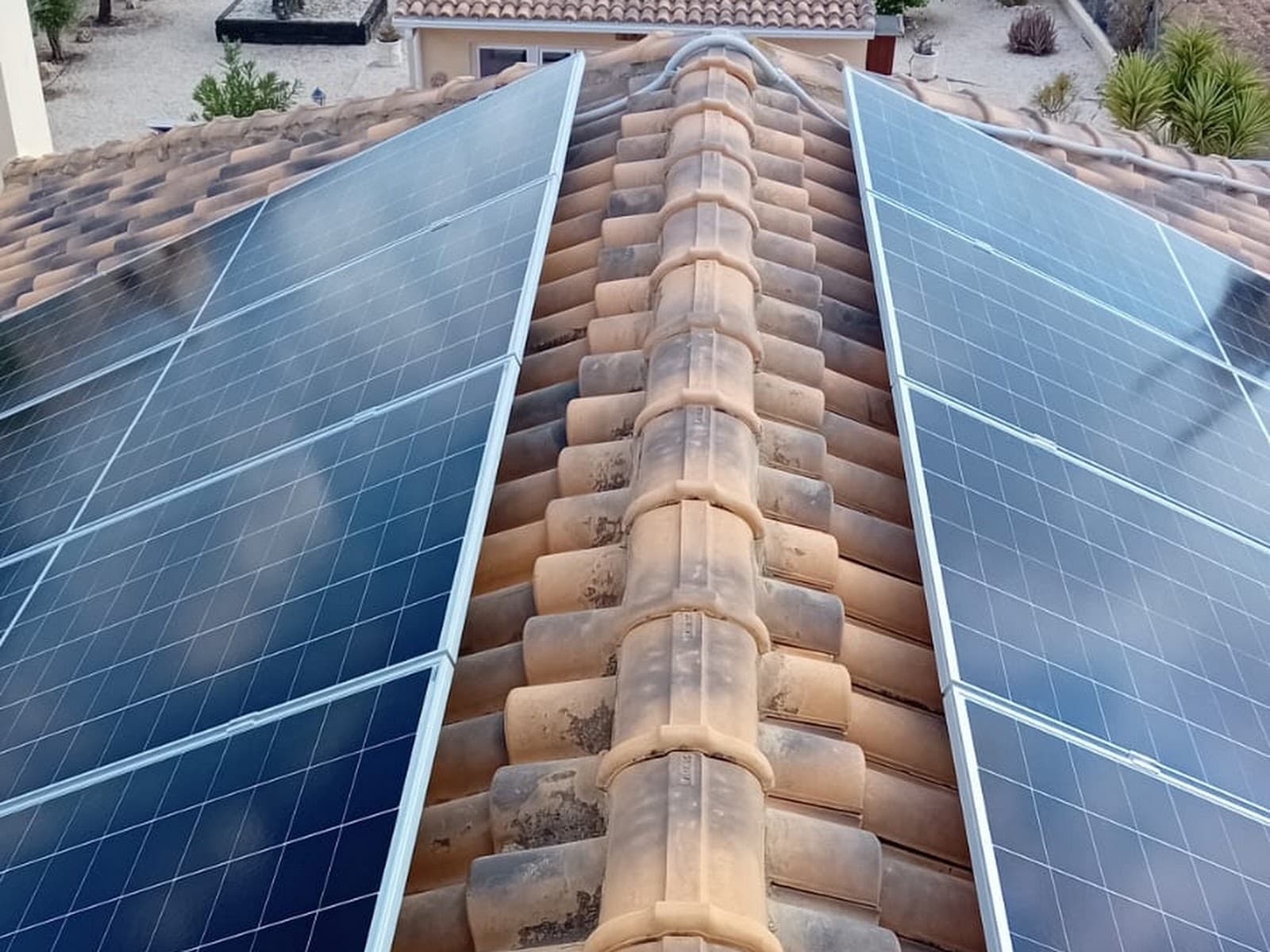 Region of Murcia
Fifteen panels across the regional border in Murcia
Fifteen panels with an inverter, the permits of another autonomous community, and surplus compensation with a virtual battery set up afterwards.
- Panels
- 15
Brands we work with